Google Integrates Third-Party Apps Directly into Search AI Mode to Streamline User Workflows

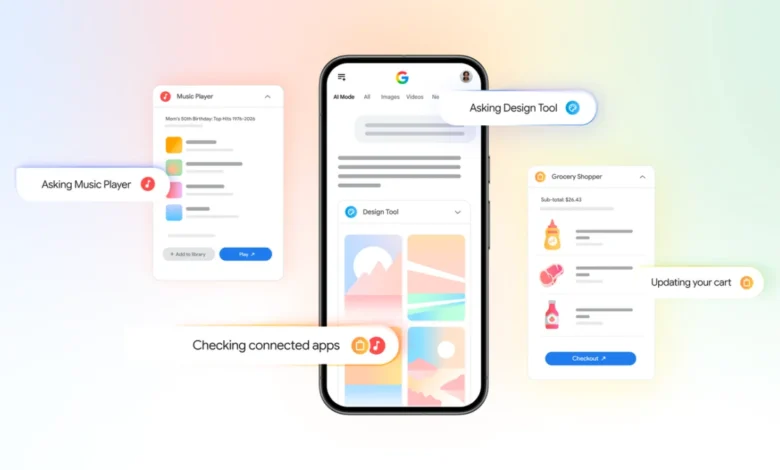
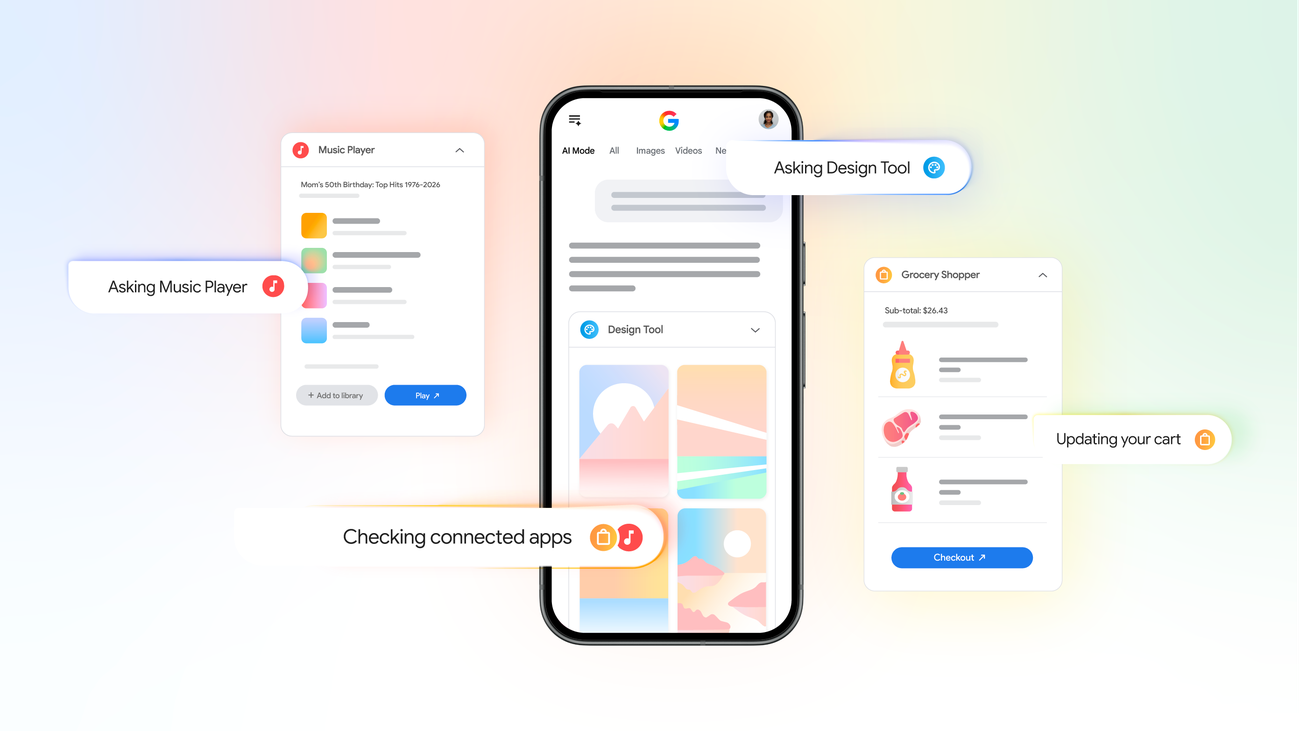
Google has officially announced a significant evolution in its search capabilities, allowing users to securely link and interact with third-party services directly within the "AI Mode" of Google Search. This update, which begins rolling out to users in the United States this week, represents a pivotal shift from a search engine that merely provides information to an "action engine" capable of executing tasks across various platforms. By integrating popular services such as Instacart, Canva, and YouTube Music, Google aims to reduce the friction between discovery and execution, enabling a more seamless digital experience.
The initiative is led by Chips Mistry, Senior Product Manager for Search, and Biharck Araújo, Engineering Lead for Search. According to the company, this development builds upon the existing "extensions" framework found in the Gemini app, but applies it specifically to the Search environment. This means that when a user engages with Google’s generative AI features to plan a project or solve a problem, the AI can now reach out to specific applications to perform actions, such as adding items to a grocery cart or generating design templates, without requiring the user to leave the Search interface and manually open separate apps.
The Evolution of Search: From Information to Action
For over two decades, Google Search functioned primarily as a gateway to the internet, indexing billions of pages to provide users with the most relevant links. However, the rise of large language models (LLMs) and generative AI has fundamentally changed user expectations. Modern users increasingly seek direct answers and immediate solutions rather than a list of websites to navigate.
The introduction of Connected Apps in AI Mode is Google’s latest response to this shift. Previously, Google introduced the Search Generative Experience (SGE), which used AI to synthesize complex information into easy-to-read summaries. The new integration takes this a step further by adding a layer of utility. For example, if a user is planning a summer barbecue and asks AI Mode for help with a grocery list, the system can now interact with Instacart. Once the user approves the list, the ingredients are automatically populated into their Instacart shopping cart, leaving only the final checkout process to be completed on the Instacart platform.
This move aligns Google more closely with the concept of a "super app"—a single platform that serves as a hub for various services. While Google is not building these services itself, it is positioning Search as the intelligent connective tissue that binds them together.
Partner Integrations and Practical Use Cases
At launch, the Connected Apps feature focuses on three distinct areas: e-commerce, creative design, and entertainment. These partnerships serve as a proof-of-concept for how generative AI can act as a personal assistant.
- Instacart and Grocery Logistics: Beyond simple list-making, the Instacart integration allows for real-time inventory checks and direct cart population. This reduces the cognitive load on the user, who no longer needs to copy-paste items from a search result into a delivery app.
- Canva and Visual Content Creation: For users working on creative projects, such as designing a flyer or a social media post, the Canva integration allows AI Mode to suggest specific templates based on the user’s query. By asking for "design concepts for a neighborhood bake sale," the AI can pull relevant Canva templates directly into the search results, which the user can then open and customize with a single click.
- YouTube Music and Curated Entertainment: The integration with YouTube Music allows users to curate soundtracks for specific moods or events. If a user asks for a "high-energy workout playlist," AI Mode can generate the list and instantly save it to the user’s YouTube Music library, allowing them to press play without manual assembly.
Google has indicated that these three partners are only the beginning. The company is reportedly working with a broad range of developers to expand the ecosystem of connected apps, potentially including travel booking services, financial management tools, and project management software.
Technical Infrastructure and User Privacy
A critical component of this rollout is the balance between convenience and security. Integrating third-party apps into a search environment requires a robust data-sharing framework. Google has emphasized that these links are "securely linked," utilizing industry-standard authentication protocols such as OAuth. This ensures that Google does not see the user’s third-party login credentials and that the user maintains control over what data is shared between platforms.
Users must proactively opt-in to connect their accounts. Within the AI Mode settings, a dedicated "Connected Apps" section allows users to manage their permissions, see which apps are linked, and revoke access at any time. Furthermore, Google’s AI models are designed to only trigger these integrations when relevant to the user’s intent, preventing unnecessary data exchanges.
The technical backbone of this feature relies on sophisticated API (Application Programming Interface) calls. When a user makes a request, the LLM determines if a connected app can fulfill the request. If so, it generates a structured command that the third-party API can understand. This "function calling" capability is a hallmark of modern AI development, transforming chatbots from conversationalists into functional agents.
Timeline of Google’s AI Integration
The path to Connected Apps in Search has been a rapid one, reflecting the intense competition in the AI sector:
- February 2023: Google announces Bard, its initial foray into conversational AI.
- May 2023: At Google I/O, the company introduces Search Generative Experience (SGE) as an experimental feature in Search Labs.
- December 2023: The Gemini model family is launched, providing the multimodal capabilities needed for complex task handling.
- February 2024: Bard is rebranded as Gemini, and Google introduces "Extensions" for Gmail, Drive, and Maps.
- Mid-2024: Google begins testing deeper third-party integrations, leading to the current rollout of Connected Apps in U.S. Search.
This timeline illustrates Google’s strategy of incremental deployment—testing features in controlled environments like "Labs" before moving them into the mainstream Search interface used by billions.
Market Context and Competitive Pressure
Google’s decision to open Search to third-party apps is not occurring in a vacuum. The search landscape is facing its most significant challenge since the 1990s. Competitors like OpenAI, with its rumored "SearchGPT" and existing ChatGPT plugins, are vying for the same "action-oriented" market. Similarly, Perplexity AI has gained traction by offering a "knowledge engine" that provides direct citations and answers, often bypassing the traditional list of links.
Furthermore, Apple’s recent announcement of "Apple Intelligence" suggests a future where Siri can perform actions across apps using on-device processing. For Google, integrating these capabilities directly into the web and mobile search experience is essential to maintaining its dominance.
Market data suggests that users are increasingly frustrated with the "fragmented web." A 2023 study on digital consumer behavior found that the average user switches between three to five different apps to complete a single complex task, such as planning a trip or organizing an event. By consolidating these steps within Search, Google is attempting to capture more of the user’s "intent journey," which is highly valuable for both user retention and advertising relevance.
Broader Implications for the Digital Ecosystem
The shift toward "Connected Search" has profound implications for the broader internet economy, particularly for SEO (Search Engine Optimization) and app developers.
For developers, being a "Connected App" becomes a new form of discovery. Instead of hoping a user downloads their app from an app store, they can provide value directly at the moment of search. This could lead to a new era of "Action-based SEO," where companies optimize their APIs to be easily "readable" and "callable" by AI agents.
However, there are also concerns regarding the "walled garden" effect. If users can complete tasks within Google Search, they may spend less time on the actual websites of small businesses or niche service providers. This could centralize even more power within the Google ecosystem, prompting scrutiny from antitrust regulators who are already closely monitoring Google’s dominance in search and advertising.
From a user perspective, the benefit is clear: time saved. As AI Mode becomes more proficient at handling logistical details, the "search" part of the process becomes shorter, and the "result" part becomes more productive.
Looking Ahead: The Future of Personal Intelligence
Google’s announcement hints at a future where search is not just about finding what exists, but creating what is needed. The company refers to this as "Personal Intelligence," a system that understands the user’s context, preferences, and connected tools to provide tailored responses.
As the rollout continues in the United States, Google will likely monitor user feedback and performance metrics closely before expanding the feature to international markets. The success of this initiative will depend on how many developers join the ecosystem and how effectively the AI can interpret complex, multi-step user requests.
For now, the integration of Instacart, Canva, and YouTube Music serves as the first chapter in a new era for Google Search—one where the search bar is no longer just for typing questions, but for getting things done. As Mistry and Araújo noted in their announcement, the goal is to "help you get even more done," signaling that the future of search is less about the search itself and more about the actions that follow.