Halloween Costume Trends and the Evolving Cultural Significance of Adult Participation in Modern Festivities

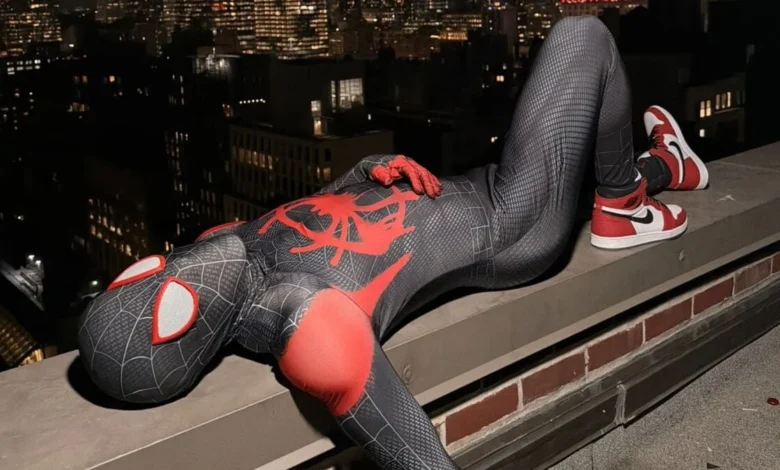
Halloween has transitioned from a primarily youth-oriented holiday into a significant cultural and economic milestone for the adult population. While the traditional act of trick-or-treating remains the bedrock of the October 31 tradition, the proliferation of costume culture among adults has transformed the holiday into a multi-billion-dollar industry. This year, the intersection of social media influence, pop culture nostalgia, and high-production-value cosplay has redefined what it means to participate in the festivities, with adults increasingly prioritizing creative expression over mere consumption.
Historical Context and the Rise of Adult Participation
The origins of Halloween, rooted in the ancient Celtic festival of Samhain, have evolved through centuries of syncretism. However, the commercialization of the holiday in the 20th century initially focused on confectionery and children’s activities. It was not until the late 1990s and early 2000s that the adult demographic began to reclaim the holiday as a sophisticated social event. Data from the National Retail Federation (NRF) suggests that adult Halloween spending has seen a consistent year-over-year increase, with total holiday spending in the United States projected to reach record highs in the current fiscal cycle.
This shift is largely attributed to the "experience economy," where adults are increasingly seeking out curated events, costume parties, and immersive environments that allow for temporary escapism. Unlike previous generations, modern adults utilize Halloween as a platform to engage with niche subcultures, whether through high-fidelity film-accurate costuming or satirical social commentary.
Economic Implications of the Costume Industry
The economic impact of Halloween is substantial. Retailers now begin stocking seasonal inventory as early as August, a phenomenon known in industry parlance as "Halloween Creep." The costume market alone accounts for a significant portion of this expenditure, with consumers spending upwards of $3.8 billion on costumes annually. This investment is no longer limited to mass-market retail chains; there is a burgeoning market for independent artisans, professional makeup artists, and specialized garment manufacturers who cater to the "prosumer" segment of the Halloween market.
Analysis of the data reveals that while children’s costumes are often driven by licensed intellectual property from major animation studios, adult costume trends are significantly more volatile and diverse. They are heavily influenced by viral internet moments, cinematic reboots, and the intersection of traditional fashion with theatrical design. The ability for a costume to gain traction on short-form video platforms serves as a modern catalyst for sales, effectively turning the holiday into a global runway for digital creators.
Chronology of Modern Costume Evolution
To understand the current state of costume design, one must look at the progression of the last decade. In the early 2010s, costumes were largely defined by mainstream pop culture—superheroes and classic horror figures dominated the market. By 2015, the influence of digital platforms began to shift the landscape toward "meta" costumes, where the subject matter was increasingly niche, requiring an audience to be "in on the joke" to appreciate the effort.
By 2020, the forced isolation of the pandemic altered the trajectory of Halloween. With large-scale gatherings suspended, the focus shifted from external visibility to digital showcase. This period accelerated the demand for high-quality, DIY, and artisanal costuming. Today, the "post-pandemic" Halloween is characterized by a hybrid approach: individuals are crafting elaborate looks that are both photogenic for social media and functional for the return of large-scale physical events and parties.
The Role of Nostalgia and Pop Culture Icons
A recurring theme in this year’s costume landscape is the resurgence of 1990s and early 2000s media. From children’s television programming to cult-classic film characters, the reliance on nostalgia is a strategic choice for many participants. Sociologists note that in times of societal uncertainty, individuals tend to gravitate toward cultural artifacts that represent a perceived simpler time. By embodying characters from beloved childhood shows or iconic music eras, adults are effectively performing a form of collective reminiscence.
Furthermore, the rise of the "streamer" as a cultural authority has changed the nature of public performance during the holiday. Prominent internet personalities are now expected to host elaborate, high-budget Halloween events that rival professional television productions. Their influence sets a standard for production quality, encouraging their followers to emulate these styles. This trickle-down effect—from professional content creators to the general public—has elevated the overall baseline of effort put into the average adult costume.
Technological Advancements in Costume Design
Modern costume creation has been bolstered by advancements in materials science and manufacturing. The widespread availability of 3D printing, high-quality synthetic fabrics, and professional-grade prosthetic adhesives has allowed amateurs to achieve effects that were once restricted to Hollywood studio lots.
For instance, the ability to create armor, masks, and intricate props at home via home-use 3D printers has democratized high-end cosplay. These technological tools mean that an individual’s ability to execute a complex design is limited more by their technical proficiency than by their budget. As these tools become more accessible, the gap between professional prop-making and hobbyist costuming continues to narrow, contributing to the increased aesthetic complexity observed in modern Halloween festivities.
Institutional and Societal Reactions
Public institutions and event planners have responded to this shift by diversifying their offerings. Where municipal events once focused strictly on youth safety, cities now sponsor "Halloween crawls," adult-themed museum nights, and themed theatrical performances. This suggests that the holiday is being viewed as a legitimate driver of local tourism and nightlife revenue.
However, the increase in adult participation has also led to discussions regarding the boundaries of the holiday. Concerns regarding cultural appropriation in costume design have become a staple of modern Halloween discourse. Organizations and social media advocacy groups now proactively provide guidelines on how to participate in costume culture while remaining culturally sensitive, reflecting a more nuanced and conscientious approach to the holiday than was present in previous decades.
The Future of Halloween Festivities
As we look toward the future, it is clear that Halloween will continue to be a primary outlet for creative expression in the adult population. The trend is moving toward increased personalization and the blending of physical and digital identities. With the potential for Augmented Reality (AR) integration into physical costumes—such as digital masks or interactive social media filters—the next evolution of the holiday will likely bridge the divide between the tangible and the virtual.
In summary, the modern Halloween is a sophisticated socio-economic event. Whether through the lens of a "throwback" homage, a complex cinematic recreation, or a satirical take on current events, the act of dressing up has become a vital form of self-expression. As participants continue to raise the bar for creativity and execution, the holiday will undoubtedly remain a cornerstone of the annual cultural calendar, reflecting both the nostalgic tendencies and the forward-looking technological capabilities of the modern era. The magic of the holiday, once thought to be exclusively for the young, has effectively been reclaimed by an adult audience that values the spectacle, the social connection, and the sheer joy of transformative play.
Related posts: