How Wojtek Fus and Paul Coulthard Brought a Mythic, Calcified Serpent to Life for God of Bones

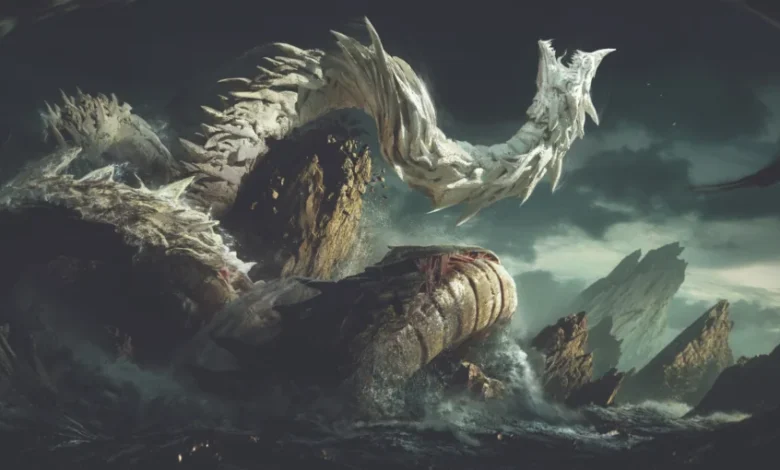
The intersection of traditional artistic vision and advanced 3D digital pipelines continues to redefine the boundaries of modern cinematic world-building. For the upcoming short film God of Bones, directed by Paul Coulthard, realizing a pivotal vista shot required a multidisciplinary approach involving concept art, complex 3D blockouts, and meticulous digital paintovers. At the heart of this visual centerpiece is a colossal serpent captured mid-death throes, its immense body calcifying and collapsing into timeless stone.
Digital artist Wojtek Fus was brought onto the project specifically to elevate this central vista, tasked with injecting a palpable sense of scale, weight, and arrested motion that early compositions had yet to capture. Working in tandem with Coulthard, as well as a specialized team of 3D modelers, Fus navigated a rigorous multi-step workflow to transform a rough pencil drawing into a breathtaking cinematic reality.
Main Facts of the Production and Creative Vision
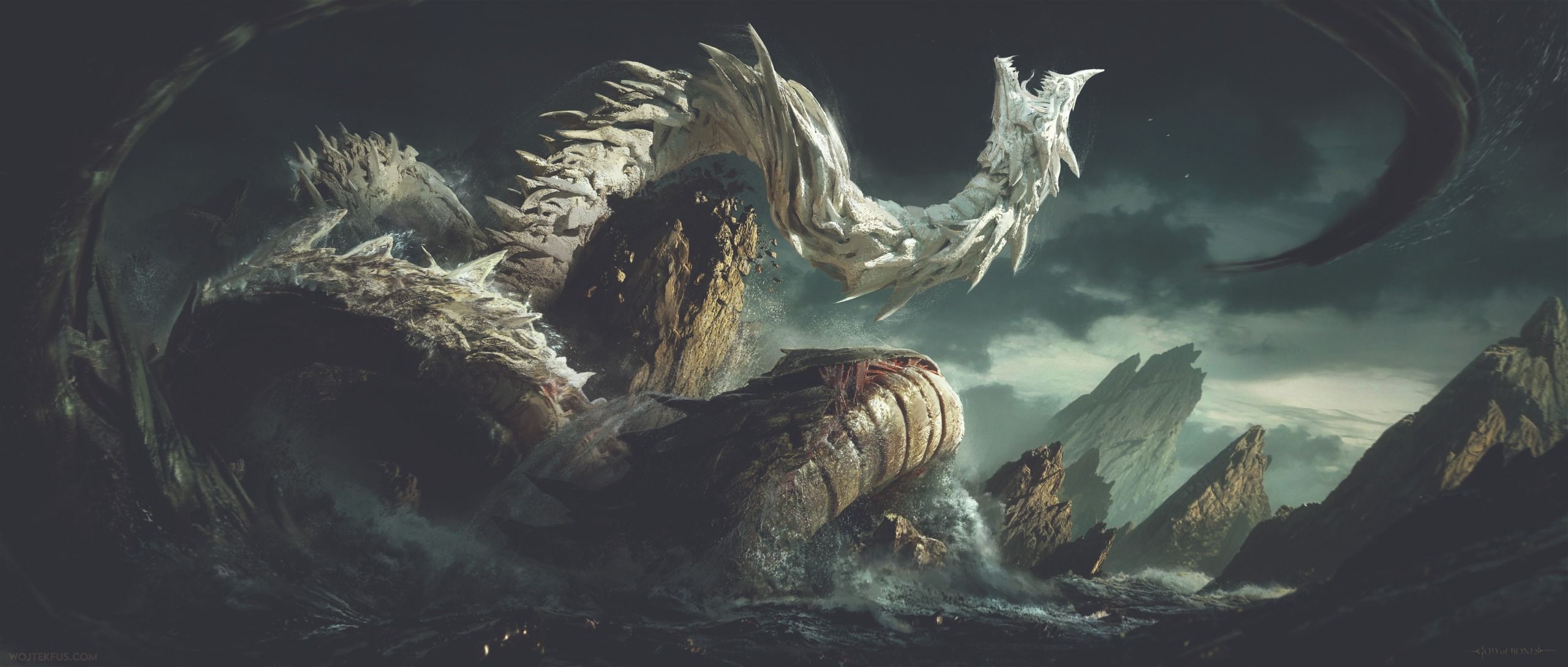
God of Bones is currently advancing through its production cycle as a short film, a medium that frequently relies on striking, high-impact imagery to establish its atmospheric universe quickly. The core artistic challenge presented to Fus was conveying a moment of extreme violence combined with the profound stillness of petrifaction.
Capturing a creature of mythic proportions requires an acute understanding of composition, lighting, and environmental integration. The serpent had to appear not merely as an object placed within a landscape, but as an organic entity physically interacting with the harsh, rocky topography around it. The final image successfully achieves this by blending digital rendering with photographic textures, resulting in a frame that feels both hyper-realistic and deeply rooted in fantasy lore.
Chronology and Workflow: From Sketch to Final Masterpiece
The realization of the calcified serpent scene followed a structured, highly collaborative three-stage creative pipeline. Each phase built upon the previous step to solve distinct compositional and technical hurdles.
Phase 1: The Conceptual Foundation
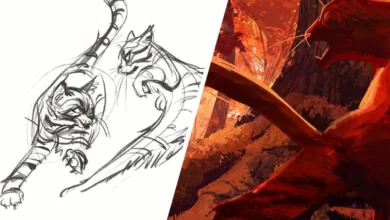
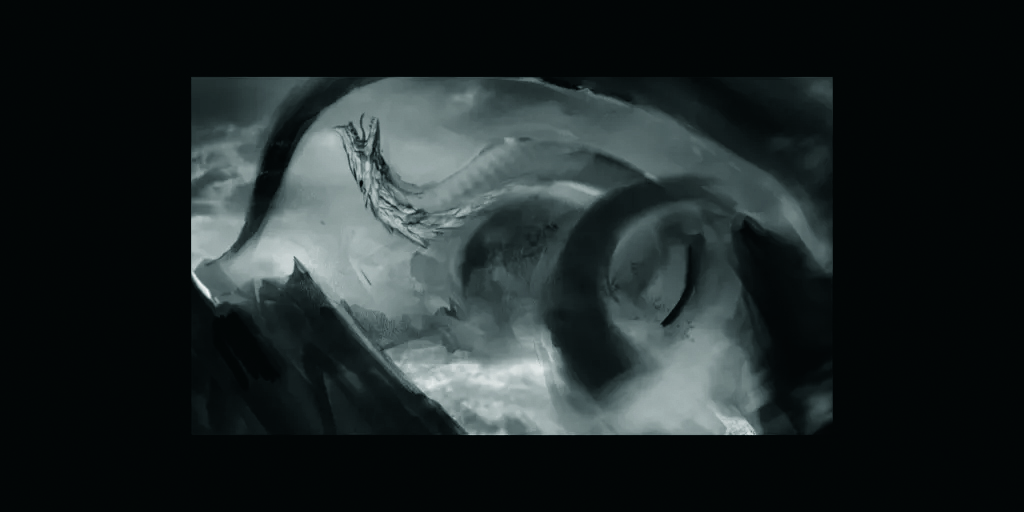
The project commenced with a rough concept sketch provided by director Paul Coulthard. This initial drawing served as the blueprint for the entire sequence, designed to establish the core mood, the raw violence of the scene, and the staggering scale of the serpent caught in its final moments. While sparse in fine details, the sketch successfully defined the primary composition, rhythm, and kinetic flow of the creature as it wound through the environment, setting a clear trajectory for subsequent digital development.
Phase 2: 3D Blocking and Spatial Layout in Blender
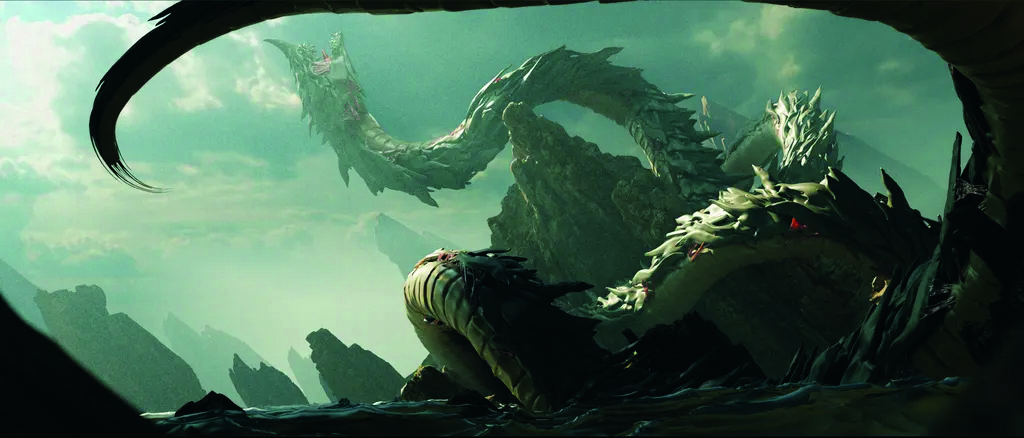
With the conceptual direction established, Fus transitioned the project into the digital realm using Blender, an industry-standard 3D modeling suite. During this stage, the primary environment was constructed, embedding the serpent within a massive, jagged rocky formation.
Collaborating closely with Coulthard, Fus iterated rapidly on the spatial arrangement. The primary objectives during this blocking phase were maintaining visual readability, reinforcing the illusion of immense scale, and preserving a sense of dynamic, unstable energy. The serpent design itself was expertly supervised by Christian Bull, while the heavy lifting of 3D modeling was executed by Laurens Rasti and Wilmar Ballespi of Shoot First. This division of labor allowed for high fidelity in asset creation while keeping the overarching cinematic composition flexible.
Phase 3: Rendering, Texturing, and Final Paintovers
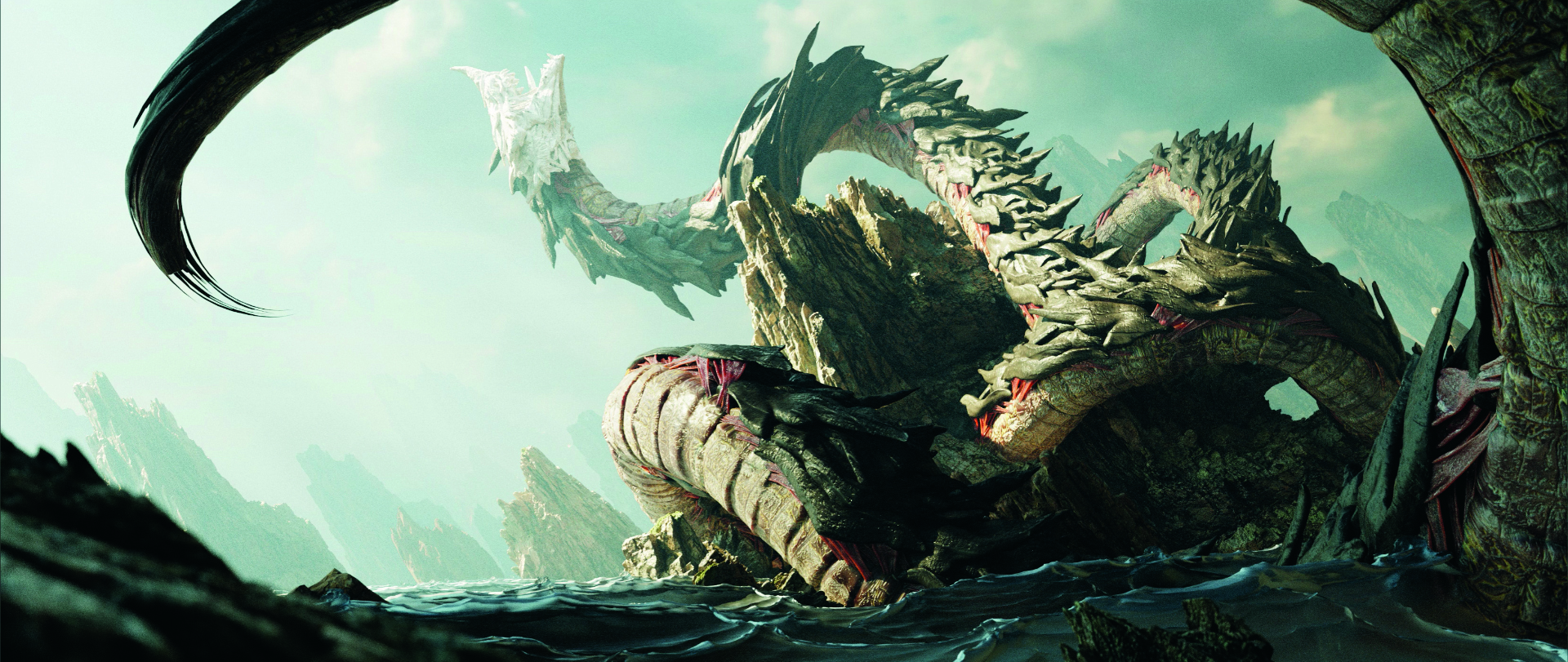
Once the 3D layout was solidified and rendered, Fus undertook the intricate process of integration. This final polish involved combining photographic elements and digital painting techniques to introduce environmental details such as ocean spray, weathered rock textures, and atmospheric haze.
One of the most complex hurdles in this phase was rendering the serpent’s head calcification—communicating the transitional state between organic flesh and solid stone in a visually distinct manner. In a surprising final compositional adjustment, the entire scene was horizontally flipped to optimize the visual weight and direct the viewer’s eye more effectively across the frame.
Industry Context and Technical Implications
The methodologies employed in the production of God of Bones highlight broader shifts in contemporary independent filmmaking and digital art creation. As accessible 3D modeling software and rendering engines grow increasingly sophisticated, independent productions are achieving visual fidelity that once required the massive budgets of major Hollywood studios.
The collaboration between specialized concept artists like Fus, directors like Coulthard, and dedicated asset studios like Shoot First exemplifies the modern distributed pipeline. By leveraging remote workflows and specialized expertise—ranging from character design to environment blocking—creators can iterate on complex visual effects shots with unprecedented speed. Furthermore, the reliance on tools like Blender underscores the democratization of 3D pipelines, enabling artists to conceptualize and execute massive macro-scale environments without prohibitive financial overhead.
Broader Impact on the Digital Art Community
Projects of this scale serve a dual purpose: they advance narrative cinema while simultaneously enriching the educational landscape of the global digital art community. Insights into professional pipelines—such as those shared by Fus regarding his work on God of Bones—offer invaluable guidance to emerging artists navigating the complexities of 3D rendering, composition, and digital paintovers.
As the lines between concept art, 3D layout, and final compositing continue to blur, artists must increasingly master multidisciplinary skill sets. The successful execution of the serpent vista demonstrates that while advanced software provides the technical means, it is the deliberate collaboration between director and artist that ultimately dictates the emotional resonance of the final frame. With God of Bones continuing its development, the striking imagery established by Fus and his collaborators sets a high benchmark for the short film’s aesthetic presentation, promising audiences a visually immersive cinematic experience upon its eventual release.