Nintendo Announces The Legend of Zelda: Ocarina of Time Remake for Switch 2 Launching November 2026

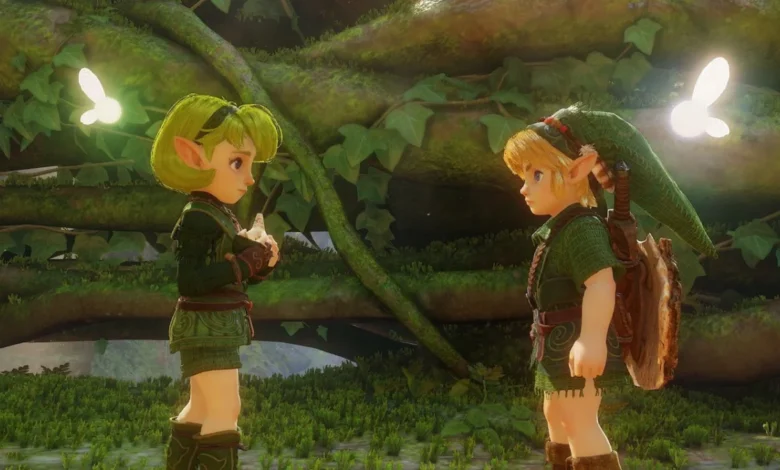
Nintendo has officially unveiled a comprehensive, ground-up remake of its critically acclaimed 1998 masterpiece, The Legend of Zelda: Ocarina of Time. Revealed during the company’s recent Zelda 40th Anniversary Direct broadcast, the modern reimagining is scheduled for an exclusive global release on November 5, 2026, for Nintendo’s successor hardware, widely referred to as the Switch 2. Diverging from traditional high-definition texture upgrades, the project represents a complete technological reconstruction designed to leverage modern hardware capabilities while preserving the foundational design that cemented the original title as a cultural touchstone in video game history.
The announcement has immediately re-energized the global gaming community, sparking widespread discussion regarding Nintendo’s design philosophy, hardware capabilities, and the commercial strategy surrounding its next-generation console. As pre-orders go live across international markets, the industry is closely evaluating what this ambitious release signifies for the preservation and modernization of classic interactive media.
Chronology and Historical Context
Originally released in November 1998 for the Nintendo 64, The Legend of Zelda: Ocarina of Time revolutionized three-dimensional game design. Helmed by director Shigeru Miyamoto and produced by Eiji Aonuma, the title introduced foundational gameplay mechanics that became industry standards, most notably the "Z-targeting" system, which allowed players to lock onto enemies in a 3D space. The game’s seamless integration of exploration, puzzle-solving, and a time-travel narrative earned it universal critical acclaim, frequently occupying the top position on numerous "Greatest Games of All Time" lists.
Over the decades, Nintendo has revisited the title multiple times. A direct port was released for the Nintendo GameCube in 2002 as a pre-order bonus for The Legend of Zelda: The Wind Waker, followed by digital releases on the Virtual Console for the Wii, Wii U, and Nintendo Switch Online. In 2011, Grezzo and Nintendo collaborated to release The Legend of Zelda: Ocarina of Time 3D for the Nintendo 3DS, which introduced stereoscopic 3D visuals, refined user interfaces, and updated character models.
However, the newly announced 2026 remake transcends these previous iterations. According to statements made by series producer Eiji Aonuma during the anniversary presentation, the project is structured as a "faithful interpretation using modern technologies." Rather than applying a simple coat of high-definition paint, Nintendo and its development partners have entirely rebuilt the game’s environments, character models, lighting engines, and acoustic landscapes to align with the advanced performance benchmarks of the upcoming Switch 2 architecture.
Technical Overhaul and Gameplay Innovations
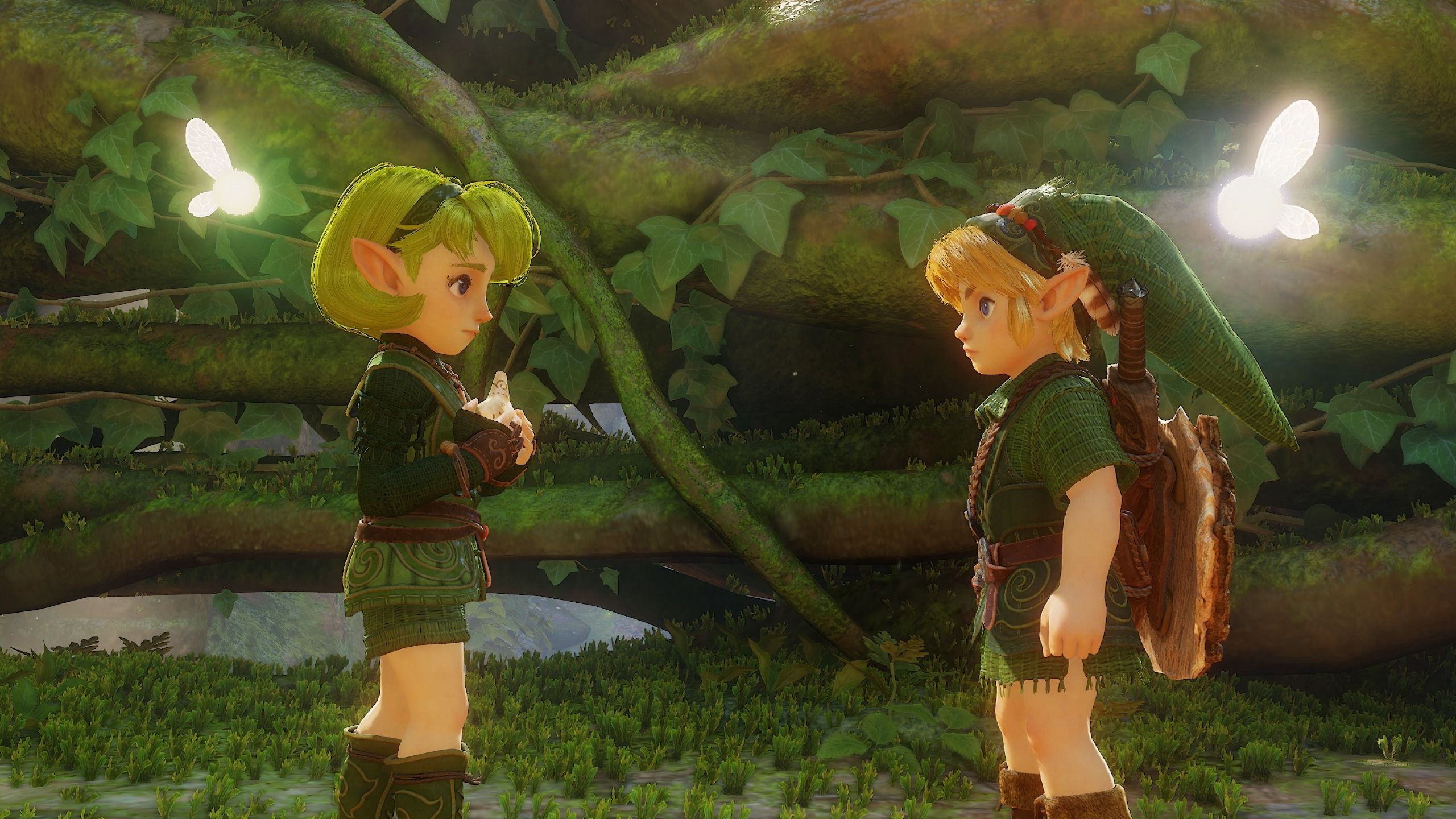
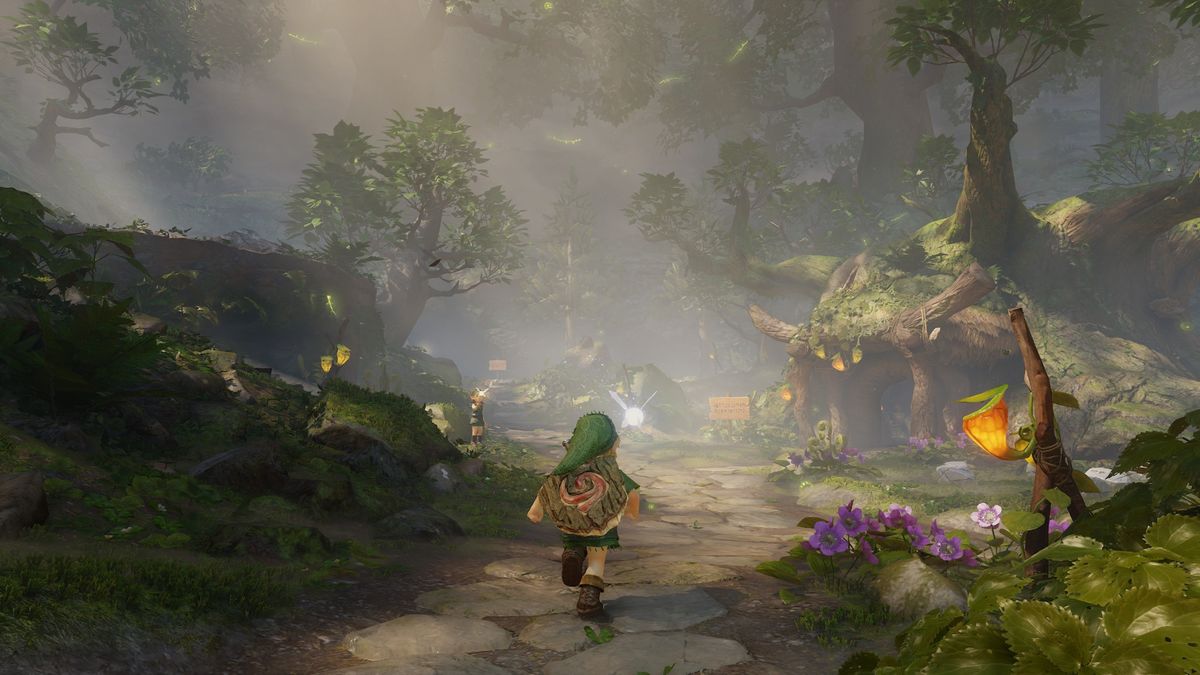
The visual presentation of the Ocarina of Time remake showcases a dramatic departure from the polygonal limitations of the Nintendo 64 era. Promotional stills and technical demonstrations reveal fully realized, dynamic environments featuring advanced rendering techniques, including real-time soft shadows, physically based rendering (PBR) for realistic material textures, and expansive draw distances that bring unprecedented depth to iconic locations such as Hyrule Field, Kokiri Forest, and Kakariko Village.
While the aesthetic upgrade has been overwhelmingly praised for its fidelity, it has also sparked nuanced debates within the enthusiast community regarding character design. Certain stylistic choices applied to Young Link and supporting figures have ignited online discussions about how modern graphical standards alter the nostalgic resonance of late-1990s character art.
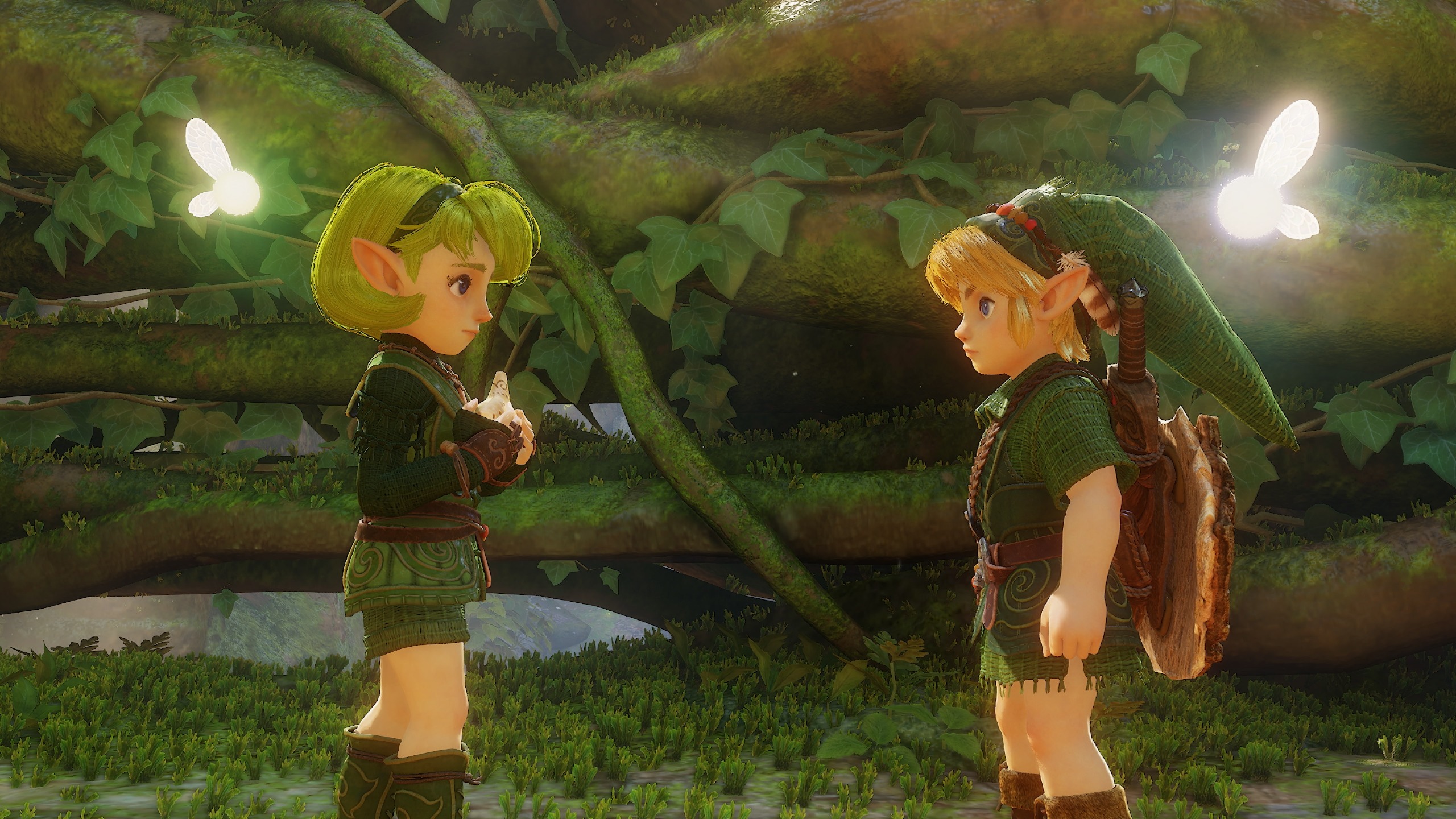
Beyond graphics, Nintendo has integrated novel interactive mechanics that utilize the hardware specifications of the Switch 2. Most notably, the title incorporates microphone-enabled gameplay features. Players can utilize the console’s built-in microphone to physically hum notes when utilizing the titular Ocarina in-game, translating real-world breath and pitch into musical commands required for puzzle progression and time manipulation. This addition bridges physical interaction with traditional input methods, showcasing an innovative use of the new console’s peripheral capabilities.
Pricing, Editions, and Distribution Logistics
The economic framework and distribution model for the release have also been detailed by Nintendo. The physical edition of The Legend of Zelda: Ocarina of Time for the Switch 2 will retail at a standard physical price point of $69.99 USD / £54.99 GBP, while the digital download version will be priced at $59.99 USD.
A notable point of relief for physical media collectors and retail advocates is Nintendo’s logistical commitment to cartridge capacity. The publisher has confirmed that the entire estimated 27-gigabyte software package will be housed directly on the physical Switch 2 game card. This decision bypasses the controversial practice of utilizing physical game boxes merely as vessels for digital download codes—a trend that has drawn criticism across the gaming industry in recent years. Furthermore, physical buyers purchasing through authorized retail channels at launch will receive a specialized foil-embossed cover sleeve while promotional supplies last.
Global Retail Strategies and Pre-Order Incentives
Retailers across North America and Europe have mobilized rapidly to capture early consumer demand. In the United States, major distributors such as Amazon and Walmart have initiated aggressive promotional discounting, temporarily lowering the physical pre-order price to $59.88 USD, undercutting the manufacturer’s suggested retail price (MSRP) ahead of the November launch.
In the United Kingdom, specialized entertainment stockists including Smyths Toys, Argos, and Currys have opened extensive pre-order inventories, with several outlets applying minor discounts to capture market share. Meanwhile, the official Nintendo UK online store has introduced an exclusive collector’s incentive that has driven significant consumer engagement: physical pre-orders placed directly through the official platform include a bespoke set of high-detail 3D replicas of the Spiritual Stones—Kokiri’s Emerald, Goron’s Ruby, and Zora’s Sapphire—fostering high demand among series purists and merchandise collectors.
Market Implications and Broader Industry Impact
The release of The Legend of Zelda: Ocarina of Time on November 5, 2026, serves a dual purpose within Nintendo’s overarching commercial strategy. Functioning as a high-profile exclusive for the Switch 2, the title provides a powerful nostalgic anchor during the console’s critical launch window, bridging the gap between aging legacy fans and younger demographics experiencing the narrative for the first time.
Industry analysts note that remakes of this magnitude represent a lucrative and increasingly sophisticated segment of the interactive entertainment economy. By taking a foundational intellectual property and reconstructing it through a contemporary lens, publishers can mitigate the financial risks associated with unproven intellectual properties while satisfying a guaranteed market demand for modernized classic content.
However, such projects also carry artistic responsibilities. Reinterpreting a game revered for defining three-dimensional navigation requires a delicate balance between modernization and preservation. As release day approaches, the primary metric of success for Nintendo will not merely be commercial performance, but whether the modernized Ocarina of Time successfully captures the emotional and atmospheric resonance that established its predecessor as an immortal classic nearly three decades ago.
Related posts: