The Social Dynamics of Elephants
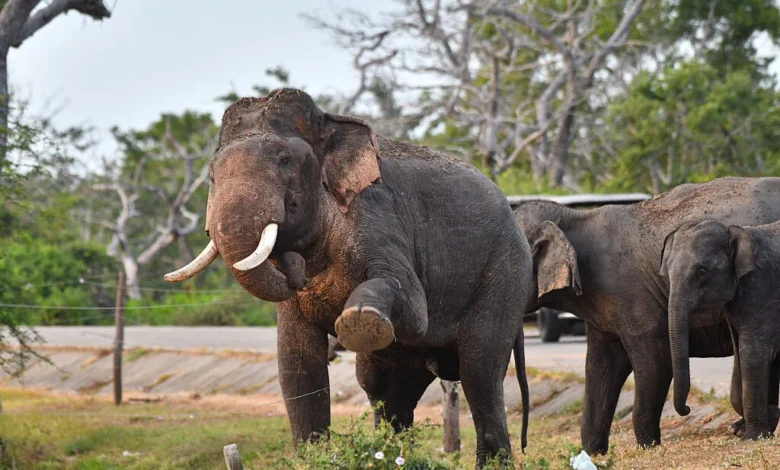
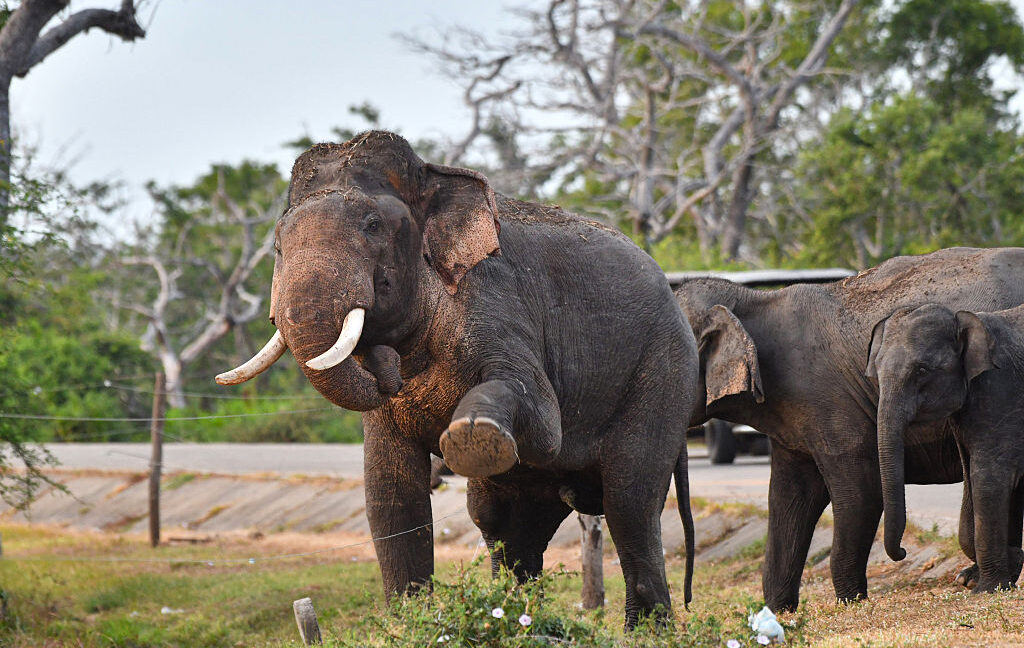
Asian elephants (Elephas maximus) operate within what biologists describe as a "fission-fusion" society. Unlike the rigid, matriarchal family structures often observed in their African savanna cousins, Asian elephants exhibit a more fluid, modular social existence. Individuals move between various subgroups, maintaining a complex web of associations that facilitate information sharing, cooperative care, and survival.
Anastasia Madsen, a behavioral ecologist at the University of California, San Diego, and her colleagues conducted a comprehensive 12-year longitudinal study of this population. By utilizing the unique ear patterns of 443 adult and subadult females as biological "fingerprints," the research team mapped the shifting social architecture of the park’s elephant population from 2007 to 2018. The findings were stark: once the mortality rate and emigration of individuals began to consistently outpace the arrival of new members, the social network did not merely contract; it fragmented into isolated, fragile clusters.
A Chronology of Ecological Transformation
The current crisis in Udawalawe is rooted in the park’s relatively short history. Established in the 1970s following the construction of a reservoir on one of Sri Lanka’s major river systems, the area was once a lush tropical deciduous forest. The subsequent removal of human settlements allowed the land to transition into a sprawling, savanna-like grassland. This artificial ecosystem provided an abundance of forage, which, for a period, turned the park into a sanctuary for large herds.
However, nature’s ecological succession did not pause. In the absence of natural fire regimes or human-led land clearing, invasive species such as lantana (Lantana camara) began to encroach upon the open grasslands. By the early 2010s, these invasive thickets had created dense, impenetrable barriers that offered no nutritional value to the elephants. This loss of foraging habitat triggered a chain reaction: fewer elephants were attracted to the park from surrounding areas, and the existing population struggled to maintain the nutritional intake required for successful calf rearing.
Statistical Evidence of Social Decay
By 2012, the demographic balance in the park had tipped. The data collected by the research team showed that by 2018, nearly 69 percent of the female elephants identified at the start of the study had disappeared. While individual loss is a natural occurrence, the lack of new recruitment meant the network began to lose its "glue"—those key individuals who held disparate subgroups together.
Madsen’s analysis of the network’s integrity revealed that the "resident" population—the 59 elephants consistently observed throughout the study—underwent a significant behavioral shift. As the density of the population thinned, these core individuals altered their social interactions. Casual, "weak" ties—often described by researchers as the social glue that facilitates information transfer between different, non-related groups—were the first to vanish. This erosion of social connectivity is not merely a numbers game; it is a profound behavioral shift indicating that the elephants are prioritizing survival in a resource-scarce environment over the maintenance of their complex, broader social circles.
The Phenomenon of "Flickering"
In the realm of complex systems theory, the researchers observed a phenomenon known as "flickering." Much like a failing lightbulb that pulses before burning out, the social network metrics fluctuated wildly in the years leading up to the collapse. This flickering serves as a critical, albeit often ignored, early warning sign of systemic failure. The researchers argue that had these signals been detected and acted upon earlier, there might have been a window for management intervention. However, the requirement for long-term, high-resolution data remains a significant barrier for conservationists working in many protected regions globally.
Human-Wildlife Conflict and Habitat Fragmentation
The decline of the Udawalawe elephants is inextricably linked to the broader landscape of Sri Lanka. With the species having lost nearly two-thirds of its historical range, the park has become a confined island. Female Asian elephants, which lack tusks and are therefore less targeted by ivory poachers than their African counterparts, face a different set of lethal threats.
Crop raiding, while a natural search for food, frequently brings elephants into fatal contact with human populations. Instances of elephants being shot or suffering injuries from improvised explosive devices—often hidden in agricultural produce by farmers attempting to deter wild boars—have become tragically common. These incidents are a symptom of a larger, systemic issue: the failure to manage elephant habitats as interconnected landscapes rather than isolated "protected" pockets.

Shermin de Silva, a senior ecologist and the study’s senior author, emphasizes that the issue is not exclusively one of wildlife management but rather one of infrastructure and land-use planning. Irrigation canals, roads, and agricultural expansion create rigid barriers that prevent natural movement, further isolating populations and exacerbating the competition for dwindling resources.
Implications for Global Conservation
The study, published in Science, provides a sobering look at how environmental pressures can destroy the social intelligence of a species long before the population hits a point of total collapse. The "structural damage" to the elephant society, as described by the researchers, suggests that even if habitat quality were suddenly restored, the loss of social knowledge—such as the collective memory of where to find water or how to navigate seasonal shifts—may be irreversible.
Conservation efforts are now shifting focus toward landscape-level management. The research team is actively working with local farming communities surrounding the park to implement elephant-friendly agricultural practices, such as planting crops that are less attractive to foraging herds. These initiatives are essential, as the long-term survival of the species depends on the ability of humans and elephants to coexist in shared, often contested spaces.
The case of the Udawalawe elephants serves as a global cautionary tale. When ecological corridors are severed and the quality of habitat declines, the consequences extend far beyond the immediate survival of individuals. It strikes at the heart of their society, dissolving the connections that have allowed these intelligent creatures to thrive for millennia. Without a holistic approach that treats the landscape as a shared entity, the silent erosion of these social networks will continue, leaving behind only the ghosts of what were once thriving, complex communities. As the researchers noted, the ship is taking on water; the task now is to identify and repair the hull before the damage becomes, in every sense, permanent.