Intel Innovation New Ai Core Ultra Processors

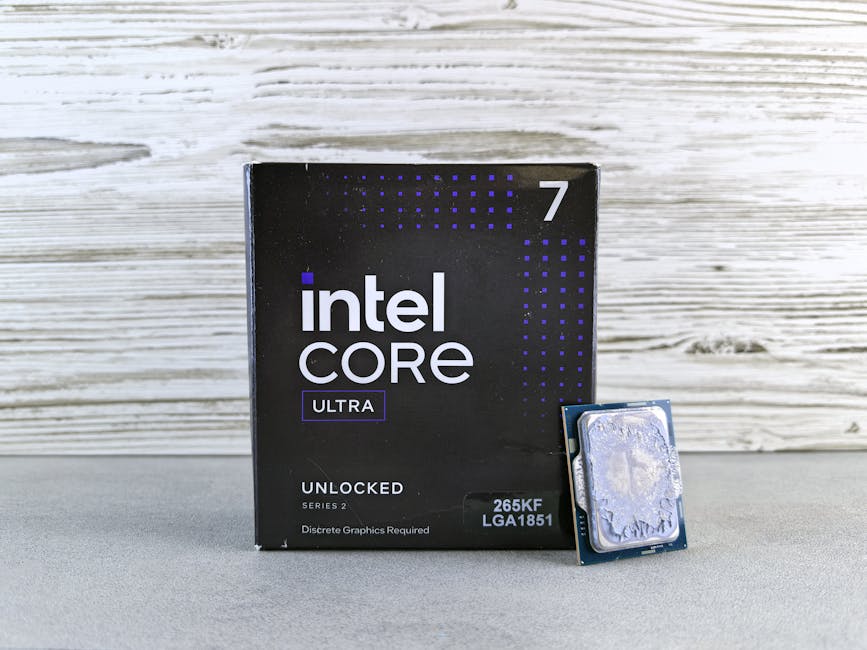
Intel Innovation: Unveiling the AI Core Ultra Processors – The Dawn of a New Era in AI-Accelerated Computing
Intel’s recent unveiling of its groundbreaking AI Core Ultra processors marks a pivotal moment in the evolution of personal computing and artificial intelligence integration. This new architecture, codenamed Meteor Lake for consumer devices, represents Intel’s ambitious leap into a future where AI is not an add-on, but an intrinsic component of everyday computing experiences. The AI Core Ultra processors are engineered to deliver unprecedented levels of AI acceleration directly on the device, empowering a wide range of applications from enhanced productivity and creative workflows to more immersive gaming and intelligent system management. This article delves into the core innovations of these processors, their architectural advancements, the benefits they unlock for users, and their strategic importance in Intel’s ongoing pursuit of AI leadership.
At the heart of the AI Core Ultra processors lies a fundamental shift in processor design: the integration of a dedicated Neural Processing Unit (NPU), branded by Intel as the "AI Boost" engine. This dedicated NPU is not merely an optimization of existing cores; it is a specialized hardware accelerator designed from the ground up to efficiently execute AI inference tasks. Traditional CPUs and even GPUs, while capable of AI computations, are not as power-efficient or as specialized for the specific types of matrix multiplications and parallel processing that define AI workloads. The AI Boost NPU addresses this by offering significantly improved performance per watt for AI operations, allowing for more complex AI models to run directly on the client device without relying on cloud connectivity. This "on-device AI" paradigm is a cornerstone of the AI Core Ultra architecture, promising enhanced privacy, reduced latency, and greater reliability for AI-powered features.
The architectural design of the AI Core Ultra processors is a testament to Intel’s "tile-based" or "chiplet" approach, a modular manufacturing strategy that allows for greater flexibility and optimization. Instead of a monolithic die, the processor is composed of multiple specialized "tiles" connected via an advanced interconnect. This includes a compute tile housing the P-cores (Performance-cores) and E-cores (Efficient-cores) for general-purpose processing, a graphics tile featuring Intel’s new Xe-LPG architecture for integrated graphics performance, and crucially, the AI Boost tile containing the dedicated NPU. This modularity allows Intel to tailor the configuration of these tiles to meet the demands of different market segments, from ultraportable laptops to high-performance workstations, while also enabling the use of different manufacturing processes for each tile, thereby optimizing cost and performance.
The integration of the Xe-LPG graphics architecture within the AI Core Ultra processors is another significant enhancement. This new generation of integrated graphics delivers a substantial uplift in performance compared to previous generations, making it capable of handling more demanding graphical workloads, including gaming and professional content creation. Furthermore, the Xe-LPG architecture is designed to work in tandem with the AI Boost NPU, allowing for a synergistic acceleration of AI-enhanced graphics features. This can manifest in applications like AI-powered upscaling, intelligent denoising, and real-time visual effects, offering a more fluid and visually rich experience for users. The combined power of the CPU, GPU, and NPU creates a holistic processing environment where AI can permeate and enhance various aspects of the user experience.
The benefits of the AI Core Ultra processors for end-users are multifaceted and transformative. Productivity applications are poised to see dramatic improvements. AI-powered features such as intelligent noise cancellation for video conferencing, real-time transcription and translation, automated summarization of documents and emails, and advanced writing assistance will become seamless and ubiquitous. This allows users to focus more on their core tasks and less on mundane administrative or computational burdens. For creative professionals, the AI Boost NPU can accelerate tasks like image and video editing, object recognition in photos, generative art creation, and intelligent asset management within creative suites. This not only speeds up workflows but also unlocks new creative possibilities that were previously computationally prohibitive on client devices.
In the realm of gaming, the AI Core Ultra processors promise a more immersive and responsive experience. Beyond the enhanced raw graphical power of the integrated GPU, AI can be leveraged for intelligent frame rate boosting, adaptive resolution scaling based on scene complexity, and even AI-driven character behavior in games. This can lead to smoother gameplay, higher visual fidelity, and a more dynamic interactive environment, all while maintaining power efficiency crucial for laptop gaming. The ability to perform these AI computations on-device also contributes to reduced input lag, a critical factor for competitive gaming.
Beyond specific application categories, the AI Core Ultra processors are designed to intelligently manage system resources and power consumption. The AI Boost NPU can learn user patterns and anticipate workload demands, dynamically allocating resources to optimize performance and battery life. This proactive approach to power management means that the system can intelligently adjust performance levels, dim displays, or even manage background processes more effectively, leading to extended battery life and a more responsive overall user experience without manual intervention. This intelligent system optimization is a key differentiator, moving computing from a reactive to a proactive state.
From a developer’s perspective, Intel is providing a robust software ecosystem and development tools to facilitate the adoption and utilization of the AI Core Ultra processors. The OpenVINO toolkit, Intel’s comprehensive suite for optimizing and deploying AI inference, plays a crucial role here. It enables developers to easily port and run their AI models across Intel’s hardware, including the new NPUs. This commitment to an open and accessible development environment is critical for fostering innovation and ensuring that the full potential of the AI Core Ultra processors is realized across a broad spectrum of software applications. Furthermore, Intel’s emphasis on industry standards and collaborations ensures that developers can build applications that are future-proof and compatible with a wide range of hardware.
The strategic importance of the AI Core Ultra processors for Intel cannot be overstated. In an era where AI is rapidly becoming the defining characteristic of technological advancement, Intel’s ability to integrate powerful AI acceleration directly into its mainstream processors positions it to reclaim and solidify its leadership in the PC market. The "AI PC" is no longer a niche concept but a rapidly emerging standard, and Intel is at the forefront of defining this new category. By democratizing on-device AI, Intel is enabling a new generation of intelligent devices that are more personal, more capable, and more efficient. This move directly challenges competitors and aims to redefine the user experience of personal computing.
The competitive landscape for AI-accelerated computing is intense, with significant investments from various tech giants. However, Intel’s AI Core Ultra processors differentiate themselves through their integrated approach, combining a high-performance CPU, advanced integrated graphics, and a dedicated, power-efficient NPU within a single, cohesive architecture. This "system-on-tile" design offers a distinct advantage in terms of power efficiency and cost-effectiveness compared to solutions that might rely on discrete AI accelerators or cloud-based processing for comparable tasks. The unified architecture also simplifies the development process for hardware manufacturers and software developers.
Looking ahead, the AI Core Ultra processors represent the foundational step in Intel’s long-term AI strategy. The company has outlined plans for continued innovation in this space, with future generations of processors expected to feature even more powerful NPUs, enhanced AI-specific instruction sets, and deeper integration of AI capabilities across its entire product portfolio, including server and data center solutions. The ability to scale AI performance from the edge to the cloud is a key tenet of Intel’s vision, and the AI Core Ultra processors are the first tangible manifestation of this ambition in the client computing space.
The impact of these processors will extend beyond individual device performance. As AI becomes more pervasive on client devices, it will drive new user expectations and create demand for more intelligent and responsive software. This, in turn, will spur further innovation in AI algorithms and applications, creating a virtuous cycle of advancement. Intel’s commitment to developing and popularizing the AI PC through its AI Core Ultra processors is thus not just about selling chips; it’s about shaping the future of computing and ushering in an era where artificial intelligence is an invisible, yet indispensable, partner in our digital lives. The promise of AI Core Ultra is a future where every interaction with a computer is smarter, more efficient, and more intuitive, thanks to the power of integrated AI acceleration.


