The landscape of generative artificial intelligence and large language model integration has reached a new threshold of efficiency with the official preview rollout of Tool Retrieval within the Gemini Interactions API. Developed by Google product managers and research scientists, this new framework addresses one of the most persistent bottlenecks in modern AI agent architecture: the systemic degradation of performance, increased latency, and inflated input token overhead that occurs when artificial intelligence models are forced to parse massive, ever-expanding libraries of executable functions on every single request. By allowing developers to maintain expansive tool catalogs on standby while dynamically loading parameter schemas exclusively when required, Tool Retrieval fundamentally shifts how complex AI agents manage operational scalability.
The Architectural Challenge of Scale in AI Agents
For years, developers building sophisticated autonomous agents—systems designed to execute multifaceted workflows across corporate software ecosystems, customer relationship management platforms, and cloud environments—have faced a compounding engineering hurdle. When an AI agent connects to dozens, hundreds, or even thousands of individual tools, application programming interface, and remote databases, the traditional protocol requires appending every single full parameter schema to the beginning of the prompt context window.
This monolithic approach introduces three critical friction points. First, it exponentially inflates input token counts, driving up operational costs significantly as enterprise applications scale to thousands of daily users. Second, it
introduces measurable latency overhead, as the model’s self-attention mechanism must process massive volumes of static metadata before generating a response. Finally, empirical evaluations consistently demonstrate that as the candidate list of tools grows disproportionately large, the model’s tool-selection accuracy degrades due to context pollution and semantic overlap among similar functions.
To resolve these structural limitations, the Gemini API engineering team devised a server-managed retrieval mechanism that decouples a tool’s high-level descriptive metadata from its granular, token-heavy parameter schemas.
Mechanics of Tool Retrieval: How Dynamic Schema Loading Operates
Implementing Tool Retrieval within an enterprise pipeline requires minimal structural changes to existing application codebases. Developers configure the system by introducing a specialized tool_search utility into their request payload while appending a defer_loading: true boolean flag to any function parameters they wish to temporarily withhold from the active context window.
Under this paradigm, the Gemini model maintains continuous visibility over the name and natural language description of every deferred tool, ensuring it retains comprehensive structural awareness of the broader system capabilities without consuming valuable token real estate for parameter definitions. When a user input triggers a scenario demanding a specific action—such as issuing a financial refund or querying a remote database—the model autonomously identifies the appropriate capability, invokes an internal search query by name, prompts the API to retrieve the full schema, and executes the function call within a singular, unified request cycle.
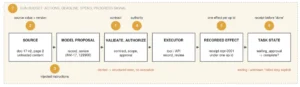
Inspection of the underlying execution architecture reveals a transparent three-step lifecycle embedded directly within the response object. The interaction trace logs a tool_search_call containing the requested function identifiers, followed immediately by a tool_search_result delivering the exact parameter schema, culminating in the standard function_call state. This granular traceability empowers software engineers to debug tool naming conventions, description clarity, and selection logic with unprecedented precision.

Furthermore, this framework integrates seamlessly with modern caching strategies, including prefix caching. Because deferred schemas remain isolated from the initial prompt headers, and dynamically loaded schemas append cleanly toward the end of the conversation history, the foundational cached prefix remains static and preserved across successive conversational turns, protecting input optimization gains.
Client-Side Integration and Remote MCP Compatibility
Recognizing that many enterprise environments rely on proprietary security perimeters, internal registries, and decentralized permission filters, the Gemini API architecture accommodates both server-managed and client-side retrieval workflows.
For organizations maintaining custom-built tool registries or per-user access control lists, developers can declare the tool_search parameter with an explicit "execution": "client" configuration. This approach grants engineering teams total sovereignty over the lookup index. When the model emits a function call requesting an internal tool search, the host application executes the query against its private repository and feeds the matching JSON schemas back into the conversation via a standard function result payload. This client-driven model also unlocks dynamic, mid-conversation tool provisioning—allowing end-users to link third-party integrations or plugins on the fly without restarting the session.
Additionally, Tool Retrieval offers native compatibility with remote Model Context Protocol (MCP) servers. By applying the defer_loading: true attribute directly to an mcp_server declaration, developers can bridge vast, sprawling remote server architectures without manually cataloging every single endpoint or function up front.
Economic Implications and Strategic Industry Analysis
From an economic perspective, Google has structured Tool Retrieval to align directly with consumption-based scaling. The feature incurs no distinct, separate pricing tier; instead, usage is governed by standard input and output token rates associated with the underlying model. Activating the tool_search parameter introduces a minimal, fixed block of input tokens, while subsequently loaded schemas are billed at standard rates for the duration of the conversation.
Industry analysts observing the rollout note that for large-scale applications possessing extensive tool libraries, the net token reduction achieved by omitting unused schemas vastly outweighs the marginal overhead of the retrieval mechanism. This architectural shift addresses a major cost barrier for enterprise adoption of autonomous agents, particularly in sectors such as financial services, enterprise resource planning, and automated IT helpdesks where agents must interface with hundreds of disparate microservices.
Chronology and Availability
The launch of Tool Retrieval builds upon a sustained trajectory of optimization within Google’s developer ecosystem, following iterative enhancements to function calling fidelity and context window management throughout recent product cycles. The preview release is currently supported across Gemini 3.6 and subsequent generational iterations, including the complete lineup of Gemini 4 models accessible via the Google AI Studio and Vertex AI platforms through the Interactions API.
As enterprises increasingly transition from basic chat interfaces to autonomous, multi-tool agentic workflows, capabilities like Tool Retrieval represent a critical maturation phase in large language model infrastructure—bridging the gap between boundless capability and lean, cost-effective execution.