LimeWire Reinvents Itself as a Generative AI and NFT Publishing Platform, Empowering Creators with New Monetization Avenues

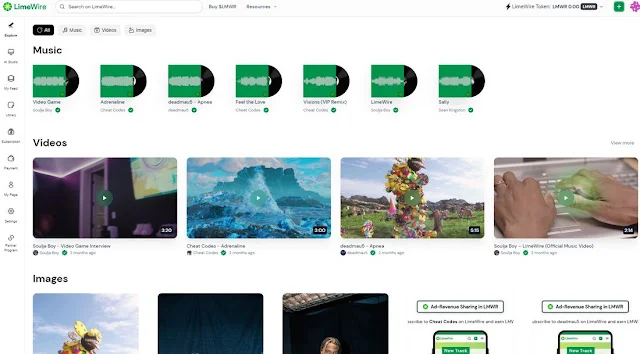
In a significant pivot marking one of the most unexpected re-emergences in digital history, LimeWire, a name once synonymous with peer-to-peer file-sharing, has undergone a radical transformation. Far from its controversial past, the platform has re-entered the digital landscape as a sophisticated generative Artificial Intelligence (AI) content publishing hub, positioning itself at the forefront of the burgeoning creator economy and the decentralized web. This strategic evolution aims to democratize access to advanced AI tools for content creation, offering innovative mechanisms for artists and creators to share, own, and monetize their digital works through Non-Fungible Tokens (NFTs) and direct ad revenue.
The Rebirth of a Brand: From P2P to AI Pioneer
The story of LimeWire is one of dramatic reinvention. For many, the name evokes memories of the early 2000s, an era when it served as a ubiquitous platform for peer-to-peer (P2P) file sharing. At its peak, LimeWire facilitated the exchange of millions of digital files, primarily music, films, and software, often without the consent of copyright holders. This led to protracted and high-profile legal battles with the recording industry, culminating in a permanent injunction in 2010 that effectively shut down the original service. The saga of LimeWire became a landmark case illustrating the profound challenges of digital copyright in the nascent internet age and the difficulty of enforcing intellectual property rights in a decentralized environment.
More than a decade later, the brand has been resurrected by a new ownership group, not as a defiant return to its P2P roots, but as a forward-looking entity embracing cutting-edge technologies. The strategic decision to pivot towards generative AI and blockchain technology represents a calculated move to capitalize on two of the most disruptive forces reshaping the digital content landscape. This new iteration of LimeWire seeks to learn from its predecessor’s mistakes by championing creator ownership and legitimate monetization, rather than circumventing it. This radical shift signifies an attempt to leverage a globally recognized, albeit infamous, brand name to establish credibility and attract a new generation of digital artists and enthusiasts. The re-launch was not merely a rebranding exercise but a fundamental re-architecture of its core mission, aligning with the ethos of Web3 where creators have greater control over their intellectual property and direct engagement with their audience.
LimeWire Studio: A Hub for AI-Powered Creativity
At the heart of the new LimeWire is its AI Studio, a versatile platform currently focused on AI image generation, with ambitious plans for future expansion into AI music and video creation. The studio provides creators with a robust toolkit, integrating advanced generative AI models such as Stable Diffusion 2.1, Stable Diffusion XL, and DALL-E 2. This diverse selection allows users to tap into a spectrum of artistic capabilities, from generating photorealistic images to crafting abstract digital art, with unparalleled control and flexibility.
The user experience within LimeWire Studio is designed to be accessible to both novice and experienced creators. Users can initiate the creative process with simple text prompts, describing their desired output in natural language, or delve into more intricate instructions for highly customized results. A key differentiating factor is the platform’s seamless integration of various AI models and an extensive library of design styles. Creators can effortlessly switch between cinematic, digital art, pixel art, anime, analog film, and numerous other aesthetic presets, each imparting a distinct visual identity to the generated art. This level of stylistic versatility empowers artists to explore broad creative horizons and produce unique, engaging visuals that resonate with diverse audiences.
Beyond basic generation, LimeWire Studio incorporates advanced features like samplers, which enable users to fine-tune the quality, detail, and stylistic nuances of their creations. Comprehensive customization options and intuitive prompt guidance further enhance the creative workflow, making the complex world of generative AI more approachable. The platform’s commitment to innovation is underscored by its active development of a proprietary AI model, signaling a dedication to continuously enhancing its image generation capabilities and pushing the boundaries of AI-driven art. This strategic investment positions LimeWire to offer unique functionalities and maintain a competitive edge in a rapidly evolving market.
Empowering the Creator Economy: Monetization and Ownership
LimeWire’s redefined mission extends beyond mere content creation; it seeks to fundamentally empower the creator economy by offering novel monetization and ownership paradigms. Central to this strategy is a robust system for direct revenue generation and the integration of Non-Fungible Tokens (NFTs).
Upon publishing content on the platform, creators are presented with the option to automatically mint their work as an NFT. This process utilizes either the Polygon or Algorand blockchain, chosen for their scalability, lower transaction costs, and energy efficiency compared to older blockchain networks. By minting content as an NFT, LimeWire imbues each creation with a unique digital signature, securing its authenticity, verifiable ownership, and provenance within a decentralized ledger. This transformative step allows digital artists to claim true ownership over their creations in a way that traditional digital file formats often cannot.
Creators retain significant control over the accessibility of their NFT creations. They can opt for a public release, making their content discoverable and tradable by anyone within the LimeWire community and beyond, fostering a vibrant ecosystem for engagement. Alternatively, LimeWire acknowledges the value of exclusivity, allowing creators to share posts solely with their premium subscribers, thereby cultivating an intimate and personalized experience for dedicated fans. This flexibility in distribution strategies enables artists to tailor their approach to audience engagement and maximize revenue potential.
A cornerstone of LimeWire’s monetization model is its generous ad revenue sharing program. Creators receive a substantial 70% of all ad revenue generated from other users viewing their images, music, and videos on the platform. This direct revenue stream provides a tangible incentive for creators to produce high-quality, engaging content, offering a sustainable income source beyond traditional royalty structures or one-time sales. Furthermore, LimeWire has implemented a unique royalty system: creators earn a 2.5% royalty each time their NFT content is traded on secondary markets. This ensures ongoing passive income and reinforces the value of their original intellectual property within the digital asset ecosystem.
All earnings on LimeWire are disbursed in LMWR tokens, the platform’s native cryptocurrency. Paid monthly, these tokens can then be traded on major crypto exchange platforms such as Kraken, ByBit, and UniSwap, providing creators with liquidity and the flexibility to convert their earnings into fiat currency or other digital assets. Additionally, LMWR tokens serve a practical utility within the LimeWire ecosystem, allowing users to pay for prompts and access advanced features within the generative AI tools, creating a closed-loop economy that rewards participation and creation. This comprehensive monetization framework positions LimeWire as a compelling platform for designers, musicians, and artists seeking direct financial benefits from their digital creations.
High-Profile Endorsements and Market Positioning
The credibility of LimeWire’s ambitious pivot has been significantly bolstered by early endorsements from established artists and musicians. Industry stalwarts such as Deadmau5, Soulja Boy, and Sean Kingston have embraced the platform, utilizing it to publish their content in the form of NFT music, videos, and images. These high-profile collaborations lend considerable weight to LimeWire’s vision, demonstrating its appeal beyond the niche crypto community and signaling its potential to attract mainstream creative talent. For these artists, LimeWire offers a direct conduit to engage with fans, experiment with new digital formats, and explore innovative revenue streams that bypass traditional intermediaries.
From LimeWire’s leadership perspective, the platform is envisioned as a democratizing force in the creative landscape. A representative statement, inferring from the platform’s features, would likely emphasize the commitment to "empowering creators by placing ownership and monetization directly into their hands, leveraging the transformative power of AI and blockchain." They would likely highlight how LimeWire aims to "remove traditional barriers to entry, enabling anyone with a creative vision to publish, share, and earn from their work, fostering a vibrant and equitable creator economy." This stance directly addresses the historical challenges faced by artists in securing fair compensation and control over their digital output.
In the competitive landscape of generative AI tools and creator platforms, LimeWire carves out a unique niche. While platforms like Midjourney, DALL-E, and Artbreeder offer powerful AI creation capabilities, they generally lack integrated NFT minting, robust ad revenue sharing, and a native token economy. Similarly, existing NFT marketplaces like OpenSea or Rarible facilitate trading but don’t provide in-house generative AI tools. LimeWire’s strength lies in its comprehensive, end-to-end solution: from AI-powered creation to secure ownership via NFTs, coupled with direct monetization through ad revenue and royalties, all within a single ecosystem. This integrated approach positions it as a formidable contender for creators looking for a holistic platform that supports their entire creative and financial journey in the Web3 era.
Accessibility and Pricing Models
LimeWire is committed to accessibility, offering a tiered pricing structure that caters to a broad spectrum of creators, from hobbyists to professional artists. The platform provides a free tier, allowing anyone to sign up and begin experimenting with its AI tools without an initial financial commitment. Free users receive 10 credits per month, enabling them to generate up to 20 AI images daily. This tier also includes a 50% share of ad revenue generated from their content, providing a tangible incentive even for casual users. This freemium model serves as a crucial entry point, lowering the barrier to adoption for individuals curious about generative AI and NFT creation.
For creators seeking more extensive capabilities and enhanced benefits, LimeWire offers several premium subscription plans:
- Basic Plan ($9.99/month): Provides 1,000 credits monthly, allowing for up to 2,000 image generations. Subscribers also gain early access to new AI models and maintain a 50% ad revenue share.
- Pro Plan ($29/month): Escalates the offering to 3,750 credits per month, supporting up to 7,500 image generations. This tier includes early access to new AI models and an increased ad revenue share of 60%.
- Advanced Plan ($49/month): Designed for more prolific creators, this plan offers 5,000 credits monthly, enabling up to 10,000 image generations. It also provides early access to new AI models and a significant 70% ad revenue share.
- Ultimate Plan ($99/month): The top-tier offering, delivering 11,250 credits per month for up to 22,500 image generations. Like the Advanced Plan, it includes early access to new AI models and a 70% ad revenue share.
All premium plans come with a suite of additional benefits designed to enhance the creator experience. These include a Pro profile badge, signaling enhanced status within the community; full creation history access; faster image generation speeds; and an ad-free experience while using the platform. These benefits collectively provide a compelling value proposition for creators who are serious about leveraging AI for their artistic endeavors and maximizing their potential earnings. The tiered approach ensures that creators can scale their usage and benefits according to their specific needs and creative output.
Challenges and the Path Forward
Despite its innovative approach and promising features, LimeWire’s journey into the generative AI and blockchain space is not without its challenges. The inherent volatility of the cryptocurrency and NFT markets presents a significant risk, as the value of LMWR tokens and creator-minted NFTs can fluctuate dramatically, impacting creators’ earnings and investment confidence. The broader NFT market, while having seen explosive growth, has also experienced periods of significant decline, raising questions about long-term sustainability and mainstream adoption.
Another critical area is the evolving legal and ethical landscape surrounding AI-generated content. Questions of copyright ownership for AI-created works, potential for algorithmic bias, and the implications for human artists are still being debated and legislated globally. LimeWire, as a platform facilitating such creation, will need to navigate these complex issues carefully, potentially through robust terms of service, content moderation, and clear guidelines for intellectual property.
Competition in both the generative AI and creator platform sectors is intense. Established AI tools continue to innovate, and traditional social media platforms are exploring their own Web3 integrations. LimeWire’s ability to differentiate itself and attract a critical mass of users will depend on continuous innovation, superior user experience, and effective community building. Furthermore, the lingering legacy of the original LimeWire, despite the complete transformation, could still pose brand perception challenges for some segments of the public.
LimeWire’s strategic response to these challenges appears to be centered on relentless innovation and expanding its utility. The commitment to launching AI music and video generation tools, alongside the development of its proprietary AI model, indicates a clear path towards broadening its appeal and enhancing its core offerings. By focusing on a holistic ecosystem that integrates creation, ownership, and monetization, LimeWire aims to build a sticky platform that provides sustained value to its users. Its success will likely hinge on its ability to foster a vibrant, engaged community and effectively communicate its value proposition in a crowded digital space, while also adapting swiftly to technological advancements and regulatory shifts.
Broader Implications for Digital Creation and Ownership
LimeWire’s re-emergence and strategic pivot hold significant broader implications for the future of digital creation, ownership, and the evolving creator economy. By seamlessly integrating generative AI with blockchain technology and a direct monetization model, LimeWire is contributing to a paradigm shift where digital artists can exert unprecedented control over their work and directly benefit from their creativity.
This model challenges traditional intermediaries in the creative industries, offering a more direct and potentially equitable relationship between creators and their audience. The automatic minting of content as NFTs on scalable blockchains like Polygon and Algorand democratizes access to digital ownership, making it feasible for a wider range of artists, not just those with significant technical or financial resources. This could lead to a proliferation of unique digital assets and foster new forms of artistic expression.
The fusion of AI and blockchain on platforms like LimeWire also pushes the boundaries of intellectual property in the digital age. As AI tools become more sophisticated, the distinction between human and machine creativity blurs, prompting new discussions about authorship, copyright, and value in the digital realm. LimeWire’s royalty system for secondary sales of NFTs represents an important step towards ensuring that creators can benefit from the long-term value appreciation of their work, a concept often elusive in traditional digital distribution.
Ultimately, LimeWire’s ambitious venture signifies a tangible step towards a decentralized, creator-centric internet. It highlights the potential for technology to not only facilitate creation but also to reshape economic models around digital content, providing artists with greater autonomy and financial independence. As the platform continues to evolve, particularly with the anticipated introduction of AI music and video generation, it stands poised to play a crucial role in defining the next era of digital art and the creator economy, encouraging endless artistic exploration and innovative ways for creators to connect with their global audience.