Mastering Python Context Managers Beyond File Handling for Robust Software Engineering

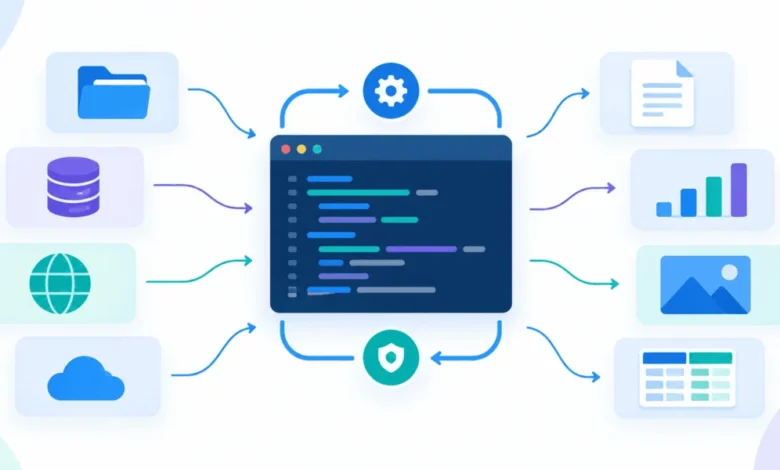
The Python with statement is frequently introduced to developers as a convenient shorthand for file management, yet this pedagogical approach often obscures its true utility as a robust mechanism for resource lifecycle control. In production-grade software engineering—particularly within the high-stakes environments of machine learning pipelines and data processing—the with statement serves as a formal boundary. It guarantees that critical cleanup tasks are executed regardless of whether a code block completes successfully or terminates due to a runtime exception. When developers rely on manual cleanup routines positioned at the end of scripts, they expose their systems to significant risks, including memory leaks, stale environment configurations, and orphaned temporary files.
The Problem of Brittle Resource Management
In complex evaluation scripts, developers often initialize a variety of temporary states. A typical machine learning workflow might involve creating a scratch directory for data extraction, modifying global environment variables to point toward high-performance caching disks, suppressing verbose logging levels to maintain console clarity, and initializing high-resolution timers. When these operations are executed linearly, the corresponding "undo" operations—deleting the directory, resetting environment variables, and restoring log levels—are placed at the end of the file.
This pattern is fundamentally flawed. If an unexpected event, such as a malformed data record or a network interruption, triggers an exception during the evaluation phase, the script halts immediately. The cleanup code, positioned at the bottom of the script, is bypassed entirely. This results in a "dirty" state where subsequent processes inherit incorrect cache paths, muted logs, and gigabytes of junk data. Over time, these residues accumulate, leading to "heisenbugs"—intermittent, hard-to-reproduce errors that plague production environments.
The Mechanics of the Context Protocol
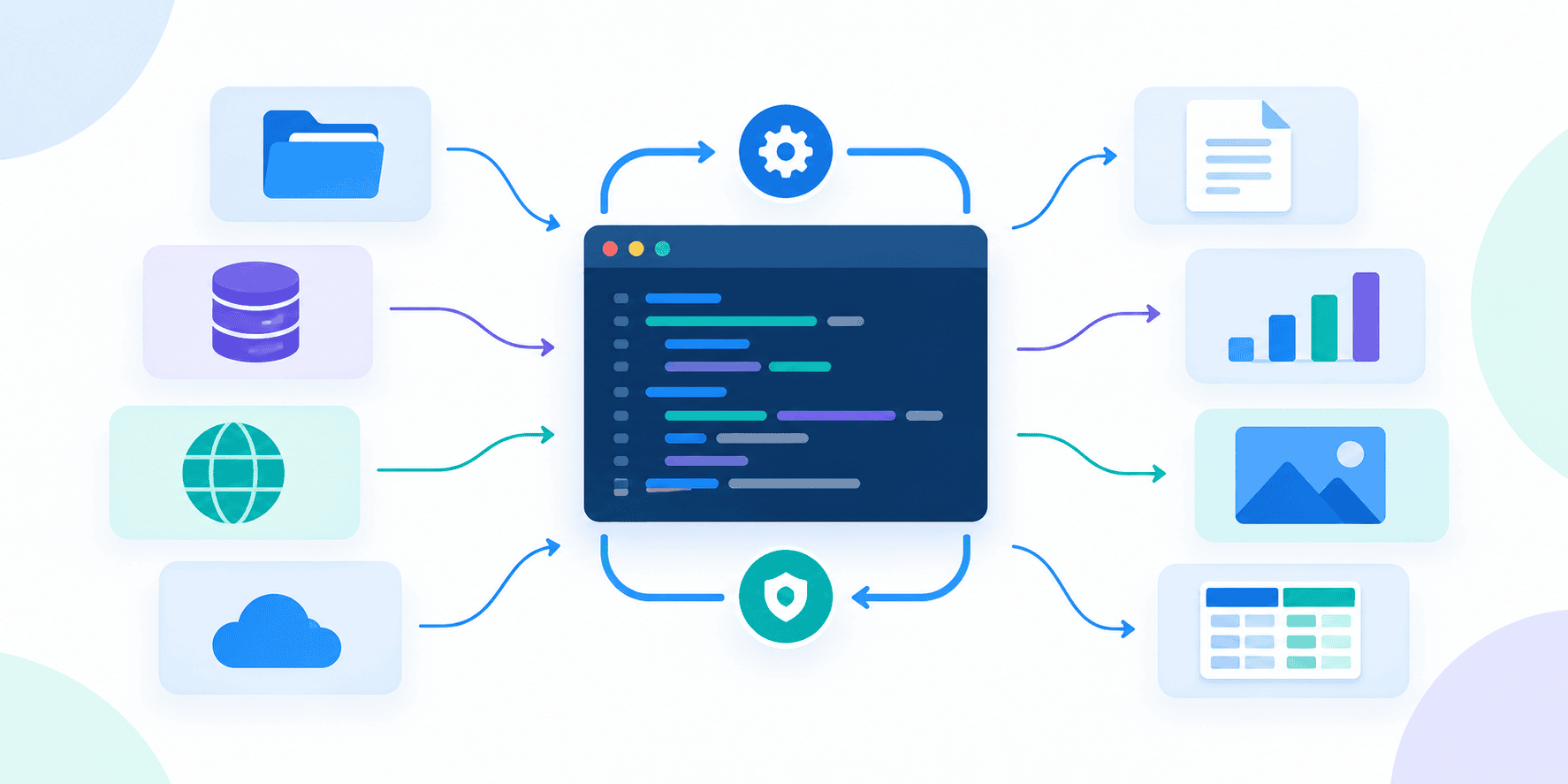
The architectural strength of the with statement lies in the Python context management protocol, which dictates the behavior of the enter() and exit() methods. When a script initiates a with block, Python executes the enter() method of the context manager, binding its return value to the optional as clause. The subsequent code block executes within this established scope.
The transition to the exit() method is the critical juncture. This method is invoked regardless of the block’s outcome. Whether the code finishes naturally, triggers a return statement, or raises an exception, the exit() method remains guaranteed to run. It receives three arguments: the exception type, the exception value, and the traceback. If no exception occurred, all three are None. The developer can then instruct the manager to suppress the exception—by returning a true value—or allow it to propagate by returning False. In professional library development, the latter is generally preferred to maintain visibility into error states.
Implementation Strategies for Scalable Systems
To move beyond basic file handling, developers must adopt specific patterns based on the requirements of the resource being managed.
Statefulness and Class-Based Managers
When a resource requires state tracking—such as a performance timer—a class-based approach is optimal. By defining init, enter, and exit, developers can create objects that persist metadata across the lifecycle of a block. For example, a Timer class can capture a start timestamp in enter and calculate the total duration in exit, storing the result in an instance variable that remains accessible even after the block has closed. This provides a clean interface for performance monitoring without cluttering the main logic.
The @contextmanager Decorator
For simpler workflows involving a single setup and teardown phase, the @contextmanager decorator from the contextlib module is the industry standard. It transforms a generator function into a context manager, utilizing the yield keyword to mark the entry point for the managed block. By wrapping the teardown code in a finally block, developers ensure that cleanup is absolute. This is particularly effective for transient state changes, such as temporarily altering logging verbosity or toggling feature flags.
Automated Cleanup with TemporaryDirectory
The Python standard library provides specialized managers that handle common pitfalls. The tempfile.TemporaryDirectory class is a prime example. By creating a unique directory at runtime and automatically removing it upon exit, it eliminates the possibility of persistent, unmanaged artifacts. Recent updates, such as the delete=False parameter introduced in Python 3.12, provide flexibility for post-mortem analysis without abandoning the safety of the manager.
Handling Dynamic Resource Sets with ExitStack
In high-concurrency environments or batch processing jobs, the number of resources to manage—such as multiple file handles or socket connections—may not be known until execution time. Manual nesting of with statements is impractical and error-prone. The ExitStack class provides a programmatic solution to this challenge. It allows for the dynamic registration of multiple context managers and cleanup callbacks. When the ExitStack closes, it unwinds these resources in reverse order, ensuring that dependencies are respected. This pattern is essential for developers building complex pipelines where the volume of input shards fluctuates based on real-time data ingestion.
Mitigating Risks in Global State
Global state, including environment variables and current working directories, represents the most volatile category of system resources. Using patch.dict from the unittest.mock module is a sophisticated way to manage these changes. It creates a temporary, reversible overlay on dictionaries, ensuring that modifications to environment variables do not persist after the scope concludes.
However, developers must exercise caution: environment variables and working directories are process-wide settings. In threaded or asynchronous applications, changing these values within one context can inadvertently affect other concurrent operations. As a rule of thumb, global state should only be managed via context managers in single-threaded environments or where explicit synchronization mechanisms are in place.
The Broader Implications for Engineering Reliability
The transition toward context-managed resource lifecycles is a shift toward defensive programming. By localizing the scope of side effects, developers create codebases that are inherently more maintainable and easier to debug. When a resource’s lifetime is explicitly tied to a block, the logic becomes self-documenting; the developer reading the code can see exactly what is being acquired and how it will be released.
In production machine learning engineering, where system stability is as vital as model performance, the use of context managers minimizes the "debris" of development. It prevents the accumulation of stale cache files that consume expensive storage and avoids the misconfiguration of logging services that could hide critical system failures. By treating resources as temporary contracts rather than permanent fixtures, teams can significantly reduce the technical debt associated with long-running, automated processes.
Ultimately, the goal of adopting these patterns is to ensure that the code handles the "happy path" with the same level of integrity as the "error path." While the happy path is easy to write, the error path is what defines the reliability of a system when it encounters unexpected input or hardware limitations. Moving cleanup logic from the bottom of the file into the boundary of a context manager ensures that the system recovers gracefully, providing a foundation for consistent, repeatable, and robust software performance.