Radaris Domain Seizure Marks a Watershed Moment in the Battle Over Data Broker Accountability


The consumer data broker Radaris.com, long criticized for its aggressive refusal to honor requests to remove personal information, has seen its digital empire effectively dismantled following a landmark legal defeat. A New Jersey court has ordered the transfer of Radaris.com and over a dozen associated domains to the plaintiffs, Atlas Data Privacy Corp, in a move that signals a significant escalation in the enforcement of Daniel’s Law. This statute, designed to protect the privacy of law enforcement officials, judges, and government personnel, has become the primary weapon in a high-stakes legal crusade against the multi-billion dollar people-search industry.
The seizure follows a pattern of protracted legal evasion by the operators of Radaris, who have spent years employing complex corporate shell structures to shield themselves from accountability. The transfer of these domains marks the most tangible consequence to date for a firm that has consistently prioritized profit over the safety and privacy of the individuals featured in its vast databases.
A Chronology of Evasion and Litigation
The legal battle between Atlas Data Privacy Corp and the Radaris ecosystem represents the culmination of years of frustration regarding the unchecked dissemination of sensitive personal data. In February 2024, Atlas initiated litigation alleging that Radaris was in flagrant violation of Daniel’s Law, which mandates the removal of personal data upon request by protected classes and imposes fines of $1,000 per violation.
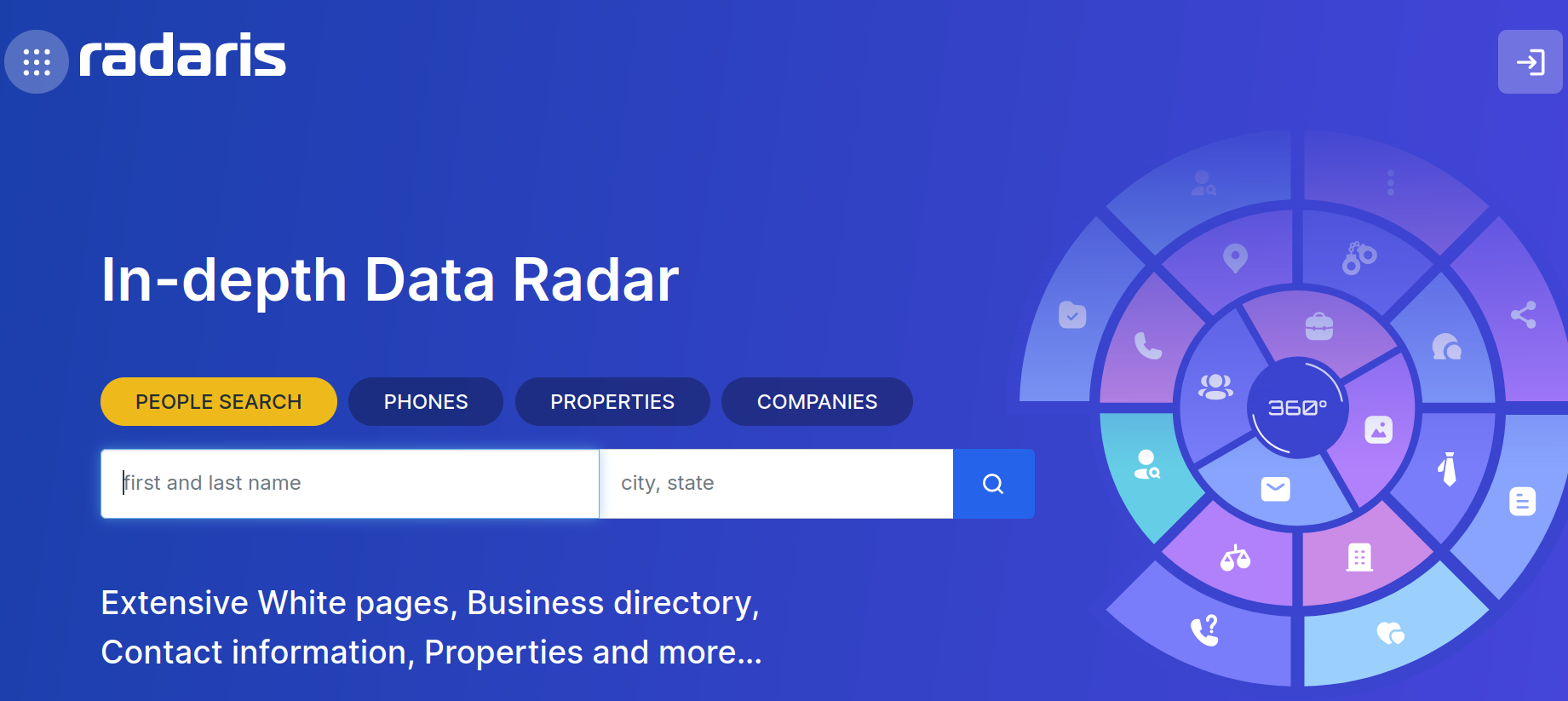
The defense strategy employed by Radaris has been characterized by legal experts as an exercise in "litigation by attrition." Following the initial filing, the company’s representatives engaged in a series of procedural delays, frequently challenging the court’s jurisdiction and the identity of the defendants. The defense team, led by attorney Val Gurvits of the Boston Law Group, initially attempted to deflect blame by claiming the true owners were individuals residing in Ukraine, a claim that stood in stark contrast to investigative findings identifying the co-founders as Igor and Dmitry Lubarsky, Massachusetts-based brothers.
The case gained further notoriety when it was revealed that Radaris had been operating under the guise of a fictitious CEO, "Gary Norden." This fabrication, which included the issuance of press releases intended to attract investors, was eventually admitted by legal counsel, further damaging the company’s credibility. By June 2025, Atlas re-filed its lawsuit, expanding the scope to include a broader array of shell companies linked to the Lubarsky brothers, including entities registered in jurisdictions known for their corporate opacity, such as the Marshall Islands, the British Virgin Islands, and the Seychelles.
The Shell Game: Corporate Obfuscation
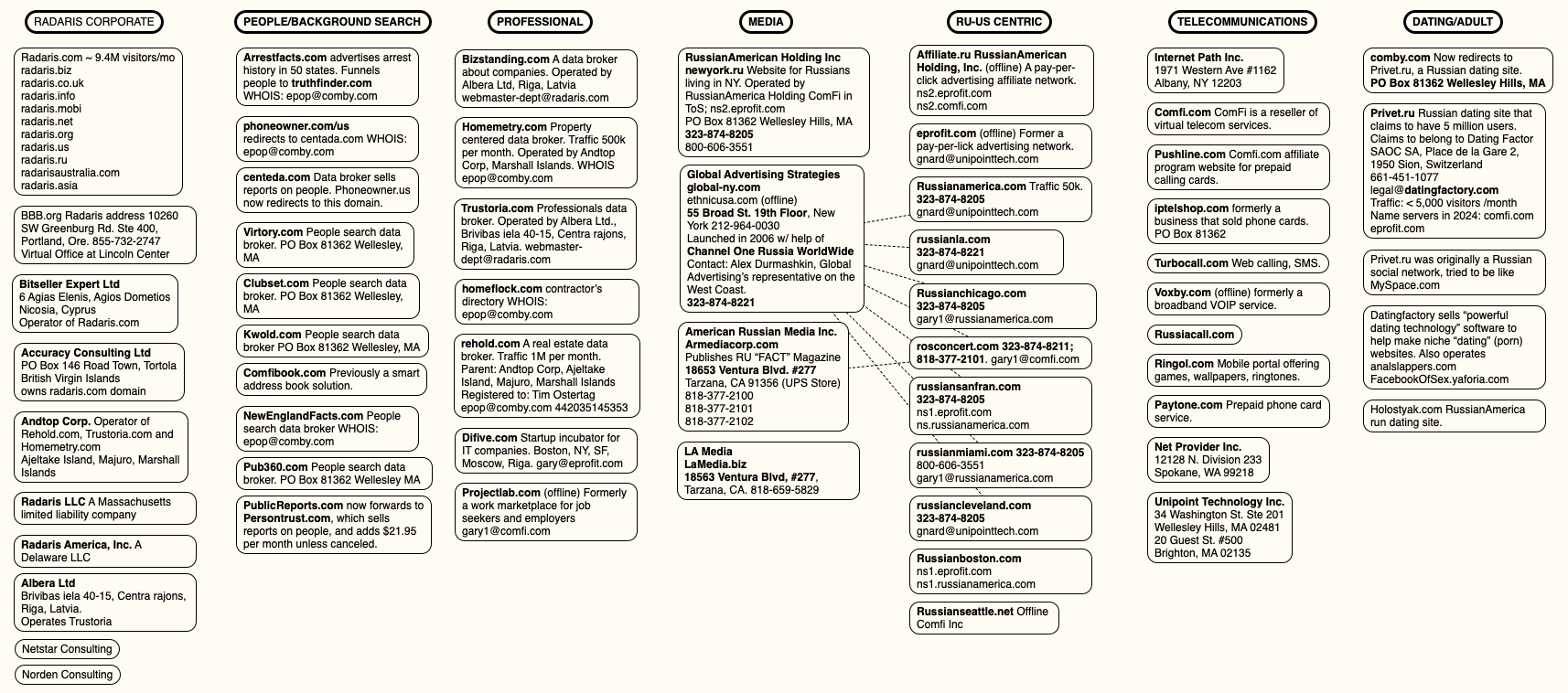
Evidence obtained through the discovery process has shed light on the sophisticated infrastructure supporting the Radaris network. According to Atlas, more than 10,000 documents and emails confirm that the seemingly disparate websites—including Radaris, Veripages, and others—are managed by a centralized group of individuals operating from a virtual office.
These documents reveal a interconnected web of legal entities, including Radaris America, Inc., Bitseller Expert Limited, and Andtop Company. Despite the frequent shifting of corporate responsibility among these entities, the financial and technical management remained concentrated. Financial records indicate that these platforms generate significant monthly revenue, with Radaris.com and Veripages.com each pulling in between $40,000 and $45,000 per month. A substantial portion of this revenue is bolstered by partnerships with marketing firms like the Lifetime Value Company and data-removal services like Onerep, creating a circular economy where companies profit both from the exposure of data and the subsequent demand for privacy services.

The "island-hopping" strategy—whereby the company would update its terms of service to shift management to a new, often non-existent offshore entity whenever a lawsuit neared a judgment—served as a primary defensive barrier. Matt Adkisson, CEO of Atlas, noted that the company’s commitment to this litigation was born out of the necessity to neutralize a clear and present danger to public officials, regardless of the difficulty in enforcing judgments against international shell entities.
The Constitutional Frontline: Daniel’s Law Under Siege
The victory for Atlas in the New Jersey court is not an isolated incident but part of a broader, volatile legal conflict. Daniel’s Law is currently being challenged on constitutional grounds, with roughly 150 data broker firms arguing that the law is overly broad and infringes upon First Amendment rights. The data broker industry has successfully moved a significant number of these cases to federal court, setting the stage for a potential showdown at the U.S. Supreme Court.
The legal landscape is further complicated by inconsistent rulings. While New Jersey continues to pursue enforcement, a federal district court in West Virginia ruled in August 2025 that a similar version of the state’s privacy law was facially unconstitutional. This divergence creates a fragmented regulatory environment that benefits large data brokers who can afford to litigate across multiple jurisdictions.
Broader Implications for Privacy and Digital Surveillance
The Radaris case serves as a microcosm of the systemic failures in U.S. consumer privacy protections. Privacy expert Justin Sherman, author of the forthcoming "The Middlemen," emphasizes that the lack of comprehensive federal legislation leaves the average citizen highly vulnerable. Current state laws, while well-intentioned, are riddled with exemptions for "public" or "government" records—a category that conveniently covers everything from property filings to criminal records.
This systemic reliance on "public" data has facilitated the rise of the surveillance economy. When companies can scrape, aggregate, and monetize government-held records without meaningful oversight, the concept of privacy becomes illusory. The recent breach at IDScan.net, which exposed the driver’s license data of 153 million Americans, underscores the catastrophic risks of this data-hungry ecosystem. In the absence of a federal standard, individual state laws like Daniel’s Law act as a temporary dike against a flood of data exposure, yet they remain vulnerable to high-powered lobbying from tech giants, AI developers, and data brokers who characterize these protections as threats to the digital economy.
Future Outlook and Regulatory Challenges
The transfer of the 14 Radaris domains to Atlas represents a rare victory for privacy advocates, but it is unlikely to end the broader war. Counsel for the Radaris entities, now represented by Victor Worms, has indicated plans to move to vacate the default judgment, arguing that the court lacked the authority to transfer the property of a "non-entity." This procedural argument highlights the ongoing difficulty in holding decentralized, offshore-based operations accountable within the confines of domestic law.
The reality, as articulated by Sherman, is that the current approach is reactive rather than proactive. The "eight million wake-up calls"—referring to the recurring data breaches and privacy scandals—have yet to force a federal legislative response that reconciles the First Amendment with the right to personal security. As long as the data brokerage industry can rely on a combination of legislative loopholes and legal attrition, the struggle to protect individual privacy will continue to play out in courtrooms rather than in the halls of Congress.
For the victims of data exposure, the Radaris domain seizure offers a moment of respite, but the precedent remains fragile. The next phase of this battle will likely determine whether Daniel’s Law can survive its constitutional challenges or if the data broker industry will continue to operate with a degree of impunity that is increasingly at odds with the digital realities of the 21st century.