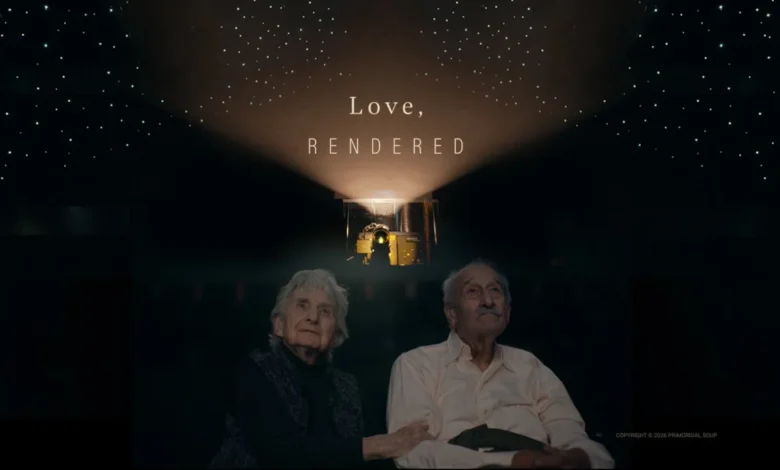
The intersection of artificial intelligence, documentary filmmaking, and human memory has yielded a poignant new cinematic exploration titled "Love, Rendered." Directed by Academy Award-nominated filmmaker Liz Garbus and produced in collaboration with Dan Cogan and Darren Aronofsky’s creative venture, Primordial Soup, alongside engineers at Google DeepMind, the short documentary examines the profound impact of cognitive decline. It focuses on Burt and Ethelle Shatz, a couple married for over seven decades, as they attempt to recapture a pivotal, unrecorded moment from their past: the day they first met at a student cooperative in Cleveland, Ohio.
Because that specific day existed only within their memories, the filmmakers and technologists turned to emerging machine learning models to help visualize the unphotographed past. The project serves as an unprecedented case study in how generative AI tools can be harnessed for reminiscence therapy, blending technical innovation with deeply personal human storytelling.
The Genesis of the Project: Memory, Loss, and Innovation
The conceptual roots of "Love, Rendered" lie in a shared fascination among the creative team regarding the resilience of human memory, particularly in the face of neurological degradation. Garbus previously explored altered states of consciousness while directing the documentary "Coma," during which she observed functional magnetic resonance imaging (fMRI) scans illuminating when minimally conscious patients were exposed to familiar voices or images of loved ones. Similarly, producer Darren Aronofsky encountered archival footage of a former ballerina suffering from Alzheimer’s disease who, upon hearing Tchaikovsky’s "Swan Lake," instinctively began executing the choreography from her wheelchair.

These observations aligned with the clinical practice of reminiscence therapy, which utilizes sensory inputs—such as music, tactile objects, and photographs—to stimulate neural pathways, spark dialogue, and reinforce emotional attachments. However, a significant clinical hurdle arises when a cherished memory lacks physical documentation or sensory prompts.
For Michael Chang, a Google DeepMind engineer who stepped in as the technical lead for the film, the project carried heavy personal resonance. Chang’s own grandfather had suffered a stroke and subsequent memory loss prior to his passing. During a visit in his thirties, Chang’s grandfather remained convinced that his grandson was still an undergraduate celebrating graduation. Seeking to explore whether contemporary digital preservation tools could bridge generational and cognitive gaps, Chang initially experimented with restoring old family photographs of his own parents meeting in their twenties, successfully animating them using advanced video generation models to observe them in their youth.
Technical Execution: Bridging Missing Details with Emotional Truth
Translating an unrecorded memory into motion required a rigorous, multi-tiered technical workflow designed to preserve emotional authenticity rather than merely fabricate visual fiction. Working in tandem with Primordial Soup, the Google DeepMind engineering team utilized a two-part methodology that combined image restoration with generative video synthesis.
Crucially, the reconstruction process was not driven solely by algorithms. Ethelle Shatz sat directly alongside the production and engineering teams throughout the development phase, acting as an active co-creator. When rendering the scene of their initial meeting in Cleveland, Ethelle provided granular, real-time corrections—adjusting details such as the precise curvature of a historical staircase or the specific shape of a shoe heel. This human-in-the-loop oversight ensured that the generated frames adhered to historical accuracy and personal reality.

According to technical demonstrations provided by Google DeepMind engineers like Jess Gallegos, the workflow heavily emphasized mapping micro-mannerisms—subtle physical gestures, posture shifts, and facial expressions unique to the subjects. By fusing these micro-mannerisms with historical contextual data, the team successfully intertwined Burt and Ethelle’s past and present realities, constructing a visual representation of a memory that the couple ultimately confirmed felt authentic to their lived experience.
The Role of Human Direction in AI-Driven Artistry
The collaboration highlights a central philosophy regarding the application of artificial intelligence in creative industries. As producer Darren Aronofsky remarked during production, technological instruments—whether a traditional paintbrush, a carpenter’s hammer, or a machine learning model—remain inert until directed by human hands.
In "Love, Rendered," machine learning functioned strictly as a medium rather than an autonomous creator. The technology acted as a bridge, allowing Burt and Ethelle to navigate backward through time and anchor a fading moment. The project exemplifies a growing trend in documentary cinema where advanced computational tools are deployed not to replace traditional filmmaking, but to extend the boundaries of archival non-fiction storytelling when physical archives fall short.
Broader Implications and Accessibility for Families
Beyond its festival screenings, the release of "Love, Rendered" has sparked broader discussions regarding the democratization of digital preservation tools for the general public. As cognitive decline and memory preservation affect millions of families globally, the techniques utilized in the documentary are increasingly accessible to everyday users seeking to safeguard their own family histories.
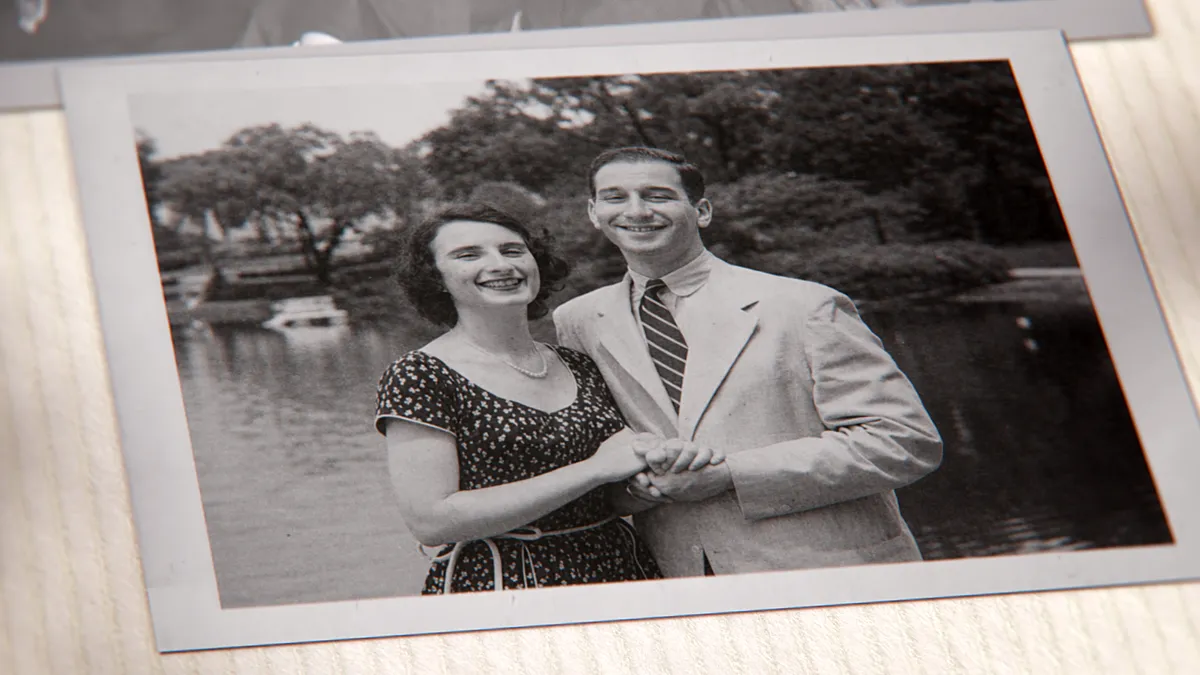
Technology platforms have begun integrating consumer-facing variants of these restoration and generation capabilities. For instance, individuals looking to restore degraded or damaged historical photographs of older relatives can utilize multimodal AI interfaces, such as the Gemini application. By uploading scanned archives and providing specific prompts—such as instructing the model to restore and colorize an image while strictly preserving the original appearance, facial expressions, and poses of the subjects—families can rescue deteriorating physical media from permanent degradation.
Ultimately, "Love, Rendered" demonstrates that while artificial intelligence is frequently analyzed through the lens of automation and efficiency, its application in human-centered storytelling can offer profound emotional utility. By transforming abstract memories into tangible frames, the project highlights how technology can serve as a companion to human empathy, helping individuals hold onto what matters most as time moves forward.
Related posts: