The Apple Vision Pro When Technology Cant Keep Up With Ambition But Offers A Glimpse Into The Future
Apple Vision Pro: When Technology Can’t Keep Up With Ambition, But Offers a Glimpse into the Future
The Apple Vision Pro, a device born from audacious ambition and a deep-seated belief in the transformative power of spatial computing, has arrived. It’s not a smartphone, not a tablet, and certainly not a traditional VR headset. Instead, it positions itself as a revolutionary new platform, a gateway to an immersive digital reality seamlessly interwoven with the physical world. Yet, upon initial release and extensive testing, a palpable chasm emerges between the device’s lofty aspirations and the current state of its underlying technology. While it undeniably showcases what might be possible, its immediate impact is tempered by limitations that highlight the immense engineering challenges Apple has yet to fully overcome. This is a product that looks, and often feels, like it’s a decade ahead of its time, a testament to Apple’s willingness to push boundaries, but also a stark reminder that even the most brilliant minds can’t always outpace the fundamental constraints of physics and current technological maturity.
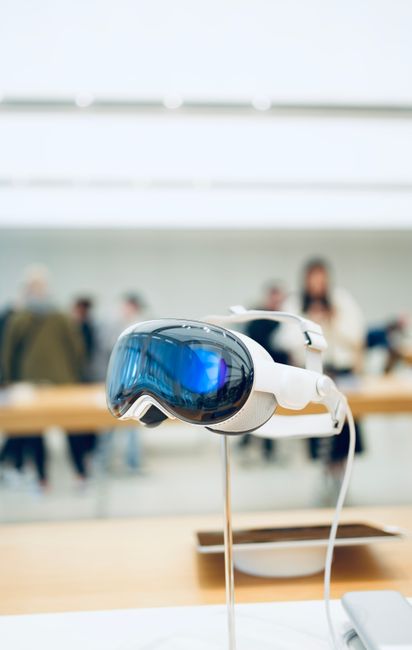
The Vision Pro’s headline feature, its unprecedented visual fidelity and immersive capabilities, is its greatest triumph and, paradoxically, its most significant stumbling block. Apple has engineered an astonishing display system, boasting micro-OLED panels with a resolution that far surpasses any consumer VR headset currently available. The clarity is breathtaking, sharp enough to read text with ease, rendering virtual environments with an almost photorealistic quality. The passthrough technology, which allows users to see their real-world surroundings through the device’s external cameras, is equally impressive. It’s a near-perfect overlay, with remarkably low latency and a natural color representation that makes the virtual elements feel truly integrated. However, this visual prowess comes at a substantial cost. The sheer volume of data processed to drive these high-resolution displays, combined with the complex array of sensors and cameras required for spatial tracking and eye-tracking, demands an immense amount of computational power. This power is housed in a separate, albeit compact, battery pack connected by a cable, a physical compromise that underscores the current limitations of miniaturization and battery technology. The weight of the headset itself, while intelligently distributed, is still a factor, leading to fatigue during extended use. Furthermore, the limited field of view, though wider than many VR headsets, can still create a “binocular” effect, breaking the illusion of complete immersion when moving your eyes rapidly. This is where ambition meets the immutable laws of silicon and power consumption.
The interaction model is another area where the Vision Pro attempts to redefine the paradigm, and largely succeeds in its innovative approach, but also reveals areas where refinement is desperately needed. Apple has eschewed traditional controllers, opting instead for a gesture- and eye-tracking based interface. Users control the device by looking at elements and pinching their fingers to select them, a system that is remarkably intuitive for basic navigation and app interaction. The hand tracking is precise, capturing subtle movements with impressive accuracy. However, this reliance on precise gestures and eye movements also exposes its vulnerabilities. In certain lighting conditions, or with rapid head movements, the tracking can falter, leading to frustrating misinterpretations of user input. For more complex tasks, such as gaming or detailed content creation, the absence of tactile feedback from physical controllers becomes a significant drawback. While Apple has hinted at future controller support, the initial vision is one of an entirely gestural and gaze-driven experience, which, for now, feels incomplete for certain applications. The eye-tracking, while remarkably sophisticated for menu navigation, can also feel a bit like a spotlight, drawing unintended attention to where the user is looking and potentially breaking the natural flow of interaction. This is a bold departure from established interfaces, and while it lays the groundwork for a new form of human-computer interaction, it’s not yet a universally polished experience.
The application ecosystem is, perhaps, the most immediate bottleneck hindering the Vision Pro’s full realization. Apple has clearly bet on developers embracing their new platform, but the initial rollout is characterized by a scarcity of truly "killer apps" that leverage the Vision Pro’s unique capabilities. Many of the available applications are either ports of existing iPad or Mac apps, which, while functional, don’t fully exploit the spatial computing potential, or are demonstrative experiences designed to showcase the technology rather than offer deep, engaging content. The immersive video experiences are stunning, offering a glimpse into the future of entertainment, but these are often short-form and limited in scope. The productivity applications, while promising in theory, are still in their nascent stages. The ability to have multiple virtual displays floating in your environment is a powerful concept, but the current software lacks the depth and polish to truly replace a multi-monitor desktop setup for demanding professional workflows. This is a classic chicken-and-egg scenario: developers are hesitant to invest heavily in a platform with a limited user base, and users are hesitant to purchase an expensive device with a limited selection of compelling applications. Apple’s ability to foster a vibrant developer community and encourage the creation of truly groundbreaking spatial computing experiences will be crucial to the Vision Pro’s long-term success.
The ambition behind Apple Vision Pro is undeniable. It’s a device that seeks to transcend the limitations of current computing paradigms and usher in a new era of spatial interaction. The engineering marvels it presents – the stunning displays, the sophisticated sensors, the intuitive (though sometimes finicky) interaction model – are a testament to Apple’s relentless pursuit of innovation. However, the current iteration of the Vision Pro also serves as a powerful illustration of what happens when that ambition outpaces the available technology. The power demands, the battery life limitations, the weight, and the nascent application ecosystem are all indicators that while the future has been glimpsed, it is not yet fully within reach. The Vision Pro is not a perfect product, nor is it an immediate mainstream device. Instead, it is a bold statement of intent, a meticulously crafted prototype of what personal computing could become. It’s a testament to Apple’s willingness to invest in the long game, to create a platform that, with time, refinement, and a thriving developer ecosystem, could indeed revolutionize how we interact with technology and the digital world. For now, however, it remains an extraordinary, expensive, and often awe-inspiring glimpse into that future, a future that the technology, for all its brilliance, is still striving to fully materialize. The true impact of the Vision Pro will not be measured in its initial sales figures, but in its capacity to inspire and guide the next decade of technological development, ironing out the kinks and transforming this ambitious vision into a tangible reality for a broader audience.

