Bridging the Digital Divide How AudioEye is Redefining Web Accessibility through AI and Human Expertise

In an era where the digital landscape serves as the primary gateway to commerce, education, and social interaction, the concept of web accessibility has shifted from a secondary consideration to a fundamental human right and a critical business imperative. AudioEye, a leading digital accessibility platform, has emerged as a central figure in this transformation, leveraging a sophisticated blend of artificial intelligence and human expertise to ensure that the 1.3 billion people globally living with disabilities can navigate the internet without barriers. As digital environments become increasingly complex, the company’s mission to make the web accessible by default rather than as an afterthought reflects a broader movement toward universal design and legal compliance in a globalized economy.
The Landscape of Digital Inclusion
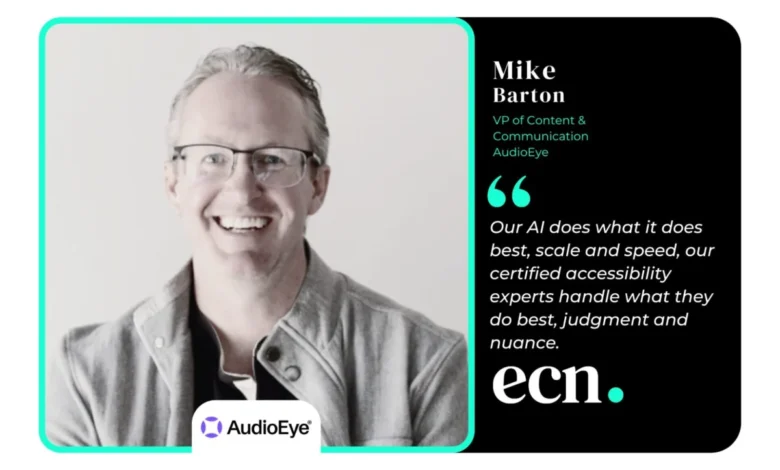
The scale of the digital accessibility challenge is vast. According to the World Health Organization, approximately 16% of the global population lives with some form of disability. For these individuals, an inaccessible website is not merely an inconvenience; it is a digital wall that prevents access to essential services, employment, and information. AudioEye, led by executives like Mike Barton, Vice President of Content Marketing and Communications, views this as a solvable engineering and social problem. The company currently serves over 127,000 organizations, ranging from small local businesses to massive global enterprises, aiming to protect digital experiences for a population that represents an estimated $18 trillion in global spending power.
Historically, digital accessibility was treated as a "niche concern" or a "checkbox" for compliance departments. However, the last decade has seen a paradigm shift. Digital accessibility now sits at the intersection of civil rights, corporate social responsibility, and revenue optimization. The "Purple Dollar"—the spending power of disabled people and their families—is a massive market that businesses can no longer afford to ignore. Research indicates that 71% of web users with a disability will simply leave a website that is difficult to use, and once they find a platform that accommodates their needs, they tend to remain loyal to that brand.
A Chronology of Compliance and Technological Evolution
The evolution of AudioEye mirrors the broader history of the internet’s growth. Nearly two decades ago, when the company was founded, the web was largely static. As the internet transitioned into the dynamic, JavaScript-heavy environment of Web 2.0 and beyond, the barriers for users relying on assistive technologies, such as screen readers, magnified.
The legal landscape has evolved in tandem with these technological shifts. In the United States, the Americans with Disabilities Act (ADA) has been increasingly interpreted by courts to apply to digital "places of public accommodation." This interpretation has led to a dramatic surge in litigation; accessibility-related lawsuits have doubled over the last five years. In 2020 alone, the number of digital accessibility suits began a steep climb that has yet to plateau.
Furthermore, the introduction of the European Accessibility Act (EAA), which came into full force in 2025, has expanded the regulatory scope globally. Unlike previous regional guidelines, the EAA applies to any business serving customers within the European Union, regardless of where the company is headquartered. This has forced multinational corporations to adopt a more rigorous, standardized approach to their digital infrastructure, moving away from reactive "legal scrambles" toward proactive, sustainable accessibility programs.
The Hybrid Model: Why AI Alone is Insufficient
One of the most significant debates in the tech industry involves the efficacy of automated accessibility "overlays" versus manual remediation. AudioEye distinguishes itself through a hybrid model that asserts automation is necessary for scale, but human judgment is essential for accuracy.
The technical framework of the AudioEye platform involves a single line of JavaScript that integrates into a website’s existing architecture. Once active, the AI-driven system scans the rendered pages against the Web Content Accessibility Guidelines (WCAG), the international standard for digital inclusion. According to a 2024 independent study by Adience, AudioEye’s AI detects up to 2.5 times more issues than competing automated tools. Approximately 50% of these issues—such as missing alternative text for images, broken form labels, and heading structure errors—are corrected automatically in real-time.
However, the company maintains that the remaining "gray areas" of accessibility require human intervention. These are issues of context and intent. For example, an AI can identify that an image lacks a description, but it may struggle to determine if a complex interactive carousel or a multi-step checkout process "feels" intuitive to a user navigating via a screen reader. To solve this, AudioEye employs certified accessibility specialists, including individuals who live with disabilities themselves. these experts conduct deep-dive audits to find what the AI might miss, writing custom code fixes that are deployed directly through the platform. This approach results in roughly 97% of accessibility issues being resolved without the client’s internal development team needing to intervene.
Strategic Business Implications and Revenue Growth
For modern businesses, particularly in the e-commerce sector, the benefits of accessibility extend far beyond avoiding a demand letter. Digital accessibility is increasingly recognized as a conversion lever. When a website is optimized for accessibility, it often results in cleaner code, faster load times, and a more logical user interface—factors that improve Search Engine Optimization (SEO) and user experience (UX) for all visitors, not just those with disabilities.
In the retail sector, where 78% of all accessibility lawsuits are currently focused, the stakes are particularly high. If a blind user cannot navigate a "Add to Cart" button because it isn’t properly labeled for a screen reader, that is a direct loss of revenue. By removing these barriers, companies tap into a loyal customer base that has been historically underserved.
Furthermore, a new frontier in digital discovery is emerging: AI agents. As large language models (LLMs) and AI-driven personal assistants begin to navigate the web on behalf of users to find products or summarize information, they rely on the website’s "accessibility tree"—the underlying structure that describes the page to assistive technology. If a site is not accessible, it becomes effectively invisible to the next generation of AI search engines and shopping bots.
Legal Protection and Risk Mitigation
The threat of litigation remains a primary driver for many organizations adopting accessibility solutions. AudioEye’s data suggests that their hybrid approach provides significantly higher levels of legal protection compared to "fix-at-source" consulting or automation-only widgets. The company reports that its customers see 300% to 400% more legal protection, supported by a documented history of courtroom dismissals.
Unlike many vendors that offer limited warranties with complex "fine print" terms, AudioEye provides a legal guarantee that includes active support during a claim. If a company receives a demand letter, AudioEye’s team validates the allegations and produces "expert debunk reports" to assist legal counsel. This level of support is becoming a standard requirement for General Counsel at Fortune 500 companies who view digital accessibility as a significant ESG (Environmental, Social, and Governance) risk.
The Future: Global Regulation and the AI Paradox
Looking toward the future, the digital accessibility industry faces a unique paradox created by the rise of generative AI. While AI is the key to scaling accessibility fixes, it is also responsible for creating new barriers. Many AI-driven coding assistants are being trained on existing web data that is inherently inaccessible. Consequently, these tools are generating new, inaccessible code at an unprecedented rate.
AudioEye’s leadership indicates that the company is focusing on closing this gap by integrating accessibility checks earlier in the development lifecycle. The goal is to move toward a future where accessibility is "baked in" to the code as it is written, rather than fixed after the site is live.
As global regulations like the EAA continue to harmonize standards across borders, the demand for sophisticated, scalable solutions will only grow. The transition of the internet from a visual-first medium to a multi-modal environment—where users interact via voice, gesture, and AI intermediaries—demands a fundamental rethinking of how digital content is structured.
In conclusion, the work of companies like AudioEye represents a critical shift in the maturity of the technology sector. By treating accessibility as a core component of digital infrastructure, businesses are not only protecting themselves from legal risk but are also participating in the creation of a more equitable digital society. As the web continues to evolve, the integration of high-speed AI automation with the nuanced judgment of human experts remains the most viable path toward a truly universal internet. The ultimate ambition is a world where "accessible" is no longer a special designation for a website, but the standard for every digital experience created.