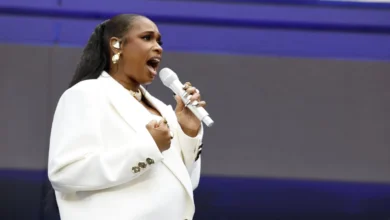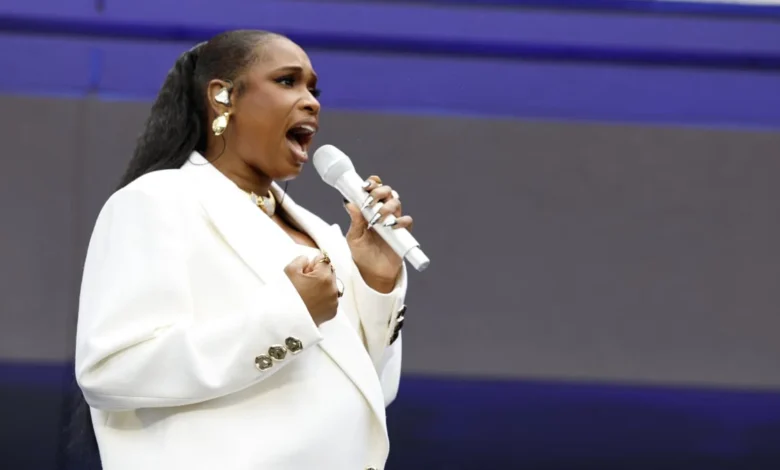
Despite the United States men’s national team not reaching the World Cup final, "The Star-Spangled Banner" is slated to be performed at the pinnacle event of international football. On July 14, FIFA announced that Grammy Award-winning singer and celebrated talk show host Jennifer Hudson would deliver a "special rendition" of the American national anthem before the World Cup final on Sunday, July 19. The highly anticipated match, featuring Spain and Argentina, is scheduled to take place at New York-New Jersey Stadium, widely known as MetLife Stadium, in East Rutherford, New Jersey. This decision has sparked considerable discussion among football enthusiasts and pundits alike, raising questions about the rationale behind featuring the host nation’s anthem in a final where its team is not competing.
The Unprecedented Performance and Public Reaction
The announcement from FIFA, the global governing body of football, immediately ignited a flurry of reactions across social media and fan forums. Many soccer fans expressed bewilderment, asking why the U.S. national anthem would be performed at a match that does not involve the United States. This sentiment reflects a long-standing tradition in international football where national anthems are typically reserved for the competing teams. The performance by Jennifer Hudson is scheduled as part of a broader pre-game ceremony, slated for 1:30 p.m. ET, approximately 90 minutes before the official kickoff at 3:00 p.m. ET. This elaborate pre-match spectacle is positioned by FIFA as a celebration of the tournament’s journey across its three host countries: Canada, Mexico, and the United States. Given that the final is being held on American soil, Hudson’s performance is intended to represent the host nation.
However, this explanation has not fully assuaged the concerns of a significant segment of the global football community. Critics quickly pointed out that if the performance is meant to honor the host nation, and given that the United States shares hosting duties with Canada and Mexico for the larger tournament, the absence of anthems from these co-hosts raises questions of equitable representation. Online discussions highlighted this perceived imbalance, with many fans wondering why a similar recognition was not extended to Canada and Mexico, particularly given the unprecedented tri-national hosting arrangement for the World Cup.
Historical Precedents and Evolving World Cup Ceremonies
While the performance of a host nation’s anthem without its team in the final is rare, it is not entirely unprecedented in the history of the FIFA World Cup. When the United States last hosted the men’s World Cup in 1994, saxophonist Kenny G performed "The Star-Spangled Banner" during the closing ceremony, preceding the final match between Brazil and Italy. This historical precedent offers a degree of context for the current decision, suggesting that FIFA has previously incorporated elements specific to the host country into its final ceremonies. However, the scale and commercial ambition of the current World Cup, particularly with its expanded format and multi-nation hosting, present a different dynamic. The 1994 event was a single-host tournament, and the closing ceremony was a distinct segment, whereas the current performance is integrated into a larger pre-game spectacle.
Over the decades, the World Cup final has evolved from a purely sporting event into a massive global entertainment production. Early finals often featured minimal pre-match ceremonies, focusing almost exclusively on the athletic contest. However, as the tournament’s global appeal and commercial value grew, so too did the scope of its opening and closing events. Today, these ceremonies are meticulously choreographed spectacles designed to capture a vast international television audience, blending cultural showcases, musical performances, and symbolic gestures. This trend reflects a broader shift in major sporting events, from the Olympic Games to the Super Bowl, where the entertainment surrounding the competition often becomes as significant as the competition itself.
The Broader Entertainment Extravaganza: A Star-Studded Affair
Jennifer Hudson’s rendition of the anthem is just one component of an extensive entertainment lineup planned for the final. The pre-game event is set to be headlined by an array of global music stars, including Post Malone, Robbie Williams, Nicole Scherzinger, and Laura Pausini. Additionally, popular streamer IShowSpeed is scheduled to perform, highlighting FIFA’s intent to attract younger, digitally native audiences. Adding to the star power, Hollywood icon Tom Cruise is slated to make a "special appearance," though the specifics of his involvement remain undisclosed. This diverse roster of performers underscores FIFA’s strategy to broaden the World Cup’s appeal beyond traditional football fans, tapping into different demographics and cultural spheres.
Beyond the pre-game festivities, this World Cup is making history by introducing its first-ever halftime show. Curated by Coldplay frontman Chris Martin, this ambitious 11-minute performance will feature an eclectic mix of global superstars, including Madonna, Shakira, BTS, and Justin Bieber. The lineup further boasts performances by Burna Boy, renowned conductor Gustavo Dudamel, the PS22 Chorus featuring Coldplay, and beloved characters from Sesame Street and The Muppets. This elaborate halftime show is designed not only for entertainment but also to support the FIFA Global Citizen Education Fund, an initiative aimed at expanding access to education and football programs for children worldwide. While admirable in its philanthropic goals, the introduction of a Super Bowl-esque halftime show has drawn significant criticism from purist football fans who view it as an attempt to "Americanize" the sport’s most prestigious event, disrupting the traditional flow of the game.
Fan Reactions and the "Americanization" Debate
The perceived "Americanization" of the World Cup has been a recurring theme throughout this tournament. From entertainment-heavy opening ceremonies to the introduction of hydration breaks—which some viewers suspect are strategically placed to create additional television advertising opportunities—FIFA’s organizational decisions have faced scrutiny. The extension of the final with a lengthy halftime show, in particular, has been met with significant backlash. Many fans argue that these additions detract from the purity and tradition of the game, transforming it into an overproduced spectacle akin to American professional sports, where entertainment often rivals the athletic competition in prominence.
Social media platforms have been ablaze with comments expressing disillusionment. Fans from various parts of the world, accustomed to the concise, football-centric format of World Cup matches, have voiced concerns that the essence of the tournament is being diluted. They contend that the focus should remain squarely on the athletic prowess of the competing teams and the drama of the match itself, rather than being overshadowed by celebrity performances and extended commercial breaks. This sentiment highlights a cultural clash between the traditional European and South American football ethos, which often prioritizes uninterrupted play and fan-generated atmosphere, and the American sports entertainment model, which integrates extensive showmanship and commercial opportunities.
The Commercial Imperative: FIFA’s Strategic Play in the U.S. Market
Understanding FIFA’s strategic decisions requires an examination of its substantial financial ambitions and the pivotal role of the North American market. FIFA projects an unprecedented revenue generation of $13 billion during the current World Cup cycle, a significant portion of which is expected to come from the highly lucrative U.S. market. The sheer scale of the American consumer base, coupled with its immense advertising potential, makes it a critical target for FIFA’s growth strategy. The organization is actively working to convert casual viewers and non-soccer fans in the U.S. into dedicated followers, recognizing the immense untapped commercial value.
The strategy appears to be yielding results. Fox’s group-stage broadcasts for this tournament averaged over 5 million viewers, nearly doubling the audience for the same stage in 2022. Furthermore, the U.S. team’s matches garnered substantially larger Spanish-language audiences on Telemundo and Peacock compared to the previous World Cup, indicating successful outreach to diverse demographic groups within the U.S. This data underscores the immense financial incentives driving FIFA’s entertainment-heavy approach. By integrating elements familiar and appealing to an American audience—such as celebrity performances and a Super Bowl-style halftime show—FIFA aims to maximize viewership and engagement, thereby driving up advertising revenue and sponsorship deals.
In this broader commercial context, Jennifer Hudson singing "The Star-Spangled Banner" transcends a mere ceremonial act. It becomes a strategic maneuver to acknowledge and engage the American audience, which is crucial for FIFA’s financial success. Even though the American team is no longer in contention, the American audience, and the significant economic power it represents, remains very much "in the game" for FIFA. This commercial imperative explains the deviation from traditional World Cup protocols and the embrace of a more entertainment-centric model.
Balancing Tradition and Modern Spectacle: Implications for Global Sports
The ongoing debate surrounding the World Cup’s evolving format and entertainment components underscores a fundamental tension in modern global sports: the balance between preserving cherished traditions and adapting to contemporary demands for spectacle and commercial viability. While traditionalists mourn the perceived erosion of football’s core identity, proponents of the new model argue that such innovations are necessary to expand the sport’s global reach, attract new generations of fans, and ensure its continued financial prosperity.
The implications of this shift extend beyond football. Other major international sporting events, from the Olympics to Rugby World Cups, are also grappling with how to maintain their historical integrity while tapping into new markets and revenue streams. The World Cup, as the most watched single-sport event globally, serves as a significant bellwether for these trends. FIFA’s aggressive pursuit of the American market through a blend of sport and entertainment could set a precedent for how future mega-events are organized and presented, potentially transforming them into even grander, more commercially driven productions. The challenge lies in achieving this expansion without alienating the core fanbase that forms the bedrock of the sport’s identity.
How to Watch the World Cup Final and Closing Ceremony
For those eager to witness both the final match and the elaborate ceremonies surrounding it, Spain and Argentina are set to clash on Sunday, July 19, at New York-New Jersey Stadium in East Rutherford, New Jersey. The closing ceremony, which includes Jennifer Hudson’s performance of "The Star-Spangled Banner" and other celebrity acts, is scheduled to commence at 1:30 p.m. ET. The highly anticipated match itself will kick off at 3:00 p.m. ET.
English-language coverage of the event will be available on Fox, with streaming options provided through Fox One and the Fox Sports app. For Spanish-language viewers, Telemundo will offer live television coverage, and Peacock has confirmed that all 104 matches of the tournament, including the final, are streaming live in Spanish. This multi-platform availability ensures that a broad spectrum of viewers across the United States can access the climactic event of the FIFA World Cup, further cementing FIFA’s commitment to reaching its diverse American audience.