EBay Acquires Fashion Marketplace Depop from Etsy in $1.2 Billion Strategic Deal to Capture Gen Z Market


In a move that signals a significant realignment within the global e-commerce landscape, eBay Inc. has reached a definitive agreement to acquire the peer-to-peer fashion marketplace Depop from Etsy, Inc. for approximately $1.2 billion. The transaction, which received formal clearance from United Kingdom regulators this week, marks a pivotal moment for both companies as they sharpen their respective market focuses. The deal is currently scheduled to reach its final close on July 30, 2026. This acquisition underscores eBay’s commitment to its "Focus Category" strategy, specifically targeting the high-growth "recommerce" sector and the coveted Gen Z demographic, while allowing Etsy to streamline its portfolio and return to its core mission of supporting artisanal and handmade goods.
The Financial Architecture of the Acquisition
The $1.2 billion price tag represents a notable shift in valuation since Etsy first acquired Depop five years ago. In 2021, at the height of the e-commerce boom spurred by global pandemic lockdowns, Etsy purchased the London-based marketplace for $1.625 billion. The current sale price indicates a $425 million decrease in valuation, reflecting a broader market correction in tech valuations and a strategic decision by Etsy to divest assets that do not align with its primary growth trajectory.
Despite the lower sale price compared to its 2021 acquisition cost, the deal is viewed by analysts as a necessary step for Etsy. The company has been actively offloading secondary platforms, including the sale of its music-gear marketplace, Reverb, in 2025. By offloading Depop, Etsy aims to improve its operational margins and refocus its resources on its flagship Etsy.com platform.
For eBay, the acquisition is a calculated investment in volume and demographic reach. While Depop generated approximately $1 billion in annual gross merchandise sales (GMS) in 2025, it remains a smaller player compared to eBay’s own fashion division, which facilitates over $10 billion in annual gross merchandise volume (GMV). However, the value of Depop lies less in its current volume and more in its brand equity and user engagement metrics within specific age brackets.
A Strategic Pivot Toward Gen Z and Recommerce
The acquisition of Depop is the latest cornerstone in eBay CEO Jamie Iannone’s broader vision for the company. Since taking the helm, Iannone has pivoted eBay away from being a generalist "everything store" toward a platform that excels in specific "Focus Categories." These categories—which include sneakers, luxury watches, handbags, and collectibles—are characterized by high enthusiast engagement and a need for trust-building mechanisms like authentication services.
Depop fits perfectly into this framework. Founded as a social shopping platform, Depop has successfully merged the aesthetics of Instagram with the functionality of a marketplace. This "social commerce" hybrid has proven exceptionally popular with younger consumers. Data provided by the companies indicates that Depop currently boasts approximately 56.3 million registered users. Of these, 7 million are active buyers and 3 million are active sellers. Crucially, 90% of Depop’s active user base is under the age of 34, a demographic that eBay has historically struggled to capture as it competed with newer, more agile social platforms.
"This acquisition presents an opportunity to advance one of our newest and fastest-growing Focus Categories with a marketplace that complements our existing presence," Iannone stated in a recent press release. He emphasized that Depop’s unique brand culture and community would remain central to its operations under the eBay umbrella, while benefiting from eBay’s massive operational scale and technological infrastructure.
Chronology of the Deal and Regulatory Landscape
The journey toward this acquisition has been marked by several key milestones:
- June 2021: Etsy acquires Depop for $1.625 billion, aiming to capitalize on the Gen Z fashion trend.
- February 2026: eBay and Etsy announce a definitive agreement for eBay to purchase Depop for $1.2 billion.
- March – June 2026: The United Kingdom’s Competition and Markets Authority (CMA) conducts a review of the deal to ensure it does not stifle competition in the UK’s robust secondhand fashion market.
- July 2026: UK regulators officially clear the transaction, citing that the merger does not significantly lessen competition given the presence of other major players like Vinted and Poshmark.
- July 30, 2026: Expected closing date of the transaction.
- August 5, 2026: Both eBay and Etsy are scheduled to release their second-quarter earnings, providing investors with the first official financial outlook following the deal’s clearance.
The regulatory approval in the UK was particularly vital, as Depop maintains a massive footprint in the British market. Regulators examined whether the combined entity of eBay Fashion and Depop would create a monopoly in the "circular fashion" space. The decision to allow the deal suggests that regulators view the market as sufficiently fragmented, with plenty of room for cross-platform competition.

Synergies and Technological Integration: The Role of eBay Live
A recurring question among industry observers is how eBay will succeed where Etsy struggled to find "synergies." One potential answer lies in eBay’s aggressive push into livestream shopping. eBay Live, a platform that allows sellers to host interactive, real-time auctions and product showcases, has seen significant success in the collectibles and luxury goods sectors.
Depop’s community is already accustomed to high levels of social interaction and "drop" culture—where sellers announce specific times for new inventory releases. Integrating Depop’s inventory and influencer-style sellers into the eBay Live ecosystem could provide a powerful engine for growth. By providing Depop sellers with professional-grade livestreaming tools and access to eBay’s global logistics network, eBay hopes to scale the "circular fashion" mission that Depop was founded upon.
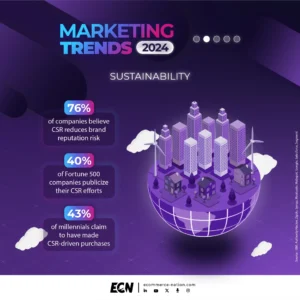
Depop’s mission—to make secondhand fashion as exciting and rewarding as buying new—aligns with eBay’s broader sustainability goals. As "recommerce" becomes a priority for environmentally conscious consumers, the ability to track the lifecycle of a garment and facilitate its resale multiple times represents a significant long-term revenue opportunity.
Market Context: The Competitive Recommerce Landscape
The acquisition comes at a time of intense competition in the online resale market. Platforms such as Vinted have gained massive traction in Europe by offering low-to-no seller fees, while Poshmark continues to hold a strong grip on the North American social-shopping market. Furthermore, traditional retailers are increasingly entering the space; brands like Zara and H&M have launched their own internal resale platforms.
By bringing Depop into the fold, eBay is not just buying a user base; it is buying a "cool factor" that is difficult to build from scratch. For years, eBay was perceived by younger audiences as the site where their parents sold old electronics. Depop, conversely, is a cultural hub for "Y2K" fashion, streetwear, and unique vintage finds.
This acquisition follows eBay’s 2024 purchase of Goldin Auctions, a leader in the high-end collectibles space. By acquiring category leaders and then enticing those users to link their accounts to the main eBay ecosystem, the company is creating a "hub-and-spoke" model where specialized marketplaces feed into a centralized powerhouse of logistics and payments.
Broader Implications for the E-Commerce Sector
The eBay-Depop deal is a bellwether for the future of e-commerce consolidation. It suggests that the "era of the generalist" may be giving way to an era of "specialized scale." For Etsy, the sale represents a disciplined return to its roots. After several years of aggressive expansion, the company is signaling to investors that it will focus on what it does best: the "Keep Commerce Human" ethos of handmade and unique goods.
For the wider market, the $1.2 billion valuation serves as a benchmark for social commerce platforms. It highlights that while user growth and brand engagement are vital, the ultimate value of a platform is tied to its ability to integrate into a larger, more efficient supply chain.
As the July 30 closing date approaches, the industry will be watching closely to see how eBay manages the transition. Maintaining the "soul" of Depop—its community-driven, anti-corporate aesthetic—while imposing eBay’s corporate rigor will be a delicate balancing act. If successful, eBay could cement its position as the undisputed leader of the global circular economy, capturing the loyalty of a generation that views shopping not just as a transaction, but as an expression of identity and ethics.
The upcoming earnings calls on August 5 will likely provide further clarity on the transition costs and the projected impact on eBay’s 2026-2027 fiscal performance. For now, the message is clear: eBay is betting big on the future of fashion, and that future is young, social, and secondhand.
Related posts: