OpenAI Launches GPT-5.6 Series Featuring Celestial Model Tiers and Advanced Reasoning Capabilities

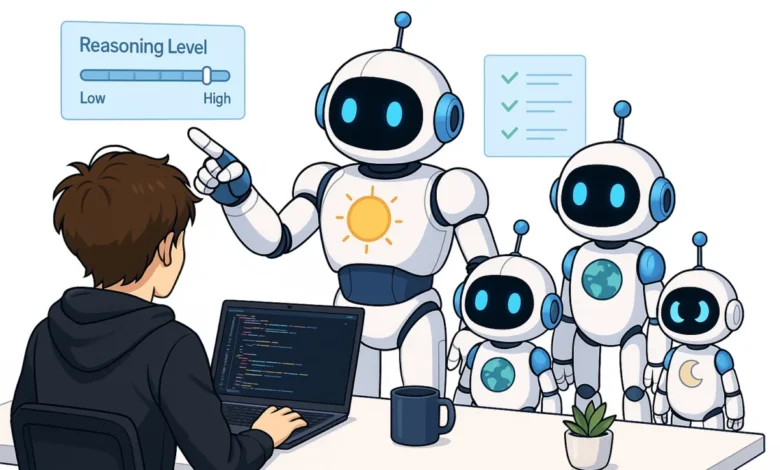
The release of GPT-5.6 marks a significant milestone in the rapid evolution of generative artificial intelligence, arriving as an incremental but technically sophisticated successor to the GPT-5.5 architecture. This new iteration from OpenAI introduces a tiered deployment strategy, utilizing a celestial nomenclature—Sol, Terra, and Luna—to categorize models by scale and computational power. Early industry analysis and field testing indicate that while GPT-5.6 represents an evolutionary rather than revolutionary step from the 5.5 version, its specialized reasoning levels and refined code-analysis capabilities position it as a formidable competitor to Anthropic’s current frontier models, including Opus 4.8 and Fable 5.
Technical Architecture and the Celestial Tier System
OpenAI has restructured its model offering with the GPT-5.6 rollout, moving away from simple "Turbo" or "Pro" designations toward a three-tiered system designed to address different enterprise and developer needs. The flagship model, Sol, represents the frontier of the company’s current capabilities, offering the highest parameter count and the most robust performance in complex reasoning tasks. Below Sol sits Terra, a mid-sized model designed to balance high-level performance with lower latency, while Luna serves as the lightweight, high-speed variant optimized for mobile and edge computing applications.
A defining feature of the GPT-5.6 series is the introduction of selectable "Reasoning Levels." Users can now toggle between different depths of cognitive processing, ranging from standard responses to "Extra High" and "Ultra" thinking modes. These levels dictate the duration the model spends on internal chain-of-thought processing before generating an output. Technical documentation suggests that higher reasoning levels significantly improve performance in multi-step planning and logical verification, though this comes at the cost of increased latency and higher token consumption.
Performance Benchmarks in Software Engineering
In the realm of software development and automated code review, GPT-5.6 has demonstrated measurable improvements in both precision and recall. Comparative data involving GPT-5.5 and GPT-5.6 shows that the newer model is more adept at identifying subtle logic flaws and security vulnerabilities that its predecessor might overlook. In precision-focused testing—where the model must correctly identify a bug without flagging false positives—GPT-5.6 shows a marginal but critical lead over Anthropic’s Opus 4.8.
Developers utilizing the model for full-scale implementations report that GPT-5.6 exhibits greater "task persistence." This refers to the model’s ability to maintain context over longer sequences of code generation and its thoroughness in following complex architectural plans. However, industry consensus suggests that for pure implementation speed and execution, Anthropic’s Opus 4.8 remains a strong alternative, leading many engineering teams to adopt a multi-model workflow rather than relying on a single provider.
Comparative Workflow Integration
The arrival of GPT-5.6 has led to the emergence of specialized "tri-model" workflows among high-end engineering firms. Rather than using one model for the entire lifecycle of a project, engineers are increasingly leveraging the specific strengths of different AI architectures:
- Planning Phase: Users often employ high-reasoning models like Claude Fable 5 to draft initial project architectures and implementation strategies.
- Execution Phase: The actual generation of boilerplate and functional code is frequently handed off to Opus 4.8, which is noted for its execution speed.
- Review Phase: GPT-5.6 Sol is then utilized as the final auditor. Its high recall rate makes it particularly effective at catching errors made during the execution phase, effectively replacing or augmenting human peer reviews for non-critical infrastructure.
Furthermore, GPT-5.6 has shown advanced capabilities in "computer use" and browser automation. When integrated with the Model Context Protocol (MCP), the model can navigate web interfaces and internal software environments with high reliability. This makes it a primary choice for end-to-end testing and automated quality assurance (QA) tasks.
Operational Constraints and Resource Management
Despite its technical advantages, GPT-5.6 introduces new challenges regarding resource allocation and usage limits. The "Extra High" and "Ultra" reasoning modes are computationally expensive, leading to a rapid depletion of user quotas. OpenAI has responded to these concerns by modifying its subscription-based usage limits. While the previous five-hour hard cap has been temporarily suspended in certain regions, it has been replaced by a more flexible but still restrictive weekly limit.

A significant addition to the OpenAI ecosystem is the "Banked Reset" feature. Unlike traditional reset cycles that occur at fixed intervals, a banked reset allows users to manually trigger a refresh of their usage limits. This is particularly beneficial for teams facing high-demand periods or those working on intensive "sprints." However, the use of a banked reset also recalibrates the user’s future reset schedule, meaning the subsequent automatic reset will occur one week from the moment of the manual trigger. This requires careful strategic management of AI resources to avoid downtime.
Evolution of the OpenAI Ecosystem
The transition from GPT-5.5 to 5.6 reflects a broader shift in AI development toward "system-level" integration. GPT-5.6 is designed to work seamlessly with various Model Context Protocols (MCP), allowing it to access external tools such as Gmail, Google Calendar, Slack, and Playwright. This connectivity is essential for the model to function as an autonomous agent rather than a simple text predictor.
Industry analysts note that OpenAI’s decision to maintain parity with Anthropic’s connectivity tools is a defensive move to prevent developer migration. Early testers have observed that GPT-5.6’s performance is significantly hampered when it is not granted full access to the user’s toolset, highlighting the model’s reliance on external data to provide contextually accurate responses.
Chronology of OpenAI Model Releases (2025-2026)
The release of GPT-5.6 follows a rapid succession of updates within the OpenAI roadmap:
- Late 2025: Release of the GPT-5 base model, focusing on expanded context windows and multimodal capabilities.
- Early 2026: Launch of GPT-5.5, which optimized the model for better performance-to-cost ratios and introduced early reasoning prototypes.
- Mid 2026: The current deployment of GPT-5.6, introducing the Sol/Terra/Luna tiers and the formalized "Reasoning Effort" selection interface.
This timeline suggests a strategy of continuous, iterative updates designed to keep pace with Anthropic’s "Fable" series and Google’s evolving Gemini Ultra architectures.
Industry Implications and Market Reaction
The reaction from the tech sector has been cautiously optimistic. While GPT-5.6 does not represent the "AGI-level" leap that some speculators anticipated, its incremental improvements in logic and code auditing provide immediate value to the enterprise sector. Market analysts suggest that the celestial tiering system is a precursor to a more granular pricing model, where companies will pay premium rates for "Sol-Ultra" access while utilizing "Luna-Medium" for routine clerical tasks.
One point of contention remains the speed of the high-reasoning modes. Some early adopters have criticized the "Ultra" mode for being prohibitively slow for real-time applications. "For a simple implementation task, the ‘Ultra’ reasoning mode can take up to three times longer than the standard mode without a proportional increase in quality," noted one technical lead from a Silicon Valley startup. This has led to the best practice of reserving high reasoning for the planning phase and downshifting to medium reasoning for the implementation of pre-defined tasks.
Future Outlook
As OpenAI continues to refine the GPT-5.6 architecture, the focus is expected to shift toward reducing the "usage drain" of high-reasoning models and improving the speed of the Sol tier. The competition between OpenAI and Anthropic is increasingly being fought on the grounds of "agentic reliability"—the ability of a model to not only generate text but to execute complex, multi-step actions across different software platforms without human intervention.
GPT-5.6 stands as a testament to the current state of the AI industry: a period of refinement where the goal is to make these powerful tools more reliable, more integrated, and more specialized for the demands of modern software engineering and data analysis. While users must navigate the complexities of new usage limits and reasoning settings, the overall trajectory points toward an era where AI models are no longer just assistants, but integral components of the professional infrastructure.
Related posts: