X Launches Grok Integration Beta in Ads Manager, Signaling Path Towards Full AI-Powered Advertising Automation


X, the social media platform owned by Elon Musk, has initiated beta testing for the integration of Grok, its proprietary artificial intelligence chatbot, within its Ads Manager. This strategic move is poised to offer advertisers more sophisticated, AI-powered guidance for their promotional campaigns, representing a significant stride towards what could eventually become full advertising automation on the platform. The introduction of Grok into the advertising ecosystem of X underscores the platform’s accelerated commitment to leveraging advanced AI to redefine digital marketing strategies.
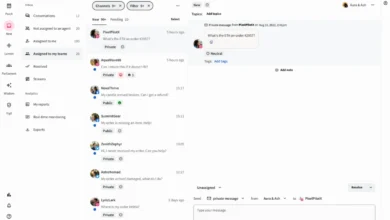
The beta program, currently accessible to a select group of X advertisers, empowers them to tap into xAI’s Grok chatbot for direct consultation and advice on their advertising approach. Early reports, including screenshots shared by @testingcatalog on Threads, reveal a conversational interface where advertisers can query Grok for insights and recommendations. Beyond direct chatbot interaction, the update also introduces new tooltips designed to streamline the creative generation process, offering ideas and guidance for crafting compelling in-stream ad creatives. This dual approach aims to both assist in strategic planning and enhance the practical execution of ad campaigns.
The Evolution of X’s Advertising Strategy Under AI
This latest development is not an isolated incident but rather a crucial milestone in X’s ambitious artificial intelligence roadmap. The platform, formerly known as Twitter, has been undergoing a transformative period since its acquisition by Elon Musk, with a strong emphasis on integrating AI across its various functionalities. This vision extends deeply into its advertising infrastructure, which Musk views as a critical revenue stream and a prime area for AI-driven innovation.
The foundation for this current integration was laid earlier this year. In April, X unveiled a comprehensively rebuilt Ad Manager platform, designed from the ground up to incorporate AI-powered guidance at every level of campaign management. At the time of its launch, X declared this revamp as the most significant update to its advertising system in the company’s history. The core promise of the rebuilt platform was its enhanced capability to understand user interests with greater precision, thereby improving ad relevance and delivery. This was intended to align advertisements more effectively with real-time trends and user engagement patterns within the application, moving beyond traditional demographic or keyword-based targeting. The April update focused on optimizing campaign performance through smarter bidding, improved audience segmentation, and more dynamic content matching, all orchestrated by underlying AI algorithms.
The integration of Grok is the natural and anticipated next step in this progression. Elon Musk has been vocal about his long-term vision for AI within X’s advertising framework. In a statement made to Digiday, though the original article cited "August 2025" which is likely a typo for an earlier date such as August 2023 or 2024, Musk outlined his eventual goal for Grok to enable full advertising automation across the platform. This expansive vision encompasses not only the generation and targeting of ads but also critical functions such as ad safety checks and content matching, ensuring brand suitability and compliance. Such a system would represent a paradigm shift, moving from advertiser-managed campaigns to an AI-orchestrated ecosystem capable of autonomously managing the entire advertising lifecycle.

Understanding Grok and Its Role in Advertising
Grok, developed by xAI – Elon Musk’s AI venture – is a large language model (LLM) designed to process and generate human-like text. What sets Grok apart, according to its developers, is its ability to access real-time information from the X platform, giving it a unique edge in understanding current trends, public sentiment, and rapidly evolving discussions. This real-time capability is particularly valuable in the fast-paced world of social media advertising, where relevance and timeliness are paramount.
For advertisers, Grok’s integration means having an "always-on assistant" that can guide their thinking. Imagine an advertiser asking Grok: "What are the trending topics related to sustainable fashion in the past week among users aged 18-34?" or "Suggest five different ad copy variations for a new tech gadget, focusing on innovation and user experience." Grok, leveraging its real-time data access and LLM capabilities, could theoretically provide highly pertinent and actionable insights, along with creative suggestions tailored to specific campaign objectives and target audiences.
The new tooltips accompanying the Grok integration further enhance this creative assistance. These are likely context-sensitive prompts or suggestions that appear during the ad creation process, helping advertisers overcome creative blocks or refine their messaging. This could range from recommending optimal image dimensions based on historical performance to suggesting compelling calls-to-action that resonate with specific audience segments.
The Promise of Agentic Ad Generation: A Deep Dive
The move towards integrating Grok into X’s Ads Manager is a foundational step towards what is known as "agentic ad generation." This concept refers to advertising platforms utilizing advanced AI tools to autonomously build and optimize entire campaigns based on a sophisticated understanding of the platform’s audience and a predictive grasp of what prospective customers might respond to. It moves beyond simply automating tasks to intelligent, goal-oriented action.
AI tools are inherently well-suited for this type of insight-driven operation due to their unparalleled capacity to assess and synthesize a vast array of data signals. For instance, an AI system can construct highly accurate persona matches. If a brand has had success with customers who purchased a specific product, the AI can analyze the various profile attributes and in-app activity indicators of those existing customers. This might include their interests, accounts they follow, content they engage with, demographic data, and even their posting habits. From this rich dataset, the AI can then identify likely new profile matches that exhibit similar traits and interests, expanding the reach to highly qualified potential customers.

With X boasting more than 550 million users, the platform possesses an immense reservoir of comparative data. This colossal dataset is a goldmine for AI training, allowing xAI’s tools to learn and refine their algorithms continuously. The sheer scale of data, combined with AI’s ability to assess it at an unprecedented speed, means that Grok should theoretically be able to provide significantly improved automated matches for ads, leading to higher conversion rates and more efficient ad spend. This massive scale of user interaction provides the necessary fuel for deep learning models to identify subtle patterns and correlations that human analysts might miss.
Implications for Advertisers: Opportunities and Challenges
For advertisers, Grok’s integration presents a myriad of opportunities:
- Enhanced Targeting Precision: By leveraging AI to analyze user data, advertisers can achieve hyper-targeted campaigns, reaching audiences most likely to convert. This moves beyond broad demographics to psychographics and behavioral patterns.
- Creative Optimization and Generation: Grok can assist in generating diverse ad copy, suggesting visual themes, and even optimizing calls-to-action based on predicted audience response, saving time and resources for creative teams.
- Increased Efficiency: Automation of routine tasks, from audience segmentation to budget allocation and ad scheduling, can free up marketing teams to focus on higher-level strategy and creative development.
- Improved ROI: More precise targeting and optimized creatives naturally lead to more effective campaigns, potentially boosting return on investment (ROI) for advertising spend.
- Accessibility for SMBs: Small and medium-sized businesses (SMBs) with limited marketing budgets and expertise can benefit from AI guidance, leveling the playing field against larger competitors. Grok could act as a virtual marketing consultant, guiding them through complex campaign setups.
- Real-time Adaptability: Grok’s ability to access real-time data means campaigns can be more agile, adapting quickly to trending topics, news events, or shifts in user sentiment.
However, the advent of such advanced AI tools also brings forth certain challenges and considerations:
- Learning Curve: Advertisers will need to adapt to a new way of working, learning how to effectively prompt and utilize AI tools like Grok.
- Data Privacy Concerns: The reliance on vast amounts of user data for AI training and targeting raises ongoing questions about data privacy, transparency, and ethical data usage. X and xAI will need to clearly communicate their data handling practices.
- "Black Box" Algorithms: The decision-making process of complex AI models can sometimes be opaque, making it difficult for advertisers to understand exactly why certain recommendations are made or how targeting is executed. This can lead to a lack of trust or control.
- Over-reliance and Human Oversight: While AI offers powerful assistance, human oversight remains crucial to ensure brand safety, prevent AI biases from propagating, and maintain creative authenticity.
- Potential for Misinterpretation: AI, while advanced, can still misinterpret complex human nuances, potentially leading to off-brand messaging or targeting errors if not carefully monitored.
Impact on X’s Business Model and the Competitive Landscape
For X, the successful integration of Grok into its advertising platform could be a significant differentiator in a fiercely competitive social media landscape. Platforms like Meta (Facebook, Instagram), Google (Search, YouTube), and TikTok are all heavily investing in AI for their advertising products. Google’s Performance Max campaigns, for instance, already leverage AI to optimize ads across its vast network. Meta’s Advantage+ suite also employs AI for audience expansion and creative optimization. X’s approach, particularly with Grok’s real-time capabilities and Musk’s vision for full automation, positions it as a leader in pushing the boundaries of AI in advertising.
This move is critical for X’s financial health. Since Musk’s acquisition, the platform has seen significant changes in its advertising revenue, with some advertisers pausing spending due to concerns about content moderation and brand safety. By offering cutting-edge AI tools that promise greater efficiency, better targeting, and enhanced safety checks, X aims to attract new advertisers and regain the confidence of existing ones. Increased ad efficiency and higher ROI for advertisers directly translate to more ad spend on the platform, bolstering X’s revenue.

Furthermore, this integration aligns with Elon Musk’s broader vision for X as an "everything app." An AI-powered advertising engine is a core component of such an ecosystem, seamlessly connecting businesses with consumers through highly relevant and dynamically generated content. It positions X not just as a social media platform, but as a comprehensive digital utility for commerce and communication, where AI plays a central role in facilitating transactions and information exchange.
Ethical Considerations and Future Outlook
As AI becomes more deeply embedded in advertising, ethical considerations surrounding data privacy, algorithmic bias, and transparency will only grow in importance. The immense dataset of X’s 550 million+ users, while powerful for AI training, also necessitates robust safeguards to protect user information and ensure responsible AI deployment. X and xAI will need to proactively address these concerns, providing clear policies and mechanisms for user control over their data. The potential for AI to inadvertently perpetuate or amplify existing societal biases through targeting must also be carefully mitigated through continuous auditing and ethical AI development practices.
Looking ahead, the beta launch of Grok in X Ads Manager is a precursor to a future where advertising is highly personalized, dynamic, and largely automated. While full automation, as envisioned by Musk, may still be some time away, the current integration represents a significant leap forward. It signifies a future where AI acts as a sophisticated co-pilot for advertisers, offering insights, generating creative content, and optimizing campaigns with unprecedented precision. The success of this beta, and X’s subsequent iterations, will be closely watched by the advertising industry, as it potentially charts a new course for how brands connect with their audiences in the digital age. The integration not only promises a new era of efficiency for advertisers but also underscores X’s unwavering commitment to being at the forefront of AI innovation in the social media landscape.
Related posts: