DOJ Reverses Course: Federal Employees Now Permitted to Use TikTok on Government Devices Following Oracle-Backed Divestiture Deal

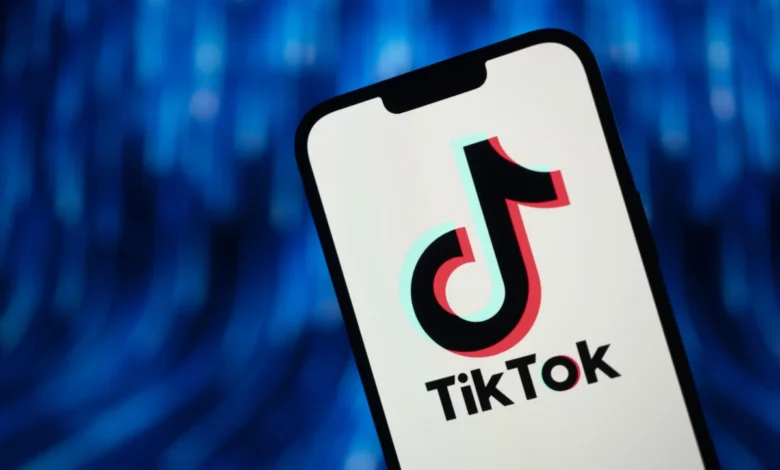
Washington D.C. – The Department of Justice (DOJ) has announced a significant policy reversal, informing federal employees that they are now permitted to download and use the popular short-form video application TikTok on their government-issued devices. This decision, reported by Reuters on July 17, 2026, marks a dramatic shift from a 2022 law that had explicitly banned the app on such devices, citing national security concerns. The change comes in the wake of a complex deal finalized in January 2026, which saw the ownership of TikTok’s U.S. operations transferred to a new joint venture predominantly backed by American entities.
The 2022 ban was enacted as part of broader legislative efforts to mitigate perceived cybersecurity and data privacy risks associated with applications owned by foreign adversaries, particularly those with ties to the People’s Republic of China. The legislation, often referred to as the "No TikTok on Government Devices Act," was a provision within the annual National Defense Authorization Act (NDAA). It reflected a growing bipartisan consensus in Congress and across various intelligence agencies that ByteDance, TikTok’s Beijing-based parent company, could be compelled by Chinese national security laws to provide user data to the Chinese government. Concerns also extended to the potential for the app to be used for propaganda or influence operations targeting American users, including federal employees who might possess access to sensitive information.
The Genesis of the Ban and Lingering Concerns
The initial scrutiny of TikTok began years prior to the 2022 ban, escalating during the Trump administration. In 2020, then-President Donald Trump issued executive orders aimed at banning TikTok and WeChat from U.S. app stores, citing national security threats. These orders were met with legal challenges and ultimately did not take full effect, but they underscored the depth of concern within the U.S. government. Cybersecurity experts and intelligence officials had consistently warned that even if ByteDance claimed to store U.S. user data in the United States, the ultimate control by a Chinese company presented an unacceptable risk. The fear was not merely about data location but about the potential for Beijing to exert influence over content moderation, algorithm manipulation, or direct data access through ByteDance.
These concerns were further amplified by reports from organizations like the Federal Bureau of Investigation (FBI) and the Office of the Director of National Intelligence (ODNI), which highlighted the opaque nature of data governance under Chinese corporate structures and the expansive reach of China’s national security laws. Federal agencies, particularly those dealing with classified information or critical infrastructure, were advised to adopt stringent policies regarding foreign-owned applications on official devices. The 2022 law was a direct legislative response to these persistent warnings, making the ban mandatory for all federal government devices, thereby standardizing a policy that some agencies had already begun to implement individually.
The Pivotal Divestiture Deal: A New Ownership Structure
The catalyst for the DOJ’s reversal is the comprehensive ownership restructuring of TikTok’s U.S. operations, finalized in January 2026. This intricate deal created a new joint venture designed to insulate U.S. user data and operations from ByteDance’s direct control. The new entity is significantly backed by American companies, including technology giant Oracle, investment firm Silver Lake, and MGX, a consortium of U.S.-based investors.
Under the terms of this agreement, Oracle has taken on the critical role of security partner for the new joint venture. This involves hosting all U.S. user data on its cloud infrastructure, implementing robust security protocols, and overseeing the integrity of TikTok’s algorithms and content moderation policies for its American operations. The arrangement is reportedly modeled after "Project Texas," an ambitious initiative first proposed years ago, aiming to create an independent entity for TikTok’s U.S. business, subject to comprehensive third-party auditing and U.S. government oversight.
While the deal significantly dilutes ByteDance’s direct operational control over TikTok’s U.S. activities, the original Chinese parent company reportedly retains a 19.9% stake in the new joint venture. This retention of a minority stake, though non-controlling, has been a point of contention for some critics who argue it doesn’t fully sever ties to Beijing. However, proponents of the deal, including the U.S. administration, contend that Oracle’s overarching security partnership and the independent board governance structure sufficiently mitigate the previously identified national security risks. The agreement is understood to include provisions for independent oversight bodies, transparency reports, and stringent auditing mechanisms to ensure compliance with U.S. data security and privacy regulations.
Presidential Intervention and Evolving Stance
The journey to this policy shift has been marked by a fluctuating stance from the executive branch, particularly from President Donald Trump. While his administration initially spearheaded efforts to ban TikTok, his position on a broader, nationwide ban appeared to soften and even reverse in early 2025. Following the 2022 federal device ban, a subsequent attempt to implement a broader U.S. ban on the app took effect early last year. However, as the original article notes, the app only went down briefly before President Trump reportedly intervened, repeatedly delaying the move and urging service providers to restore access. This suggests a nuanced approach, where the specific concerns about federal government devices might have been prioritized differently from a complete civilian blackout of the app.
The latest DOJ memo reportedly confirms President Trump’s clearance for "employees of Executive Branch agencies" to "download TikTok onto their official devices, subject to the agency’s discretion and consistent with all applicable workplace policies." This indicates a presidential endorsement of the new ownership structure as a viable solution, effectively removing the executive branch’s objections to the app’s use by its employees, provided the specified conditions are met.
Chronology of Key Events
- 2020: Trump administration issues executive orders attempting to ban TikTok and WeChat in the U.S., citing national security concerns. Orders face legal challenges and are not fully implemented.
- Late 2020 – Early 2021: Discussions emerge around "Project Texas," an initiative to create a separate U.S. entity for TikTok with American oversight and data hosting.
- December 2022: The "No TikTok on Government Devices Act" is passed as part of the National Defense Authorization Act (NDAA), mandating a ban on TikTok on all federal government devices. Agencies begin implementing the ban.
- Early 2025: A broader U.S. ban on TikTok briefly takes effect. President Trump intervenes, delaying enforcement and urging service providers to restore access, indicating a shift in his stance on a universal ban.
- January 2026: A comprehensive deal is finalized, transferring ownership of TikTok’s U.S. operations to a new joint venture backed by Oracle, Silver Lake, and MGX. Oracle assumes the role of security partner, hosting U.S. data and overseeing operations, while ByteDance retains a 19.9% non-controlling stake.
- July 17, 2026: The Department of Justice issues a memo, stating that the 2022 federal device ban no longer applies due to the new ownership structure, permitting federal employees to download TikTok on government devices at agency discretion.
Official Responses and Anticipated Reactions
The Department of Justice’s memo signifies a formal acceptance by the U.S. government that the Oracle-backed deal adequately addresses previous national security concerns. While specific statements from the DOJ beyond the memo’s content are pending, the decision itself speaks volumes. It implies a rigorous review process of the new operational framework and a determination that the risks of foreign influence have been sufficiently mitigated.
The White House is expected to frame this decision as a testament to the administration’s ability to balance national security with economic innovation and the digital rights of its citizens. A spokesperson might emphasize the collaborative effort with private industry to find a pragmatic solution that safeguards American data without resorting to outright bans on popular applications.
From Capitol Hill, reactions are likely to be mixed. Congressional members who championed the original ban, particularly those known for hawkish stances on China, may express reservations. Senators or Representatives from committees like Intelligence or Armed Services could issue statements urging continued vigilance, questioning whether a minority stake still leaves a backdoor for Beijing, or demanding ongoing audits and transparency reports. They might argue that the deal, while an improvement, does not completely eliminate the risk.
Conversely, some lawmakers, especially those focused on economic development or advocating for consumer choice, may welcome the decision. They could highlight the economic benefits of the deal, the preservation of American jobs related to TikTok’s U.S. operations, and the successful navigation of complex geopolitical tech challenges.
TikTok, Oracle, Silver Lake, and MGX are expected to issue statements reiterating their commitment to U.S. user privacy, data security, and compliance with all governmental regulations. They will likely emphasize the unprecedented nature of the security measures put in place and their dedication to fostering a safe and transparent platform for American users.
Cybersecurity experts will also offer diverse perspectives. Some might commend Oracle’s role and the architectural changes, viewing them as a potential blueprint for other foreign-owned tech companies operating in sensitive markets. Others might caution that no technological solution is foolproof, and the inherent risks of a global platform with any residual foreign ownership can never be entirely eliminated, stressing the importance of continuous monitoring and independent oversight.
Federal employee unions or associations might express relief, as the policy provides clarity and potentially allows for the more seamless use of a popular communication tool, particularly for agencies engaged in public outreach or social media engagement. However, they will also emphasize the need for clear internal agency guidelines regarding professional conduct and appropriate use.
Broader Impact and Implications
The DOJ’s decision carries significant implications across several domains:
- National Security Paradigm Shift: This move could set a precedent for how the U.S. government approaches national security risks associated with foreign-owned technology. It signals a willingness to explore complex divestiture and security partnership models rather than resorting solely to outright bans. This could influence future policy discussions regarding other foreign tech companies operating in critical sectors.
- Cybersecurity Standards for Foreign Tech: The Oracle-backed security framework for TikTok’s U.S. operations might become a de facto standard. Future deals involving foreign companies seeking to operate in sensitive U.S. markets could be benchmarked against the level of data localization, independent oversight, and algorithmic transparency established here.
- Economic and Investment Climate: The successful resolution of the TikTok saga could reassure foreign investors and tech companies about the viability of operating in the U.S. market, even amidst geopolitical tensions, provided they adhere to stringent security and ownership requirements. It also solidifies Oracle’s position as a major player in government cloud and cybersecurity solutions.
- U.S.-China Relations: While a business deal, this resolution offers a rare point of de-escalation in the broader U.S.-China tech rivalry. It demonstrates that pragmatic solutions, albeit complex, can be found to manage perceived national security threats without completely severing economic or digital ties. However, the underlying tensions surrounding technology leadership and data governance will undoubtedly persist.
- Federal Workplace Policies: While the DOJ has cleared the path, individual federal agencies retain "discretion" over TikTok’s use. This means agencies will likely issue their own updated guidelines. These might include rules about the types of government devices where TikTok is permissible (e.g., non-classified networks), restrictions on accessing sensitive information while using the app, and guidelines for professional conduct and content creation on government accounts. The focus will shift from a blanket ban to responsible and secure usage within a defined framework.
- Public Trust and Perception: The public’s perception of this decision will be crucial. For many, it will be seen as a pragmatic victory, balancing security with access to a popular platform. For others, particularly those deeply concerned about Chinese influence, it might raise questions about the thoroughness of the divestiture and the government’s commitment to protecting against foreign adversaries. Transparent communication from all involved parties will be essential to maintain public confidence.
In conclusion, the Department of Justice’s announcement marks a pivotal moment in the ongoing debate over foreign-owned technology and national security. By lifting the ban on TikTok for federal employees, the U.S. government acknowledges that the complex, Oracle-backed divestiture deal has fundamentally altered the risk landscape. This decision, however, is not an endpoint but rather the beginning of a new chapter, one that will require continuous vigilance, robust oversight, and clear policy implementation to ensure that the promise of enhanced security is fully realized.
Related posts: