Jennifer Hudson to Perform U.S. National Anthem at World Cup Final Amidst Debate Over Americanization of Global Spectacle

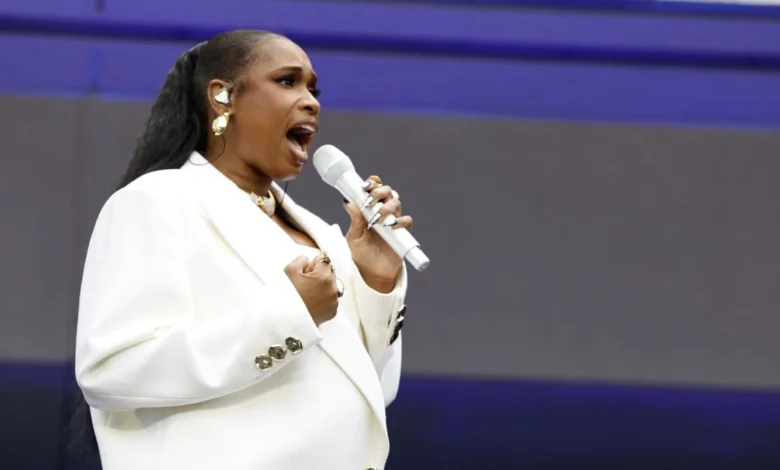
Grammy Award-winning singer and talk show host Jennifer Hudson is slated to perform a "special rendition" of "The Star-Spangled Banner" before the highly anticipated World Cup final on Sunday, July 19, at the New York New Jersey Stadium, more commonly known as MetLife Stadium. This announcement, made by FIFA on July 14, has ignited a fervent debate among global soccer fans, largely stemming from the fact that the United States Men’s National Team (USMNT) did not qualify for the final match, which will see Spain face off against Argentina. The decision has prompted widespread questioning regarding the protocol and implications of such a performance in a global tournament traditionally defined by the anthems of the competing nations.
The immediate reaction across social media platforms and fan forums has been one of bewilderment, with many asking why the U.S. national anthem would feature so prominently when the host nation’s team is not playing for the coveted trophy. However, FIFA’s rationale, as clarified in subsequent statements and implicit in the event’s broader context, points less to the on-field competitors and more to the geographical location of the monumental event. This strategic move is embedded within a larger pre-game ceremony designed to celebrate the tournament’s journey across its three host countries: Canada, Mexico, and the United States, with the final held on American soil.
The Rationale Behind the Host Nation Anthem
Jennifer Hudson’s performance of "The Star-Spangled Banner" is positioned as a key component of FIFA’s pre-match festivities, an event distinctly separate from the traditional match protocol. Scheduled to commence at 1:30 p.m. ET, a full 90 minutes before the official kickoff at 3:00 p.m. ET, the ceremony is intended to be a grand spectacle reflecting the cultural tapestry and hospitality of the host nations. Since the climactic final is being staged in New Jersey, Hudson’s rendition is officially designated to represent the United States as the host country. This aligns with FIFA’s broader strategy for this particular tournament, which is unprecedented in its multi-nation hosting arrangement and expanded format.
While this explanation provides a formal justification, it has not entirely assuaged the concerns of many soccer enthusiasts. Critics quickly pointed out that if the performance is meant to honor the host nation, and the United States is sharing hosting duties with Canada and Mexico, then why are their respective national anthems not also being performed? This omission has fueled accusations of an "American-centric" approach to a truly global event, raising questions about equitable representation among the co-hosts. The argument is that if the spirit of co-hosting is to be upheld, all host nations should receive similar recognition in the pre-game ceremonies, especially at such a high-profile juncture.
Historically, the performance of the host nation’s anthem at a World Cup final that does not feature its team is rare but not entirely unprecedented. A notable precedent occurred when the U.S. last hosted the men’s World Cup in 1994. During the closing ceremony of that tournament, before Brazil and Italy contested the final, renowned saxophonist Kenny G performed "The Star-Spangled Banner." This historical reference suggests a pattern of integrating local cultural elements when the U.S. serves as host, even if it deviates from the strictly competitive nation-centric traditions of the sport’s global governing body.
A Star-Studded Pre-Game Extravaganza and Unprecedented Halftime Show
Jennifer Hudson’s performance is just one facet of an elaborate entertainment lineup planned for the final. The pre-game event is set to feature a constellation of global music stars and personalities, transforming the stadium into a vibrant stage before a single ball is kicked. Headlining this spectacular prelude is acclaimed artist Post Malone, known for his genre-bending hits. He will be joined by British pop icon Robbie Williams, former Pussycat Dolls frontwoman Nicole Scherzinger, and Italian singer Laura Pausini, all of whom bring significant international appeal. Adding a modern twist to the traditional sporting spectacle, popular streamer IShowSpeed is also scheduled to make an appearance, catering to a younger, digitally native audience. Further heightening anticipation, Hollywood legend Tom Cruise is slated for a special, as-yet-unspecified appearance, promising an element of cinematic grandeur to the proceedings.
However, the entertainment extends beyond the pre-game festivities. In a groundbreaking move for the World Cup, FIFA has announced the introduction of the tournament’s first-ever halftime show. This 11-minute performance, curated by Coldplay frontman Chris Martin, is designed to emulate the grand scale and production values typically associated with American sporting events like the Super Bowl halftime show. The lineup for this historic inaugural performance is equally impressive, featuring global superstars Madonna, Shakira, K-pop sensation BTS, and Canadian pop icon Justin Bieber. The ensemble will also include Nigerian singer Burna Boy, Venezuelan conductor Gustavo Dudamel, the PS22 Chorus collaborating with Coldplay, and beloved characters from children’s television staples Sesame Street and The Muppets.
Beyond mere entertainment, this elaborate halftime show carries a philanthropic dimension. The performance actively supports the FIFA Global Citizen Education Fund, an initiative dedicated to expanding access to education and soccer programs for children worldwide. This integration of a social cause aims to imbue the entertainment with a sense of purpose and global responsibility, aligning with FIFA’s stated commitment to social development through sport.
The "Americanization" Debate and Fan Backlash
The introduction of an extended, celebrity-laden halftime show has, perhaps even more than the U.S. anthem performance, drawn considerable criticism from a significant segment of the global soccer fan base. Many traditionalists and "soccer purists" view this as another overt attempt to "Americanize" the World Cup, importing the entertainment-heavy structure of American sports into a tournament that has historically prided itself on its unadulterated focus on the game itself.
Social media platforms have become a hotbed for these discussions, with fans expressing dismay and concern. Comments range from accusations of diluting the sport’s integrity to complaints about commercialism overshadowing athletic prowess. Critics argue that the essence of a soccer match lies in its continuous flow and the intensity of the competition, which they believe is disrupted by lengthy entertainment breaks. The traditional half-time interval in soccer is typically a brief period for players to rest, strategize, and for fans to reflect on the first half, not a full-blown concert spectacle.
This sentiment is not new to the current tournament cycle. FIFA has already faced complaints regarding entertainment-heavy opening ceremonies and the controversial implementation of "hydration breaks" during matches. While ostensibly for player welfare, many viewers perceive these breaks as thinly veiled opportunities for additional television advertising, further reinforcing the notion that commercial interests are increasingly dictating the flow and presentation of the game. These criticisms collectively paint a picture of a growing tension between the desire to globalize and commercialize soccer, particularly in lucrative markets, and the preservation of its traditional ethos and fan experience.
FIFA’s Strategic Imperative: Tapping into the American Market
The extensive entertainment elements, including the U.S. national anthem and the unprecedented halftime show, are not random additions but rather calculated strategic moves by FIFA. The global governing body of soccer has a clear and ambitious financial objective for the current World Cup cycle: it expects to generate a record-breaking $13 billion in revenue. A significant portion of this projected income is directly tied to expanding the sport’s footprint and maximizing commercial opportunities in the United States, a market with immense untapped potential for soccer.
The American market represents a colossal opportunity for FIFA, offering substantial revenue streams from broadcasting rights, sponsorships, advertising, and merchandise sales. For a sport that has historically struggled to achieve mainstream dominance in the U.S. alongside established giants like American football, basketball, and baseball, the World Cup serves as a critical platform for engagement. The strategy is clear: to attract not only existing soccer fans but also to draw in casual viewers and those who do not typically follow the sport, by integrating elements familiar and appealing to an American audience. The glitz and glamour of celebrity performances, reminiscent of Super Bowl-style productions, are designed precisely for this purpose.
Early indications suggest this strategy is yielding positive results. Broadcast figures from the group stage of the tournament have shown significant growth. For instance, Fox’s English-language broadcasts averaged more than 5 million viewers during the group stage, nearly doubling the audience recorded for the same stage in the previous World Cup cycle. Crucially, matches involving the U.S. team garnered even larger audiences, particularly in the Spanish-language market, with Telemundo and Peacock reporting record viewership numbers. This data underscores the immense commercial value of the American audience, reinforcing FIFA’s commitment to tailoring aspects of the tournament experience to this critical demographic.
In this broader commercial context, Jennifer Hudson’s performance of "The Star-Spangled Banner" transcends a mere ceremonial act. It becomes a symbolic gesture, a deliberate nod to the host nation and, more importantly, to the vast and lucrative American audience. Even though the USMNT did not advance to the final, the American audience, with its significant purchasing power and viewership potential, remains very much "in the game" from FIFA’s perspective. The entertainment spectacle is not just about celebrating sport; it’s about expanding its commercial empire, solidifying FIFA’s financial future, and making a powerful statement about the global reach and marketability of soccer, particularly in the United States.
How to Watch the World Cup Final and Closing Ceremony
For those eager to witness both the historic match and the controversial ceremonies, the World Cup final between Spain and Argentina is scheduled for Sunday, July 19, at New York-New Jersey Stadium in East Rutherford, New Jersey.
The closing ceremony, featuring Jennifer Hudson and a host of other performers, will commence at 1:30 p.m. ET. The highly anticipated match itself is slated to kick off at 3:00 p.m. ET, following the traditional anthems of the two competing nations.
English-language coverage of the event will be broadcast live on Fox, with streaming options available through Fox One and the Fox Sports app, ensuring widespread accessibility for viewers across the United States. For Spanish-language audiences, comprehensive coverage will be provided by Telemundo, and streaming will be accessible via Peacock. Peacock has confirmed that all 104 matches of the tournament, including the final, are being streamed live in Spanish, catering to the significant Hispanic soccer fan base in the U.S.
The upcoming World Cup final thus stands as a fascinating nexus where sporting tradition, global entertainment, and strategic commercial expansion converge. The decisions made by FIFA, particularly regarding the integration of American cultural elements and the emphasis on a grand spectacle, will undoubtedly set precedents for future tournaments, shaping the evolving identity of the world’s most popular sport.
Related posts: