Beyond the Chatbot Transforming Enterprise Data Ecosystems Through Autonomous AI Agents and Integrated Governance


The integration of Artificial Intelligence into corporate environments has transitioned from a novel experiment to a fundamental requirement for operational efficiency. Over the past twenty-four months, enterprises have moved beyond using Large Language Models (LLMs) for simple text generation and have begun embedding AI directly into complex data workflows. However, industry experts suggest that the current reliance on AI as a mere productivity tool—focused on summarizing emails or drafting documents—barely scratches the surface of the technology’s potential. The next frontier of enterprise transformation lies in the overhaul of the data ecosystem, moving from passive chatbots to autonomous "Data Agents" capable of executing end-to-end analytical tasks.
The Shift from Conversational AI to Autonomous Agents
The distinction between a chatbot and an AI agent is becoming the defining factor in modern enterprise architecture. While a chatbot is designed to simulate conversation and provide information based on training data, an AI agent is an autonomous system that perceives its environment, makes informed decisions, and takes concrete actions to achieve a specific goal. In the context of data management, this represents a shift from a "human-led, AI-assisted" model to an "AI-led, human-supervised" framework.
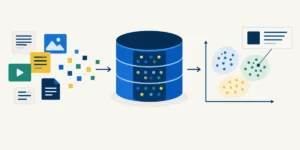
In traditional data environments, the workflow for answering a business question is labor-intensive. For example, if an executive asks for a breakdown of revenue growth in Southeast Asia, a human data analyst must manually write SQL queries, export the resulting datasets, create visualizations, and interpret the findings. This process can take hours or even days depending on the complexity of the data warehouse. An AI Data Agent, by contrast, operates by retrieving semantic information from the data layer, generating and executing SQL code, analyzing the results, and delivering a comprehensive narrative explanation. This transition significantly reduces the "time-to-insight" metric, which has become a critical Key Performance Indicator (KPI) for data-driven organizations.
The Chronology of AI Integration in Data Platforms
The evolution of these technologies has followed a rapid timeline, largely driven by the major players in the cloud and data storage markets:
- November 2022: The release of ChatGPT triggers initial corporate interest in Generative AI for text-based productivity.
- Mid-2023: Major data warehouse providers begin announcing "Copilot" integrations, focusing on code assistance for data scientists.
- Late 2023: Microsoft introduces Fabric, integrating AI agents directly into the data engineering and analytics suite.
- Early 2024: Snowflake launches Cortex Analyst, and Databricks debuts AI/BI Genie, signaling the shift toward "natural language-to-data" interfaces.
- Mid-2024: The emergence of "Agentic Frameworks" such as LangGraph and Microsoft Agent Framework allows developers to build multi-agent systems that can self-correct and interact with external software.
Current market data indicates that organizations are no longer satisfied with standalone AI tools. According to recent industry surveys, over 60% of Fortune 500 companies are currently piloting or deploying some form of AI agent to automate internal reporting.

Technical Challenges and the Reliability Gap
Despite the promise of AI Data Agents, their implementation is fraught with challenges that can undermine executive trust. The most significant hurdle is the "reliability gap." When an AI agent is asked a complex business question, it may fail to provide an answer or, more dangerously, provide an incorrect one through a phenomenon known as hallucination.
The primary issues identified by data engineers include:
- Data Silos: Agents often lack access to the full context of an enterprise’s data, leading to incomplete answers.
- Semantic Ambiguity: AI models may struggle to understand specific corporate jargon or varied definitions of metrics like "revenue" or "active users."
- Lack of Provenance: Without a clear audit trail, users cannot verify where a specific number came from, making the output unusable for high-stakes financial or regulatory decisions.
To mitigate these risks, architects are moving away from treating AI as an add-on application. Instead, they are advocating for a "Ground-Up" AI architecture that treats data agents, quality assurance (QA), and governance as interconnected pillars.
The Transformation of Data Quality Assurance
One of the most transformative applications of AI in this new ecosystem is in Quality Assurance (QA). Historically, data QA has relied on static, rule-based checks. In a healthcare setting, for instance, a data engineer might set rules to ensure that patient IDs are not null and that lab results fall within a valid numerical range. However, these rules cannot anticipate "unknown unknowns"—errors that have never occurred before or subtle shifts in data patterns.
AI-powered QA introduces a layer of machine learning that learns what "normal" data looks like from historical patterns. Instead of waiting for a rule to be triggered, the AI can detect anomalies such as a sudden 10% shift in the distribution of lab results from a specific clinic. While traditional QA would pass this data because it meets all formatting requirements, an AI-driven system would flag it as a potential pipeline issue or a data entry error.
Leading tools in this space, such as Soda, Great Expectations, and AWS Glue Data Quality, are now incorporating ML-powered anomaly detection. This allows for continuous relearning of data thresholds, reducing the manual burden on data engineers who would otherwise have to update thousands of static rules as the business evolves.

Establishing a Framework for AI Governance and Observability
As AI agents take on more autonomy, the need for robust governance becomes paramount. Industry experts argue that AI governance is no longer just about security and access control; it is about "explainability" and "reproducibility." If an AI agent provides different answers to the same question over a one-month period, the organization must be able to explain why.
Modern enterprise AI architectures are now incorporating several key components to ensure trust:
Prompt Versioning: Treating AI prompts as software artifacts. By storing prompts in version-controlled environments like Git, engineers can track exactly which version of a prompt was used to generate a specific business insight.
Tracing and Observability: Tools such as LangSmith and Phoenix allow organizations to record every step an AI agent takes—from the initial interpretation of a user’s question to the specific SQL tables queried. This "trace" provides a map for debugging and auditing.
Hallucination Detection: New methodologies are being developed to verify AI outputs against the source data in real-time. This includes "grounding" the results, where the AI must cite the specific data points used to reach its conclusion.
Human Feedback Loops: The most effective systems include mechanisms for users to provide feedback on AI performance. Simple "thumbs-up" or "thumbs-down" interactions, when paired with full execution traces, allow AI engineers to identify where prompt engineering or data modeling needs improvement.

Broader Implications and Future Outlook
The transition toward an AI-integrated data ecosystem suggests a fundamental shift in the role of the data professional. The traditional data analyst, who spent the majority of their time on manual data retrieval, is evolving into an "AI Orchestrator." This role focuses on designing the semantic layers that agents use, refining the prompts that guide AI behavior, and overseeing the governance frameworks that ensure accuracy.
From a financial perspective, the stakes are high. Gartner estimates that poor data quality costs organizations an average of $12.9 million per year. By leveraging AI to automate QA and data retrieval, enterprises can not only reduce these costs but also unlock the latent value of their data assets.
However, the path forward requires a move away from "AI for the sake of AI." Successful organizations are those that view AI as a component of a larger, reliable, and scalable data architecture. As the technology matures, the standard for enterprise excellence will not be whether a company uses AI, but whether it has built a data ecosystem where AI agents and human experts can collaborate within a framework of absolute trust and transparency. The move from simple chatbots to sophisticated, governed data agents is not merely a technical upgrade; it is a redefinition of how the modern enterprise thinks and operates.