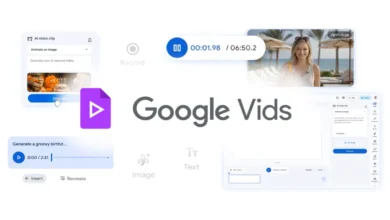
Google has officially announced a significant expansion of its AI-powered video creation platform, Google Vids, introducing two major features designed to streamline the production of professional-grade content through generative artificial intelligence. The updates, centered around the integration of the Gemini Omni model and the debut of Personal Avatars, represent a strategic move by the tech giant to lower the barrier to entry for corporate video production. By allowing users to generate, edit, and star in videos using simple natural language prompts and personal digital likenesses, Google aims to transform how businesses communicate internally and externally.
The announcement, led by Google Vids Product Manager Justin Luk, emphasizes a shift toward "everyday language" as the primary interface for video editing. This development follows the initial rollout of Google Vids earlier this year, which was positioned as an AI-powered video creation app for work, sitting alongside established Workspace tools like Google Docs, Sheets, and Slides.
The Integration of Gemini Omni and Multimodal Creation
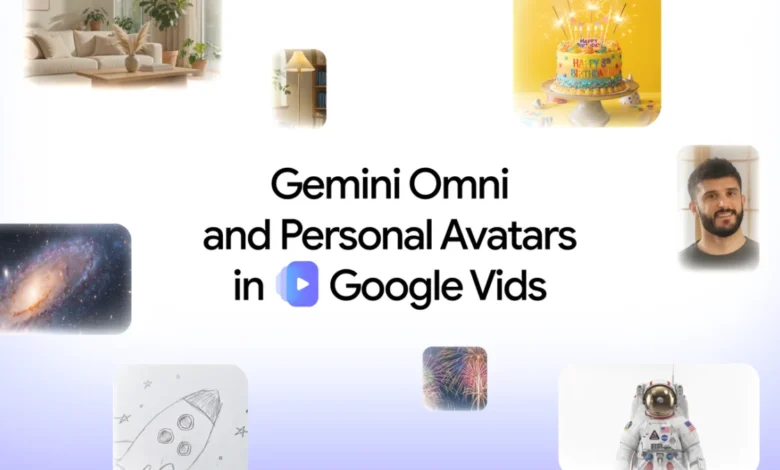
The cornerstone of this update is the implementation of Gemini Omni within the Google Vids environment. Unlike traditional video editing software that requires a steep learning curve and manual manipulation of timelines, Gemini Omni allows for a multimodal approach to creation. Users can now initiate a video project by providing a text prompt combined with image references, such as a photograph or even a rough hand-drawn sketch.
The AI model processes these diverse inputs to synthesize high-quality video clips that align with the user’s specific vision. This "text-to-video" and "image-to-video" capability is powered by Google’s advanced generative models, including the recently updated Veo 3.1. By leveraging these models, Google Vids can generate scenes that maintain visual consistency while adhering to the thematic constraints provided by the user.
Beyond initial generation, Gemini Omni introduces a "Chat to Edit" functionality. This feature allows for iterative, step-by-step refinements. For instance, if a user generates a marketing clip but finds the background too distracting or the lighting insufficient, they can simply type a command such as "make the background a modern office setting" or "adjust the lighting to look like golden hour." This conversational interface effectively turns the AI into a virtual video editor, capable of swapping backgrounds, fixing exposure, and adding cinematic effects without requiring the user to restart the rendering process from scratch.
Personal Avatars: The Future of Virtual Presence
Perhaps the most provocative feature included in the update is the introduction of Personal Avatars. This tool is designed to solve a common corporate dilemma: the need for personalized video communication without the logistical hurdles of professional filming, lighting, and wardrobe.
To create a Personal Avatar, a user uploads a high-resolution selfie and a short voice recording. The system then generates a digital twin that mimics the user’s likeness and vocal characteristics. Once the avatar is established, the user can simply type a script, and the digital twin will deliver the message with synchronized lip movements and naturalistic expressions.
This technology is specifically targeted at internal communications, such as HR updates, personalized sales pitches, or executive shout-outs. It allows professionals to "star" in videos while remaining at their desks, significantly reducing the time and cost associated with traditional video production. However, Google has implemented strict guardrails for this feature. Currently, access is limited to users aged 18 and older in specific regions. Furthermore, the avatars are strictly linked to the user’s verified Google Account to prevent the unauthorized creation of deepfakes or the impersonation of other individuals.
Chronology of Google’s Video AI Development
The release of Gemini Omni and Personal Avatars is the latest milestone in a rapid series of developments for Google’s video ecosystem. To understand the significance of this update, one must look at the timeline of Google’s AI integration into the creative suite:
- April 2024: Google first unveiled Google Vids at the Cloud Next conference, describing it as an AI-powered video app for the workplace that would simplify the creation of training videos, project updates, and meeting recaps.
- May 2024: Google introduced Veo, its most capable generative video model to date, designed to compete with industry rivals like OpenAI’s Sora and Runway’s Gen-3.
- February 2024 – Early 2025: Google began a phased rollout of Veo 3.1 across its creative platforms, providing the underlying architecture for high-fidelity video generation.
- Present Day: The integration of Gemini Omni and Personal Avatars marks the transition from "experimental" video generation to a "production-ready" tool integrated directly into the Google Workspace ecosystem.
Supporting Data and Market Context
The move to bolster Google Vids comes at a time when the demand for short-form video in the workplace is skyrocketing. According to recent industry reports, video content is 12 times more likely to be shared than text and images combined in a corporate setting. Furthermore, a study by Gartner suggests that by 2026, 75% of businesses will use generative AI to assist in the creation of marketing and internal communications.

Google’s strategy is to capture this market by embedding these tools within the existing Workspace environment. By making Google Vids accessible to Google AI Pro, Ultra, and Workspace Business subscribers, the company is positioning video as a standard document format, much like a PDF or a slide deck. The goal is to democratize video production, moving it away from specialized creative departments and into the hands of project managers, sales representatives, and educators.
Safety, Transparency, and Ethical Considerations
As generative AI becomes more sophisticated, the potential for misinformation and the creation of deceptive content has become a primary concern for tech companies and regulators alike. Google has addressed these concerns by integrating SynthID into the Google Vids workflow.
Developed by Google DeepMind, SynthID is a digital watermarking technology that embeds an invisible, yet detectable, watermark into the pixels of AI-generated video clips. This watermark is designed to persist even after the video has been compressed, cropped, or edited. By providing a reliable method for identifying AI-generated content, Google aims to foster a transparent environment where viewers can distinguish between authentic footage and synthetic media.
In addition to watermarking, Google’s likeness policy for Personal Avatars serves as a critical safety feature. By restricting avatar creation to the account holder’s own image and voice, Google is attempting to mitigate the risks associated with identity theft and digital impersonation.
Official Responses and Internal Perspectives
Justin Luk, the Product Manager for Google Vids, highlighted the user-centric nature of these updates. "We want to make video creation as easy as writing an email," Luk stated in the announcement. The sentiment within Google’s Workspace team is that the "blank canvas" problem—the difficulty of starting a creative project from scratch—is the biggest hurdle for business users. Gemini Omni is intended to act as a "creative partner" that provides a first draft within seconds.
While competitors like HeyGen and Synthesia have offered avatar-based video solutions for some time, Google’s advantage lies in its massive distribution network. With billions of users already on Workspace, the friction for adopting Google Vids is significantly lower than that of third-party platforms.
Fact-Based Analysis of Implications
The introduction of these tools carries several long-term implications for the professional world:
- Cost Reduction in Training and Onboarding: Companies that previously spent thousands of dollars on professional video crews for training modules can now produce similar content in-house for the cost of a Workspace subscription.
- The Rise of the "Synthetic Professional": As Personal Avatars become more realistic, the concept of "presence" in the digital workplace will shift. A CEO could potentially deliver personalized messages to 10,000 employees simultaneously, each addressed by name, without ever stepping into a studio.
- Pressure on Traditional Creative Agencies: Creative agencies that specialize in basic corporate video editing may see a decline in demand as AI tools become capable of handling routine tasks like background removal and color correction through chat-based prompts.
- Hardware Obsolescence: If high-quality avatars can be generated from a single selfie, the need for high-end webcams and home studio setups for asynchronous communication may diminish.
Conclusion and Future Outlook
The updates to Google Vids represent a pivotal moment in the evolution of the office suite. By combining the multimodal power of Gemini Omni with the convenience of Personal Avatars, Google is betting that video will become the dominant medium for business intelligence and storytelling.
As these features roll out to Google AI Pro and Workspace Business customers, the industry will be watching closely to see how effectively the "Chat to Edit" functionality performs in real-world scenarios and whether the Personal Avatars can truly replicate the nuance of human communication. For now, Google has sent a clear message: the future of work is not just written or spoken; it is generated.
The platform is now available for eligible subscribers, and Google encourages users to explore the new capabilities at vids.new. As the technology matures, it is expected that Google will continue to refine these models, potentially adding more complex animation capabilities and deeper integration with other Workspace apps like Meet and Chat.