The Evolution of Meta Descriptions in the Era of Generative AI and Dynamic Search Snippets

The landscape of search engine optimization has undergone a seismic shift since the early days of the commercial internet, transitioning from a system governed by rigid metadata to a fluid, AI-driven environment. For over two decades, the meta description—a brief HTML attribute that summarizes the contents of a web page—served as the primary tool for webmasters to control their appearance in search engine results pages (SERPs). Originally, Google and its contemporaries relied almost exclusively on these snippets to provide users with a preview of a page. However, as search algorithms have grown more sophisticated, the role of the meta description has transformed from a mandatory directive into a nuanced suggestion. Today, while Google frequently ignores these hand-crafted summaries in favor of dynamically generated snippets, industry experts and official Google representatives maintain that they remain a vital component of a comprehensive digital strategy, particularly as generative AI (genAI) platforms begin to play a larger role in information retrieval.
The historical trajectory of the meta description reveals a steady move toward automation. In the early 2000s, optimizing these descriptions was a cornerstone of SEO, aimed primarily at enticing users to click by including specific keywords and calls to action. In 2009, Google officially clarified that neither meta descriptions nor meta keywords were used in its ranking algorithm to determine a site’s position. This announcement shifted the focus of meta descriptions from "ranking factors" to "click-through rate (CTR) factors." By 2017, Google experimented with the length of snippets, occasionally expanding them to 320 characters before settling back into the traditional 155-to-160-character range. Throughout this timeline, the most significant change has been the frequency with which Google overrides the provided meta description. Recent industry studies, including data from Ahrefs and Moz, suggest that Google rewrites meta descriptions for approximately 62% to 70% of search results. This occurs most often when the search query does not perfectly align with the pre-written description, prompting the algorithm to pull relevant text directly from the page body to better satisfy the user’s intent.
Despite the high frequency of algorithmic overrides, Google’s Search Central documentation continues to advocate for the use of meta descriptions. The official stance is that Google will utilize the content of the page to determine the appropriate snippet, but it will revert to the meta description element when it describes the page more accurately than other segments of the content. This is particularly true for pages where the on-page text may be fragmented or technical, such as product listings or pricing tables. Last month, Google’s Senior Search Analyst John Mueller addressed the ongoing relevance of these tags during a discussion on Reddit’s TechSEO community. Mueller noted that while meta descriptions are "definitely not a requirement," they serve a dual purpose: they help search engines understand the page’s focus and help the creators themselves define a clear purpose for their content. Mueller recommended that webmasters continue to prioritize descriptions for individual pages that carry significant value, even if the algorithm occasionally chooses a different snippet.
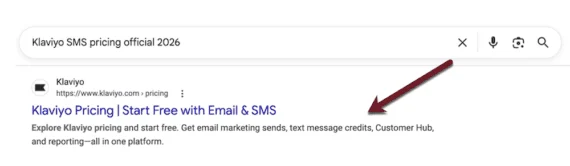
The emergence of generative AI platforms like ChatGPT, Claude, and Perplexity has added a new layer of importance to metadata. Unlike traditional search engines that primarily index and rank, genAI crawlers often use meta descriptions as a primary summary to understand the "essence" of a URL before processing the full body text. For high-intent landing pages, such as those detailing software pricing or complex services, a well-crafted meta description provides a concise data point for AI models to reference. For example, a search for "Klaviyo SMS pricing official 2026" demonstrates this synergy. In this instance, both Google’s search snippet and AI-driven summaries have been observed utilizing the site’s meta description: "Explore Klaviyo pricing and start free. Get email marketing sends, text message credits, Customer Hub, and reporting — all in one platform." This consistency suggests that when a meta description is sufficiently descriptive and aligns with the user’s query, it serves as the "gold standard" for both traditional and AI search engines.

Supporting data highlights the tangible impact of maintaining these tags. A study by Portent found that pages with optimized meta descriptions see an average CTR improvement of nearly 6% compared to those without. This is because a human-written description can convey brand voice and specific value propositions—such as "Free Shipping" or "Money-Back Guarantee"—that an automated snippet pulled from the middle of a paragraph might miss. Furthermore, for database-driven websites with thousands of URLs, such as e-commerce platforms, the challenge lies in scale. Google recommends that these large-scale sites use programmatic generation to ensure every page has a description. By using variables such as product name, price, and category, a site can ensure it provides a coherent summary that is more likely to be used by search engines than a random string of technical specifications.
The technical implementation of meta descriptions in the current era requires a strategic approach. SEO professionals now suggest focusing manual efforts on "high-intent" pages—those where a user is likely to make a purchase or sign up for a service. This includes product detail pages (PDPs), category pages, and key landing pages. For these areas, the meta description should be treated as ad copy. It must be concise, relevant, and contain the primary keyword to ensure it bolds in the search results, which naturally draws the user’s eye. Conversely, for lower-priority pages like blog archives or tag pages, programmatic or AI-generated descriptions are increasingly becoming the industry standard. Tools like ChatGPT and Claude can be prompted to generate descriptions based on the page’s H1 and primary content, though experts warn that human review remains essential for high-traffic pages to prevent "hallucinations" or awkward phrasing that could deter users.
The broader implications of this shift point toward a future where "search" is no longer just about a list of links, but about "answers." As Google integrates its Gemini AI into search results through AI Overviews, the importance of clear, structured summaries increases. If a website provides a succinct meta description, it increases the likelihood that an AI will cite that website as a source for its summary. There is no technical downside to including a meta description; even if Google chooses to ignore it for a specific query, the tag remains in the HTML as a signal of the page’s intent. In a digital environment where the competition for user attention is fiercer than ever, the meta description serves as a vital bridge between the technical backend of a website and the user’s first impression.
The official responses from Google and the behavior of modern AI crawlers confirm that the meta description is far from obsolete. Instead, it has been repurposed as a tool for clarity and intent. By providing a clear focus for a page, webmasters help search engines bridge the gap between complex on-page content and the user’s specific needs. As search technology continues to evolve, the balance between human-authored metadata and machine-generated snippets will likely continue to tilt toward automation, but the foundational role of the meta description as a "representative summary" remains a cornerstone of professional web development.
In conclusion, the strategic use of meta descriptions today involves a tiered approach: manual, high-quality copywriting for conversion-centric pages and programmatic, AI-assisted generation for the broader site architecture. By adhering to this model, businesses can ensure they are optimized not only for traditional search engines like Google but also for the next generation of AI-driven information discovery. The goal is no longer just to "rank," but to provide the most helpful, relevant answer to a user’s query, regardless of whether that answer is delivered via a classic blue link or an AI-generated summary. The meta description, once a simple tool for keywords, is now a critical asset in the quest for relevance in a crowded digital marketplace.