Bridging the Digital Divide: How AudioEye Combines AI and Human Expertise to Redefine Web Accessibility

As the modern internet increasingly shapes global commerce, communication, and daily life, the digital landscape remains largely hostile to individuals with disabilities. For decades, compliance with web accessibility standards was treated by many organizations as an afterthought—a box to be checked under legal duress rather than a fundamental pillar of inclusive design. Today, however, the convergence of tightening international regulations, rising litigation rates, and an evolving technological ecosystem has pushed digital accessibility to the forefront of corporate strategy.
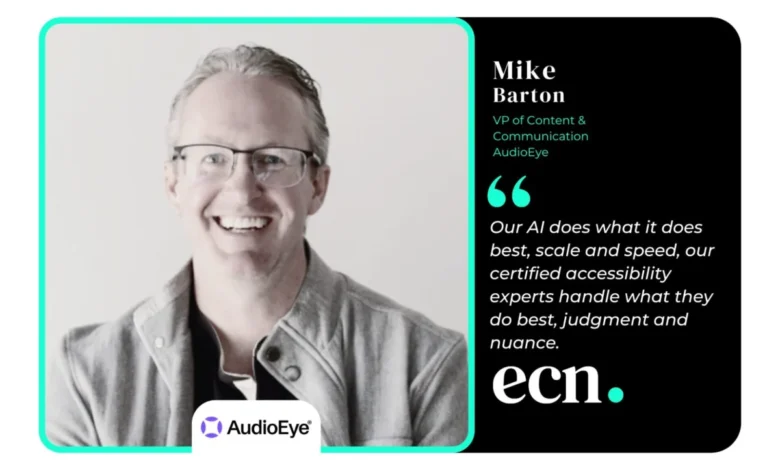
At the center of this paradigm shift is AudioEye, a prominent digital accessibility platform that leverages a hybrid model of artificial intelligence automation and human expertise. To understand the current trajectory of digital inclusivity, Mike Barton, Vice President of Content Marketing and Communications at AudioEye, outlines the company’s mission, the maturation of the industry, and the emerging challenges and opportunities facing businesses worldwide.
The Evolution of Digital Accessibility: From Niche Concern to Global Imperative
When AudioEye was founded nearly two decades ago, digital accessibility occupied a narrow niche. Most corporate entities viewed web compliance as a peripheral issue or ignored it entirely. Over the past twenty years, however, the stakes have risen dramatically. Litigation concerning digital inaccessibility has doubled over the last five years in the United States, while sweeping international frameworks, such as the European Accessibility Act, have established cross-border legal obligations. Concurrently, the rapid proliferation of artificial intelligence has fundamentally altered how websites are engineered and how users interact with them.
Despite these shifts, a core philosophy has guided AudioEye’s operational strategy: automation provides the scale required to monitor vast digital estates, while human expertise ensures accuracy and context. While the platform utilizes advanced AI to scan thousands of web pages at the speed demanded by the modern digital economy, leadership maintains that technology alone is insufficient. Complex accessibility barriers—particularly those encountered by users relying on assistive technologies like screen readers—often depend on human judgment, intent, and lived experience. By balancing automated detection with validated human review, AudioEye has scaled its services to protect more than 127,000 organizations globally.
Defining the Stakes: The $18 Trillion Market and Legal Exposure
Digital accessibility is fundamentally defined as the practice of designing and developing websites, applications, and digital content so that individuals with disabilities can navigate them with the same ease and efficiency as neurotypical or able-bodied users. This issue directly impacts approximately 1.3 billion people worldwide who live with some form of disability.
For modern enterprises, the failure to prioritize accessibility carries severe multifaceted consequences, encompassing legal, financial, and reputational risks. Consumers with disabilities represent an estimated $18 trillion in global spending power. Data indicates that approximately seventy percent of users with disabilities will immediately abandon a website that fails to accommodate their assistive technology, frequently shifting their patronage to competitors.
On the legal front, exposure has intensified significantly. In the United States, ADA-related digital lawsuits have doubled since 2020, while the European Accessibility Act extends stringent requirements to any enterprise serving consumers within the European Union. Industry analysts note that organizations treating accessibility merely as a temporary fix frequently face costly litigation, whereas businesses integrating accessibility as a fundamental component of their digital infrastructure mitigate legal risk while capturing untapped market share.
The Hybrid Platform Model: Automation Meets Human Judgment
AudioEye’s technological framework is designed to integrate seamlessly into existing digital workflows. Operating via a single line of JavaScript similar to standard cookie banners or live chat widgets, the platform deploys automatically across content management systems, custom builds, and headless architectures.
Once initialized, the platform’s AI continuously scans rendered web pages against the Web Content Accessibility Guidelines (WCAG). According to independent industry research, this automated layer detects significantly more baseline issues than standard competitive tooling. Approximately half of all detected compliance issues are resolved automatically in real time.
However, the platform’s core differentiator lies in its hybrid remediation process. Recognizing that nuanced barriers—such as the contextual intent of complex UI elements, carousels, or non-text content—escape pure algorithmic detection, AudioEye deploys certified specialists, including individuals with disabilities, to perform manual audits. These experts formulate custom code fixes that are deployed directly through the platform. Consequently, an estimated 97 percent of accessibility barriers are resolved before an organization’s internal development team is required to intervene.
Industry-Specific Pressures and Cross-Sector Adoption
While any organization with an online presence bears an operational and legal obligation to maintain an accessible digital environment, certain industries experience heightened regulatory and commercial urgency. E-commerce represents the most prominent sector, accounting for approximately 78 percent of all digital accessibility lawsuits. Online retailers face immediate financial losses when barriers prevent prospective buyers from completing transactions.
Similarly, healthcare providers, financial institutions, and government agencies face stringent regulatory oversight and severe penalties for non-compliance. Nevertheless, the underlying economic imperative remains universal across sectors: organizations must protect themselves from preventable litigation while reclaiming developer hours that would otherwise be misallocated toward manual remediation.
Regulatory Landscape and Legal Defense Mechanisms
Compliance with established standards such as WCAG A and AA criteria serves as the baseline for mitigating legal liability. AudioEye’s platform provides ongoing monitoring aligned with the Americans with Disabilities Act (ADA) in the United States and international mandates such as the European Accessibility Act.
Beyond proactive remediation, the platform offers structured defense mechanisms when legal challenges arise. When a client receives a demand letter or legal claim, AudioEye’s internal teams validate the allegations, produce comprehensive expert audit reports, and collaborate directly with the client’s legal counsel. Company executives emphasize that AudioEye remains a recognized vendor in securing documented courtroom dismissals, offering risk-mitigation guarantees compared to traditional automated-only widgets or purely advisory consulting models.
Commercial Benefits and the Rise of AI Discovery Agents
Beyond risk mitigation, investments in digital accessibility yield measurable commercial advantages, particularly within the e-commerce sector. Because a vast majority of shoppers with disabilities restrict their online purchases to platforms they know are fully accessible, eliminating friction directly correlates with reduced bounce rates, increased conversion metrics, and access to an underserved demographic.
Furthermore, an emerging technological development is reshaping the commercial rationale for accessibility: AI-driven discovery agents. Autonomous AI agents increasingly navigate the web on behalf of users, relying heavily on a website’s accessibility tree to interpret content, extract data, and execute transactions. Consequently, websites that fail to maintain robust accessibility standards risk becoming entirely invisible to next-generation AI search and discovery channels.
Looking Ahead: Global Regulations and the Future of the Web
As AudioEye looks to the future, executive leadership identifies two primary macro trends defining the trajectory of the industry. First, the globalization of regulatory frameworks—exemplified by the full enforcement of the European Accessibility Act—means that enterprises can no longer limit their compliance strategies to domestic jurisdictions. Organizations must adopt comprehensive, scalable compliance frameworks that adapt to evolving international standards.
Second, the proliferation of artificial intelligence presents both a challenge and a solution. While AI-powered automation enables accessibility platforms to scale detection and remediation faster than ever before, general-purpose AI coding tools are simultaneously generating inaccessible web content at unprecedented volumes by training on legacy, non-compliant data. Addressing this widening gap will require continuous innovation in automated detection and expert validation.
Ultimately, the convergence of accessibility compliance and AI-driven navigation signals a future where inclusive design is inextricably linked to digital visibility. As Mike Barton and the team at AudioEye assert, the core mission remains straightforward: ensuring that the digital world functions seamlessly for every user, establishing accessibility not as a compliance hurdle, but as the foundational standard of the modern internet.
Related posts: