The Evolution of Agentic AI Architecture and the Rise of Specialized Swarms by Mid-2026

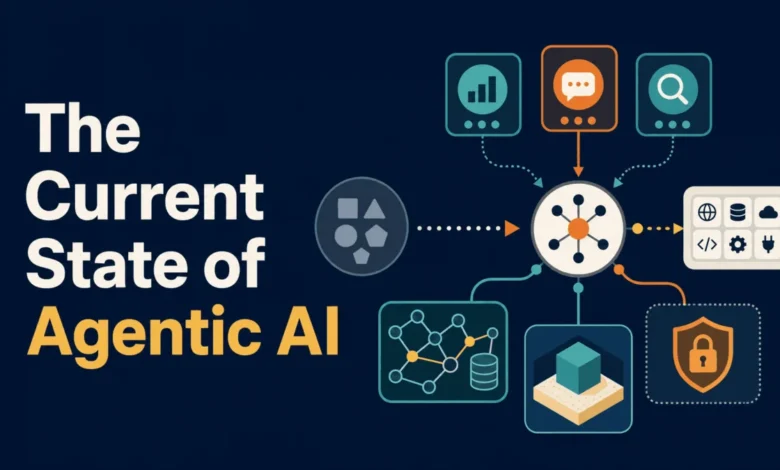
The landscape of artificial intelligence has undergone a seismic shift over the past twenty-four months, moving away from the brittle, monolithic structures of the early 2020s toward a sophisticated, decentralized ecosystem of specialized agents. By mid-2026, the industry has largely abandoned the labor-intensive "brute-force" orchestration that characterized the first wave of agentic systems. In its place, a new architecture has emerged, defined by native reasoning models, standardized communication protocols, and the rise of multi-agent "swarms" that mirror the evolution of software from monolithic applications to microservices. This transition marks the end of the era where engineers spent the majority of their time hand-crafting complex "Reasoning and Acting" (ReAct) loops and fighting with the inherent limitations of single-model prompt chains.
The Shift from External Scaffolding to Native Reasoning
In early 2024, building an AI agent required significant external scaffolding. To make a large language model (LLM) act as an agent, developers had to implement "Plan-and-Execute" patterns or "Reflexion" loops. These were essentially external Python scripts that forced a model to think step-by-step, critique its own work, and retry failed tasks. While effective as a proof of concept, these systems were plagued by high latency, excessive token consumption, and a lack of reliability.
By mid-2026, the "System 2" thinking—deliberate, logical reasoning—has been integrated directly into the architecture of foundation models. Modern models now utilize "test-time compute," generating hidden reasoning tokens that allow the model to explore multiple solution branches and self-correct before providing a final output. Industry data suggests that this shift has reduced the failure rate of complex multi-step tasks by nearly 65% compared to the external orchestration methods used in 2024. Consequently, the role of the AI engineer has transitioned from "prompting" the agent’s logic to designing the "sandbox" and infrastructure in which these natively reasoning entities operate.
The Rise of Agentic Swarms: The Microservices of AI
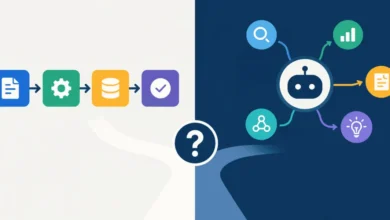
As models became more capable of internal reasoning, the strategy for deploying them in production shifted. The "do-everything" agent—a single model connected to dozens of disparate tools—has been replaced by "agentic swarms." This architectural pattern involves a collection of smaller, highly specialized agents that communicate via standardized protocols.
This modular approach addresses several critical bottlenecks. First, it solves the "tool-blindness" problem where a model with too many available functions becomes prone to hallucination or selection errors. Second, it allows for the use of "Small Language Models" (SLMs) for specific tasks, drastically reducing operational costs. For example, a "Triage Agent" might use a fast, low-cost model to route requests, while a "Data Analyst Agent" utilizes a high-parameter model for complex synthesis.
A typical 2026 enterprise swarm architecture consists of:
- The Triage Agent: Acts as the entry point, interpreting user intent and routing the task to the appropriate specialist.
- The Specialist Agents: Scoped nodes (e.g., SQL writers, API executors, document parsers) that possess only the tools necessary for their specific domain.
- The Synthesis Agent: Collects outputs from various specialists to form a coherent response for the end-user.
This "stateless-per-agent, stateful-across-system" design ensures that context windows remain lean, improving both speed and accuracy. According to recent technical benchmarks, swarm-based architectures demonstrate a 40% improvement in "Time to First Action" compared to monolithic agent designs.
Standardization via the Model Context Protocol (MCP)
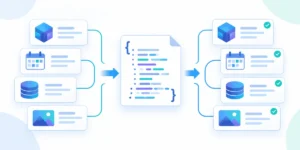
One of the most significant hurdles to agentic adoption was the lack of a universal standard for connecting models to external data and tools. Prior to 2025, every integration required custom JSON schemas and bespoke error-handling logic. The emergence and subsequent industry-wide adoption of the Model Context Protocol (MCP) has effectively solved this "integration tax."
MCP acts as a universal adapter, allowing AI agents to connect to local or remote data sources—such as GitHub, Slack, or PostgreSQL databases—without the need for custom API wrappers. In this new paradigm, the execution of a tool occurs on an isolated MCP server rather than within the agent’s immediate environment. This separation of concerns has not only simplified development but also enhanced system stability. Market analysis indicates that the availability of pre-built MCP servers has reduced the development cycle for enterprise AI agents from months to weeks.
| Feature | Old Paradigm (Pre-2025) | Current State (Mid-2026) |
|---|---|---|
| Tool Integration | Custom hardcoded API wrappers | Standardized MCP Servers |
| Logic | External ReAct/Reflexion loops | Native "System 2" Reasoning |
| Architecture | Monolithic "God" Agents | Specialized Multi-Agent Swarms |
| Memory | Basic Vector RAG | Persistent Memory Graphs |
From Prompt Engineering to Context Engineering: Memory Graphs
A persistent challenge in agentic AI has been the "Goldfish Effect"—the tendency for agents to forget previous interactions or fail to learn from their mistakes. In 2026, this is being addressed through the implementation of "Memory Graphs." Unlike traditional Retrieval-Augmented Generation (RAG), which merely pulls relevant document snippets, Memory Graphs utilize graph databases (like Neo4j) to store entities, relationships, and execution histories.
When a swarm completes a task, a specialized "Memory Agent" runs asynchronously to evaluate the trajectory. It extracts key facts, identifies successful strategies, and updates the graph. This allows the system to develop a "long-term memory" that persists across sessions. For instance, if an agent discovers a specific quirk in a company’s internal API, that knowledge is stored in the graph and made available to all agents in the swarm for future tasks. This shift represents a move from "prompt engineering" to "context engineering," where the value lies in the curated, evolving knowledge base the system builds for itself.
The New Frontier of Security: AIjacking and Lateral Movement
The transition to multi-agent swarms has introduced complex security vulnerabilities. Cybersecurity experts have identified "AIjacking"—the use of indirect prompt injections to hijack automated workflows—as a primary threat in 2026. Because agents in a swarm often have the authority to hand off control and data to one another, a malicious instruction hidden in an external source (like an email or a website) can "pivot" through the system.
For example, an "Email Parser Agent" might ingest a malicious prompt that instructs it to transfer a "delete" command to a "Database Agent." Because the Database Agent trusts the handoff from the Parser Agent, the malicious command could be executed. To combat this, three defensive layers have become standard in production environments:
- Handoff Guardrails: Programmatic checks that validate the "intent" of a transfer before control is shifted.
- Sandboxed Execution: Running all tool calls in ephemeral, isolated containers to prevent persistent system compromise.
- Human-in-the-loop (HITL) Triggers: Mandatory manual approvals for high-stakes actions, such as financial transactions or data deletions.
Economic and Industrial Implications
The maturation of agentic architecture is fundamentally changing the economics of software development. As of mid-2026, the "cost per intelligence unit" has plummeted, not just because of lower token prices, but because of increased efficiency in how those tokens are used. Enterprises are no longer buying "AI models"; they are investing in "Agentic Infrastructure."
The shift toward specialized swarms has also created a new market for "Agent-as-a-Service" providers—companies that offer highly tuned, MCP-compliant specialist agents that can be "hired" into a company’s existing swarm. This modularity is expected to drive the next wave of productivity, as businesses can now assemble custom AI workforces tailored to specific departmental needs without the overhead of training foundation models from scratch.
Chronology of Development: 2024–2026
- Late 2024: Introduction of the Model Context Protocol (MCP) by a consortium of major AI labs and infrastructure providers.
- Early 2025: Release of the first generation of "System 2" models with native reasoning capabilities, rendering many third-party orchestration frameworks obsolete.
- Late 2025: High-profile security breaches involving "lateral movement" in AI swarms lead to the standardization of Handoff Guardrails.
- Mid-2026: Agentic swarms become the dominant architecture for enterprise AI, with Memory Graphs replacing traditional RAG for complex workflows.
As the industry moves forward, the focus remains on the "systems layer." The teams achieving the highest ROI in 2026 are those that have mastered swarm topology, memory architecture, and security boundaries. Agentic AI is no longer a research curiosity; it is a disciplined engineering field where the goal is to build resilient, specialized systems capable of operating safely and autonomously at scale.