Wildfires Force Shutdown of NASA’s Deep Space Network Complex in Madrid, Impacting Global Space Communications

The Madrid Deep Space Communications Complex (MDSCC), a pivotal component of NASA’s Deep Space Network (DSN), ceased operations on Friday afternoon due to encroaching wildfires in the surrounding communities west of Madrid, Spain. This critical facility, one of only three such complexes globally, went offline as authorities ordered evacuations in the region, leaving the DSN significantly constrained with only one of its largest antennas fully operational worldwide. The shutdown of the Madrid site, which typically provides vital communication links to far-flung missions such as Voyager 2 in interstellar space and the Juno probe orbiting Jupiter, has introduced a significant challenge for NASA’s deep space operations.
The Deep Space Network: A Global Lifeline for Space Exploration
The Deep Space Network (DSN) is an international array of giant radio antennas that supports interplanetary spacecraft missions and radio astronomy observations for NASA and various international partners. Managed by NASA’s Jet Propulsion Laboratory (JPL), the DSN is strategically located at three sites approximately 120 degrees of longitude apart around the globe: Goldstone, California (USA); Madrid, Spain; and Canberra, Australia. This geographical separation ensures that any spacecraft can always be in view of at least one DSN station as Earth rotates, providing continuous, 24/7 communication capabilities. Each complex is equipped with multiple antennas of varying sizes, including the iconic 70-meter (230-foot) dishes, which are indispensable for detecting the extremely faint radio signals from distant probes and for sending commands across vast cosmic distances. These massive antennas are capable of tracking spacecraft billions of miles away, enabling the transmission of scientific data, telemetry, and critical instructions, making them the nerve center of virtually all deep space missions.
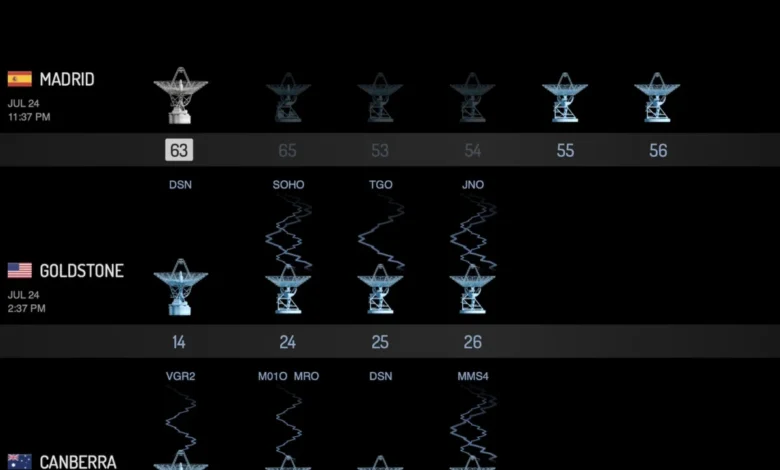
The Madrid complex, situated near Robledo de Chavela, serves as the DSN’s European hub, playing a crucial role in maintaining contact with missions exploring the solar system and beyond during Earth’s rotation. Its operational status is meticulously monitored via a public NASA website, "DSN Now" (or "DSN Eyes"), which on Friday afternoon conspicuously displayed "no activity" at the Madrid site, a stark contrast to its counterparts in California and Australia, which were actively engaged in communication with various NASA spacecraft.
Chronology of Wildfires and Evacuations in Central Spain
The wildfires forcing the closure of the Madrid DSN complex are part of a broader environmental crisis gripping central Spain. Beginning earlier in the week, a series of intense blazes rapidly spread through the Sierra de Guadarrama mountains, west of the Spanish capital. Fuelled by a persistent summer heatwave that has seen temperatures soar consistently above 40 degrees Celsius (104 degrees Fahrenheit) and exacerbated by chronic drought conditions, the fires have proven exceptionally difficult to control. The dry vegetation, high winds, and rugged terrain have created a perfect storm for rapid fire propagation.
By Friday, the situation had escalated dramatically, prompting Spanish authorities to issue emergency evacuation orders for more than 19,000 residents across several towns and villages in the affected mountainous region. Reports from Reuters indicated that over 2,000 firefighting personnel, supported by a fleet of 10 aircraft, were actively deployed in a desperate attempt to contain the conflagration. The smoke plumes were visible for many kilometers, and the immediate threat to life and critical infrastructure necessitated the pre-emptive closure and evacuation of sensitive facilities like the Madrid DSN. NASA officially acknowledged the situation, stating, "The safety and well-being of our personnel is our highest priority and our thoughts are with the families and neighbors who are also experiencing the impact of the wildfires in the surrounding communities. We will provide updates as conditions evolve." This statement underscored the severity of the situation and NASA’s commitment to its staff and the local community.
In a related development highlighting the widespread impact of the wildfires on space infrastructure, a separate deep space tracking station owned and operated by the Spanish government and the European Space Agency (ESA) also had to be evacuated. The Cebreros tracking station, an integral part of ESA’s Estrack network, is located merely a few miles from NASA’s DSN facility. Its shutdown further underscores the critical vulnerability of key scientific installations to environmental disasters. ESA officials, while not issuing an immediate public statement on the evacuation, are understood to be working closely with Spanish authorities to ensure the safety of their personnel and the integrity of the station.
A Strained Network: Pre-Existing Challenges and Current Limitations
The sudden incapacitation of the Madrid DSN complex comes at a particularly challenging time for NASA’s deep space communications infrastructure. The network was already operating under reduced capacity due to a significant incident at the Goldstone complex in California. The 70-meter antenna at Goldstone, known as DSS-14 (Deep Space Station 14), has been offline since last year following an accident where the massive structure "over-rotated." This mechanical failure caused extensive damage to crucial internal components, including cables and water lines. The incident resulted in a substantial spill of approximately 200,000 gallons of water containing glycol, an environmental hazard, into the base of the antenna.
The repairs and cleanup at Goldstone are complex and costly, with projections estimating the expense between $4.1 million and $4.6 million. NASA officials have opted to combine these necessary repairs with pre-planned upgrades to the antenna’s systems, aiming to enhance its long-term reliability and capabilities. However, this integrated approach means that DSS-14 is not expected to return to full operational status until sometime in 2028.
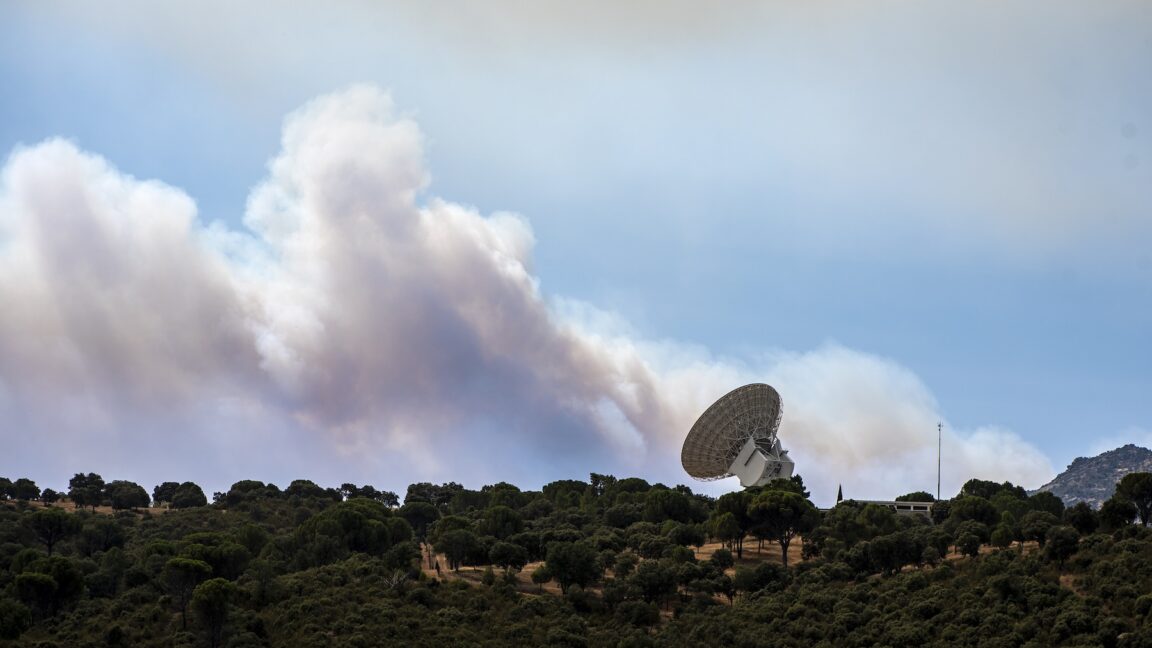
With both the Madrid 70-meter antenna (DSS-63) and the Goldstone 70-meter antenna (DSS-14) out of commission, the Deep Space Network is currently reliant on a single operational 70-meter radio antenna: DSS-43 at the Canberra Deep Space Communication Complex (CDSCC) in Australia. This dramatic reduction in primary communication assets places immense strain on the remaining operational site. The DSN’s ability to maintain continuous contact with distant spacecraft hinges on the availability of its geographically dispersed complexes. Each complex provides unique "view periods" during which it can communicate with a specific spacecraft as Earth rotates. With two of the three main sites compromised, these view periods become severely limited, creating potential communication gaps and requiring intensive rescheduling and prioritization of mission objectives.
Implications for Current and Future Space Missions
The immediate impact of the DSN’s reduced capacity is felt by ongoing missions. Spacecraft like Voyager 2, which has journeyed beyond the heliosphere into interstellar space, rely on the DSN’s largest antennas due to the extreme distances involved and the incredibly faint signals they transmit. Voyager 2 is currently over 19 billion kilometers (12 billion miles) from Earth, and even a brief interruption in communication can have significant implications for data acquisition and health checks. Similarly, the Juno probe, diligently orbiting Jupiter and sending back high-resolution data on the gas giant’s atmosphere and magnetosphere, requires robust communication links to downlink its substantial scientific payload. While Juno is closer than Voyager 2, its high data rates still demand significant DSN bandwidth.
Mission controllers at JPL will now face the arduous task of re-prioritizing communication schedules, allocating precious contact time from the sole operational 70-meter antenna in Canberra, and potentially leveraging smaller 34-meter antennas across the network for less demanding tasks. While 34-meter antennas are highly capable, they lack the raw sensitivity and power of the 70-meter dishes, especially for distant or high-data-rate missions. This situation introduces a higher degree of operational risk and could lead to delays in data reception or even missed opportunities for critical scientific observations if communication windows are too short or infrequent.
Looking ahead, the DSN’s operational status is particularly relevant for NASA’s ambitious Artemis program, which aims to return humans to the Moon. While the next crewed Artemis mission is still a few years away, the program places exceptionally high demands on the DSN. Human spaceflight missions require robust, continuous, and high-bandwidth communication for telemetry, real-time voice communications, high-resolution imagery downlinks, and critical command uplinks. The current DSN limitations, if prolonged, could influence the planning and execution of future Artemis phases.
Artemis III, initially envisioned as the first human lunar landing, has been re-scoped to fly in low-Earth orbit to test the Orion capsule with commercial Moon landers from SpaceX and Blue Origin. Artemis IV, now the program’s first planned lunar landing with astronauts, is targeted for no earlier than 2028. This timeline is significant as it potentially aligns with the projected return of the Goldstone 70-meter antenna. However, any further delays in Goldstone’s repair or prolonged outages at other sites could pose substantial challenges for the DSN’s ability to fully support the complex requirements of human lunar exploration. The robust and redundant communication capabilities of the DSN are paramount for ensuring astronaut safety and mission success.
Broader Context: Climate Change and Infrastructure Vulnerability
The wildfires in Spain, like those experienced across Southern Europe and other parts of the world, are increasingly linked to the escalating impacts of climate change. A summer heatwave and chronic drought conditions have made the region exceptionally vulnerable to such blazes. Scientists have consistently pointed to rising global temperatures leading to more frequent and intense heatwaves, prolonged dry spells, and altered precipitation patterns, all of which contribute to an increased risk of wildfires. The loss of critical infrastructure, such as space communication complexes, to these environmental events highlights a growing concern about the resilience of vital scientific and technological assets in a changing climate.
The DSN’s vulnerability underscores the need for robust contingency planning and potentially even greater redundancy in global scientific networks. As extreme weather events become more common, ensuring the uninterrupted operation of facilities that are literally our "eyes and ears" in space will require significant investment in preventative measures, rapid response capabilities, and alternative communication pathways.
The Future of Deep Space Communications: Resilience and Redundancy
The current operational challenges faced by the Deep Space Network underscore the critical importance of its global infrastructure and the necessity for robust redundancy. While NASA continuously invests in modernizing and upgrading the DSN’s capabilities, including the development of optical communications and enhanced software-defined radios, incidents like the Goldstone antenna damage and the Madrid wildfire-induced shutdown highlight the fragility of even the most advanced systems.
The DSN’s ability to adapt and maintain operations, even under duress, speaks to the dedication of its engineers and operators. However, the reliance on a single primary antenna for a significant portion of deep space communication creates a bottleneck that could have profound consequences for current missions and the ambitious future of space exploration. As the world pushes further into space, demanding more data and more complex operations, the resilience and uninterrupted functionality of the Deep Space Network will remain absolutely paramount. The incident in Madrid serves as a potent reminder of the interconnectedness of Earth’s environment and humanity’s reach into the cosmos.