Bridging the Accessibility Gap: How AudioEye Combines AI and Human Expertise to Transform the Inclusive Web

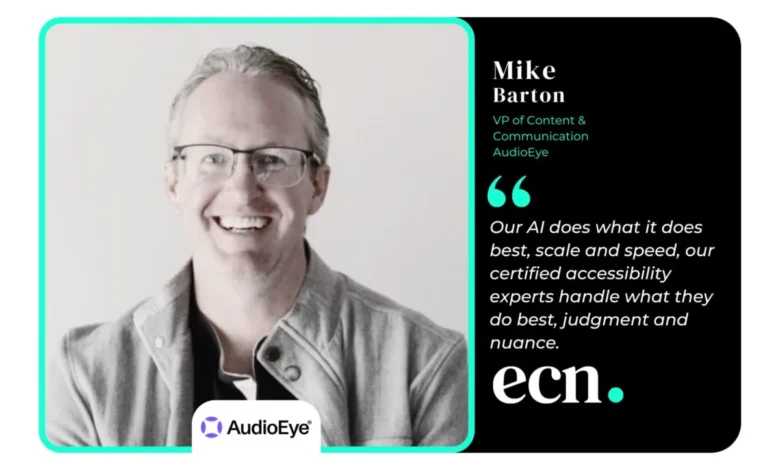
The landscape of digital infrastructure is undergoing a fundamental transformation, driven by an increasing emphasis on web accessibility and universal design. As modern commerce, communication, and governance migrate almost entirely online, the digital exclusion of individuals with disabilities has emerged as a critical societal, legal, and economic challenge. At the forefront of addressing this challenge is AudioEye, a prominent digital accessibility platform that has spent nearly two decades refining the intersection of automated artificial intelligence and human oversight. To better understand the operational mechanics, market pressures, and future outlook of this sector, Mike Barton, Vice President of Content Marketing and Communications at AudioEye, provides key insights into how the company navigates the evolving demands of the global internet.
The Evolution of Digital Accessibility: From Niche Concern to Mainstream Imperative
When AudioEye was founded nearly twenty years ago, digital accessibility was largely treated as a peripheral concern by mainstream organizations. The prevailing corporate mindset viewed accessibility compliance either as an administrative checkbox to be checked off intermittently or as an issue that could be safely ignored without immediate consequence. Over the intervening decades, however, the convergence of heightened legal scrutiny, global regulatory shifts, and the rapid expansion of digital commerce has fundamentally altered the corporate calculus.
In the past five years alone, digital accessibility lawsuits filed in the United States have doubled, targeting organizations across sectors ranging from e-commerce to healthcare. Simultaneously, international legislative frameworks have broadened the scope of corporate liability. The implementation of landmark regulations such as the European Accessibility Act (EAA) has extended rigorous compliance mandates across borders, requiring any international enterprise serving European Union consumers to adhere to strict accessibility standards. Concurrently, the rapid evolution of artificial intelligence has transformed web development paradigms, changing both how websites are constructed and how users interact with them.
Faced with these shifting stakes, AudioEye has maintained a core philosophy: automation provides the necessary scale to address millions of web pages, while human expertise ensures accuracy and context. While the company continues to invest heavily in artificial intelligence to rapidly detect and remediate systemic flaws across expansive digital properties, leadership emphasizes that AI alone remains insufficient. Complex accessibility barriers—particularly those involving contextual intent, semantic nuance, and the lived experiences of assistive technology users—still require sophisticated human judgment.
Defining the Scope: The Economic and Legal Realities of the Modern Web
Digital accessibility, defined broadly, encompasses the intentional design and engineering of websites, mobile applications, and digital documents to ensure that individuals with disabilities can navigate and interact with them as effectively as unimpaired users. This mandate directly impacts an estimated 1.3 billion people globally who live with some form of disability, many of whom rely heavily on specialized assistive technologies such as screen readers, voice navigation software, and alternative input devices.
For modern enterprises, failing to accommodate this massive demographic carries severe ramifications. People with disabilities collectively wield approximately $18 trillion in global disposable spending power. Market research indicates that roughly 70 percent to 80 percent of consumers with disabilities will immediately abandon a non-accessible website in favor of a competitor’s platform rather than attempt to navigate the barriers. Beyond lost revenue and diminished brand loyalty, the legal exposure is severe. U.S. litigation rates under the Americans with Disabilities Act (ADA) have surged, and global legislation increasingly penalizes non-compliant digital spaces. Consequently, forward-thinking enterprises increasingly view accessibility not merely as a defensive legal shield, but as an essential growth engine and an untapped market frontier.
The Hybrid Platform Model: Automation Meets Expert Validation
At the operational core of AudioEye’s service offering is a hybrid technological infrastructure designed to intercept and resolve digital barriers seamlessly. Deployed via a single line of asynchronous JavaScript—similar in implementation to standard cookie consent banners or customer support chat widgets—the platform integrates smoothly into diverse content management systems, custom web architectures, headless frameworks, and partner platforms.
Once active, AudioEye’s proprietary AI engine continuously evaluates rendered web pages against the internationally recognized Web Content Accessibility Guidelines (WCAG). According to independent industry evaluations, such as a 2026 study by Adience, the platform detects up to 2.5 times more accessibility anomalies than competing automated tooling. Approximately half of these identified issues are remediated automatically in real time, directly within the client’s browser environment before the end-user encounters them.
However, recognizing the inherent limitations of pure machine learning, AudioEye pairs its automated scanning apparatus with rigorous manual audits. Certified accessibility specialists, many of whom identify as individuals with disabilities, investigate the complex gray areas that automation cannot interpret—such as logical reading orders, ambiguous button purposes, and interactive widget behaviors. These experts author custom code fixes that are subsequently deployed through the platform dashboard. Through this combined methodology, approximately 97 percent of common accessibility defects are resolved prior to requiring intervention from internal corporate development teams.
Industry-Wide Applicability and Sector-Specific Urgency
While digital accessibility is universally applicable to any entity maintaining a web presence, certain economic sectors experience acute pressure due to regulatory exposure and user behavior patterns. E-commerce platforms represent the most prominent segment, with industry data indicating that roughly 78 percent of digital accessibility lawsuits specifically target online retail businesses.
Beyond retail, highly regulated industries such as healthcare, financial services, travel, and government carry stringent compliance obligations. For these sectors, a failure in digital accessibility can result in immediate regulatory penalties, reputational damage, and systemic exclusion of vulnerable patient or consumer populations. AudioEye currently provides accessibility infrastructure to more than 127,000 organizations, scaling its solutions to protect entities ranging from localized small businesses to massive multinational enterprises.
Navigating Compliance and Mitigating Legal Risk
A central challenge for corporate leadership is decoupling compliance from the traditional, reactive audit model. Historically, organizations relied on periodic manual audits that provided a static snapshot of compliance at a single point in time, leaving websites vulnerable to new code deployments and content updates. AudioEye’s continuous monitoring architecture shifts this paradigm, making compliance a natural byproduct of ongoing, real-time remediation.
When legal challenges do arise—such as demand letters or formal ADA-related claims—AudioEye provides specialized support infrastructure, including expert validation reports and collaboration with legal counsel. Company executives note that this comprehensive approach yields robust legal defense metrics, offering documented protections designed to withstand judicial scrutiny.
The Emerging Intersection of Accessibility, E-Commerce, and AI Discovery
Looking beyond immediate compliance mandates, industry analysts point to emerging technological trends that tie digital accessibility directly to advanced search and discovery mechanisms. A prime example is the rise of autonomous AI agents and shopping assistants designed to navigate the web on behalf of human users. These agents rely heavily on a website’s underlying accessibility tree—the structured data utilized by screen readers—to interpret page content, identify products, and execute transactions.
Consequently, websites that fail to maintain robust accessibility standards risk becoming functionally invisible to the next generation of AI-driven discovery tools. This convergence suggests that accessibility optimization will increasingly overlap with artificial intelligence discoverability, making inclusive web design a foundational requirement for search engine optimization and digital visibility.
Future Outlook: Global Regulation and the AI Paradox
As digital infrastructure continues to evolve, the global regulatory landscape is expanding rapidly. The full implementation of the European Accessibility Act has established a precedent for cross-border digital enforcement, compelling multinational corporations to adopt standardized accessibility protocols across all international markets.
Simultaneously, the widespread adoption of general-purpose AI coding tools presents a paradoxical challenge for the industry. While AI-powered tools accelerate web development, they frequently generate inaccessible code because they are trained on historical web datasets that predate modern universal design standards. Addressing this gap—ensuring that the rapid expansion of the AI-generated web remains inclusive rather than exclusionary—represents one of the defining challenges for the digital technology sector in the coming years. By continuing to refine the balance between automated scale and human expertise, platform providers aim to establish universal accessibility as the default operational standard for the global internet.
Related posts: