Apple iPhone Duo Hands-on Reveals Design Hurdles and the Future of Foldable iOS Integration

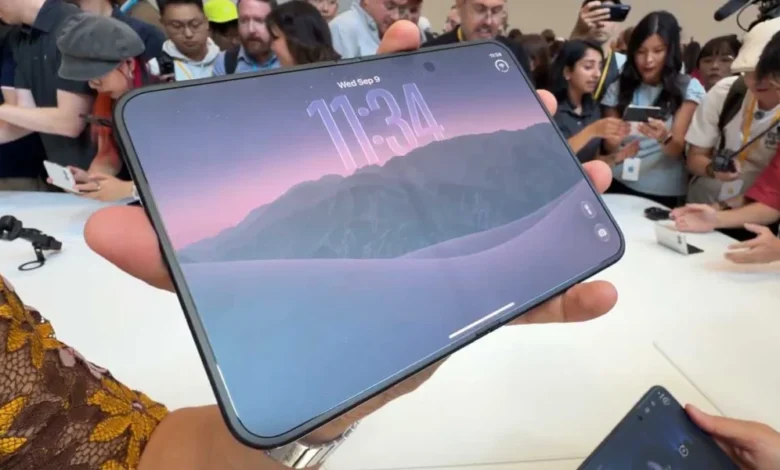
Apple’s entry into the foldable smartphone market, marked by the recent unveiling of the iPhone Duo in Cupertino, has signaled a significant shift in the company’s hardware strategy. Long perceived as a manufacturer that prioritizes product maturity over early adoption, Apple’s decision to launch a folding device comes at a time when the sector is dominated by entrenched competitors like Samsung and Google. However, early hands-on impressions suggest that even the most meticulous engineering processes cannot entirely circumvent the physical limitations inherent in current folding display technology.
The Cupertino Keynote and Initial Reception
The iPhone Duo was introduced during Apple’s September 2026 product event, an occasion that also served to showcase the latest iteration of its mobile operating system, iOS 27. While the keynote presentation focused heavily on the device’s seamless continuity and refined multitasking features, the immediate post-event analysis from industry experts and technology reviewers has shifted toward the hardware’s practical execution.
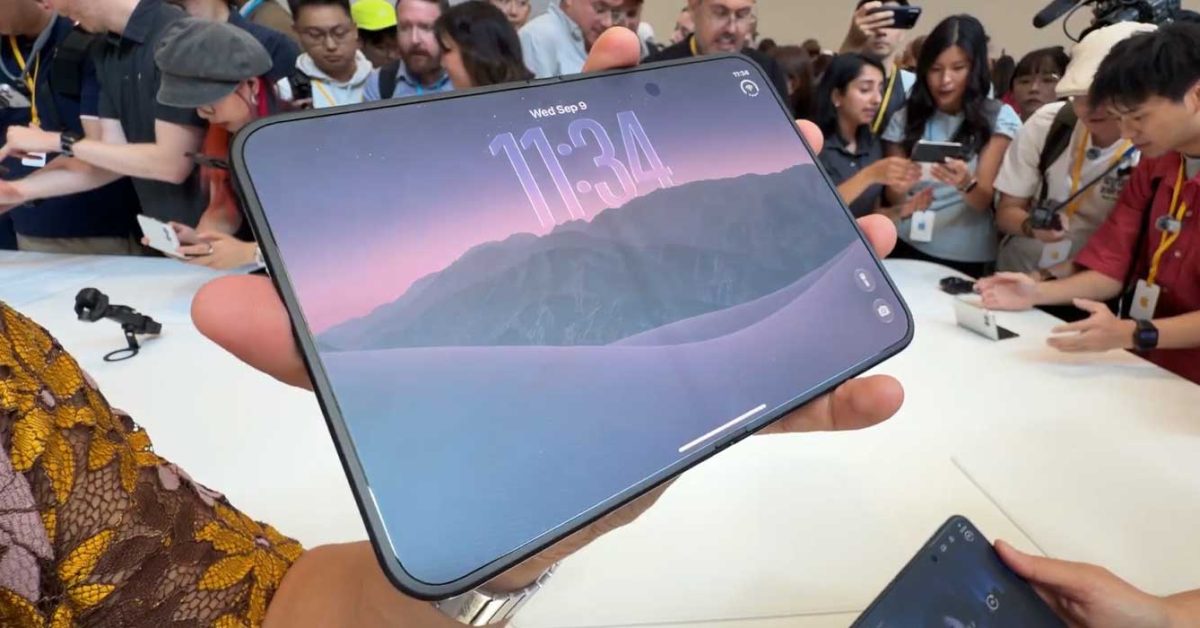
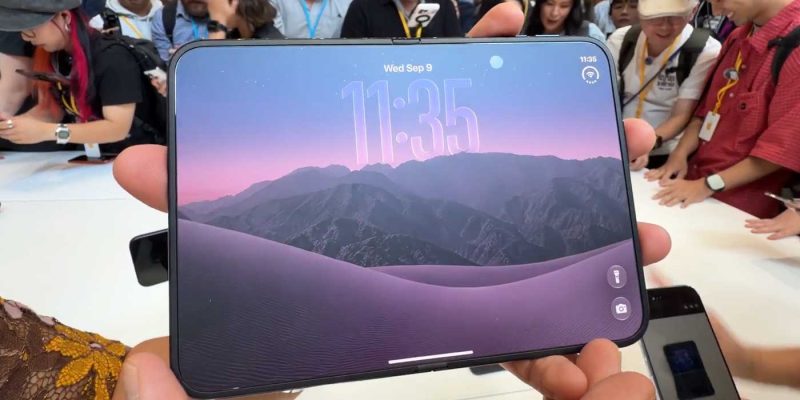
Brian Tong and other early reviewers have provided an intimate look at the device, highlighting features that were largely glossed over during the carefully curated marketing presentation. The primary point of contention remains the inner display’s physical characteristics—specifically, the visible hinge crease and the integration of the under-display camera—which mirror the challenges previously faced by Samsung’s Galaxy Z Fold series.
Chronology of the Foldable Evolution
The trajectory of the foldable smartphone market has been defined by a series of iterative improvements. Samsung initiated this trend in 2019 with the original Galaxy Fold, which was plagued by durability issues. Over the subsequent seven years, the industry focused on hinge mechanisms, display materials, and software optimization.
- 2019-2021: The "Experimental Phase," where manufacturers focused on proving the viability of folding glass and specialized OLED panels.
- 2022-2024: The "Refinement Phase," characterized by the introduction of IP-rated water resistance and improved hinge reliability.
- 2025-2026: The "Mainstream Integration Phase," marked by the entry of major players like Apple, focusing on software ecosystem parity and professional-grade performance.
By entering the market in late 2026, Apple has effectively skipped the early, error-prone iterations. However, the iPhone Duo’s hardware reveals that the industry has not yet reached a point where the physical "crease" is entirely eliminated, a reality that complicates the user experience for those expecting a perfectly flat, monolithic surface.
Technical Analysis: The Crease and the Camera
A core component of the iPhone Duo’s inner display is its two-layer flexible glass architecture. This design is intended to minimize tension and prevent material binding, a common cause of premature display failure in early foldable prototypes. Despite this, the crease remains a physical reality. While it is not significantly more pronounced than those found on the Samsung Galaxy Z Fold 8 or the Fold 8 Ultra, it remains visible under direct light and can be felt during scrolling interactions.
The under-display camera (UDC) presents another design paradox. Because the UDC also functions as a sophisticated Face ID sensor—a security feature central to the Apple ecosystem—it requires a different finish compared to the surrounding matte, anti-reflective display. This creates a visual inconsistency where the camera housing stands out against the matte screen, effectively highlighting the very component Apple sought to conceal. This is a departure from the latest Samsung designs, which have largely abandoned or further masked under-display sensors in favor of cleaner aesthetics, albeit at the cost of some biometric functionality.
iOS 27: The Software Differentiator
Where the iPhone Duo succeeds most notably is in its software integration. iOS 27 has been purpose-built to handle the unique demands of a foldable form factor. While Android’s One UI has made significant strides in split-screen multitasking and app continuity, Apple’s implementation feels more deliberate.
The system handles window management with a fluidity that suggests a high degree of synergy between the hardware’s sensors and the OS’s kernel. The "purposeful" design choice, as noted by observers, allows for a workflow that adapts to the device’s state—closed, partially folded, or fully open—without the jarring UI transitions often seen in early foldable Android implementations. This software advantage may prove to be the deciding factor for consumers who are wary of the hardware compromises but attracted by the functional benefits of a larger screen.
Durability and Environmental Resistance
The iPhone Duo arrives with an IP68 rating for water and dust resistance, a benchmark that has become the gold standard for flagship smartphones. However, industry analysts caution that this rating for foldable devices is often "temporary" or conditional. Similar to the challenges observed with the Google Pixel 10 Pro Fold, the moving parts of the hinge mechanism represent a point of failure that can be compromised over time by dust infiltration.
Apple has not yet released long-term reliability data for the iPhone Duo’s hinge, but engineering specifications suggest that the company is utilizing a specialized gasket system to maintain the IP68 seal. Whether this remains effective after thousands of cycles of opening and closing remains a point of significant interest for the repair and durability-testing community.

Broader Market Implications
The launch of the iPhone Duo is expected to catalyze a new wave of competition. By legitimizing the foldable form factor, Apple will likely force Android manufacturers to accelerate their R&D into display materials and hinge longevity. Furthermore, the "competition for the fold" will likely shift from hardware specs—which are reaching a plateau—to software and UX efficiency.
As the market matures, the focus will inevitably turn toward price accessibility. Currently, the iPhone Duo resides in the "ultra-premium" segment, priced in direct competition with the $1,800+ bracket. As production scales, it is anticipated that these technologies will migrate to lower-tier models, potentially democratizing the foldable experience.
Expert Reaction and Future Outlook
While tech enthusiasts have scrutinized the crease and the camera, the broader market sentiment appears to be one of cautious optimism. Supply chain analysts suggest that Apple’s entry into the space will lead to a 15-20% increase in global foldable shipments by 2027.
"Apple rarely enters a market unless it believes it can solve the primary pain points, or at least mitigate them to a degree that is acceptable to the mass market," says one industry analyst. "The iPhone Duo is not a perfect device—no foldable is—but it is a statement that Apple believes the era of the flat, static screen is entering a transition period."

As more units reach the hands of the general public, the true test will be the device’s longevity. The crease, while a design hurdle today, may eventually be viewed as a historical footnote in the evolution of display technology, much like the physical keyboard on early smartphones. For now, the iPhone Duo serves as a high-fidelity representation of where current technology stands: a impressive, highly capable, yet physically imperfect bridge to the next generation of mobile computing.
The company is expected to release further technical documentation regarding the display’s long-term material properties in the coming months, which may provide more clarity on how the device will perform after a year or more of daily usage. Until then, the iPhone Duo remains the most significant, if imperfect, hardware launch for Apple in the current decade.