New images of a Googlebook laptop from Asus have surfaced, showing off a selection of ports and a big ol’ trackpad.

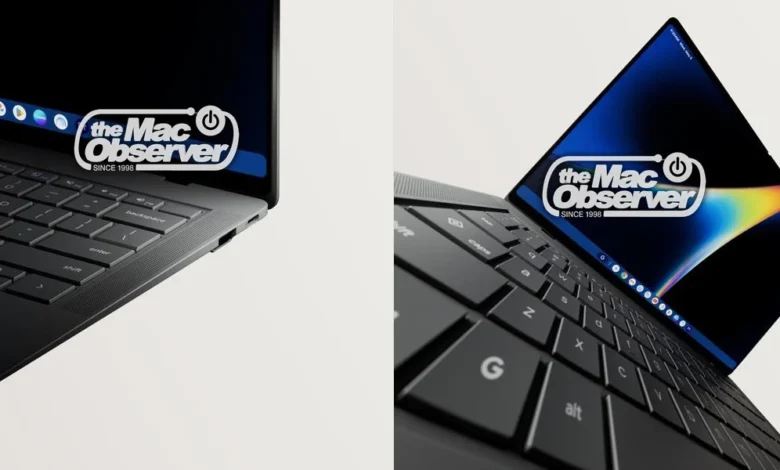
The latest visual leak regarding the upcoming Asus-manufactured Googlebook provides the most comprehensive look yet at the hardware specifications and industrial design of this highly anticipated device. Following the initial disclosure of the project last month, a new series of images obtained by The Mac Observer has clarified several key design choices, suggesting that Google and Asus are aiming for a high-performance profile that bridges the gap between traditional enterprise laptops and consumer-focused hardware.
![Asus Googlebook shows off a big trackpad and plenty of ports in leaked images [Gallery]](https://9to5google.com/wp-content/uploads/sites/4/2026/09/asus-googlebook-leak-6.jpg?quality=82&strip=all&w=1200)
Hardware Specifications and Design Language
The new imagery highlights a device that prioritizes connectivity and ergonomics. A detailed inspection of the chassis side profiles reveals a robust port selection, a necessity for professionals who rely on legacy and modern peripherals. The device appears to feature at least two USB-C ports—likely supporting Thunderbolt or USB4 standards—paired with two USB-A ports, a welcome inclusion for users who still rely on standard thumb drives or legacy mice. Additionally, a dedicated headphone jack is visible, confirming that the manufacturers have opted to retain this standard interface despite the industry trend toward wireless-only audio.
The keyboard assembly appears to offer a substantial travel distance, deviating from the ultra-shallow “butterfly” or low-profile designs that have faced criticism in other premium laptop lines. This suggests a focus on typing comfort, which aligns with Google’s branding of the Googlebook as a productivity-first machine. Perhaps most striking is the oversized trackpad, which occupies a significant portion of the palm rest. Such a design choice implies a high-precision glass surface, likely optimized for the gesture-heavy navigation environment inherent to the Google operating system.
![Asus Googlebook shows off a big trackpad and plenty of ports in leaked images [Gallery]](https://9to5google.com/wp-content/uploads/sites/4/2026/09/asus-googlebook-leak-3.jpg?quality=82&strip=all)
Security and aesthetics have not been overlooked. The inclusion of a fingerprint sensor indicates an emphasis on biometric authentication, a critical feature for both individual security and enterprise-level fleet management. Furthermore, the exterior of the chassis features a sophisticated lightbar, suggesting that Google intends for this device to carry a distinct visual signature, potentially indicating notifications or charging status through ambient lighting. The display bezels appear remarkably slim, allowing the screen to extend nearly to the corners, maximizing the screen-to-body ratio for an immersive visual experience.
A Dedicated Ecosystem Key
One of the most notable revelations in the latest leak is the presence of a dedicated “G” key. Positioned in the space typically occupied by the Windows key on a standard PC or the Command key on an Apple machine, this button serves as a physical gateway to the Google ecosystem. Analysts suggest that this key will likely act as a system-wide launcher for search, AI-driven assistance, or a unified command center, reinforcing the device’s identity as an extension of Google’s software services.
![Asus Googlebook shows off a big trackpad and plenty of ports in leaked images [Gallery]](https://9to5google.com/wp-content/uploads/sites/4/2026/09/asus-googlebook-leak-4.jpg?quality=82&strip=all)
Under the hood, the presence of an active cooling fan in this specific model confirms that the Googlebook is being positioned as a high-performance laptop. While many laptops in the cloud-computing space rely on fanless, passive cooling, the inclusion of a fan suggests that the device will be capable of sustained high-performance tasks, such as local AI processing, software development, or intensive media editing.
Chronology of the Project
The timeline of the Googlebook’s emergence reflects a calculated rollout strategy. The initial reports of the project surfaced in early August 2026, when early prototypes were first spotted in supply chain databases. At that time, the industry was largely speculative about whether Google would return to the high-end laptop market, given the company’s previous reliance on partners to produce devices under the Chromebook umbrella.
![Asus Googlebook shows off a big trackpad and plenty of ports in leaked images [Gallery]](https://9to5google.com/wp-content/uploads/sites/4/2026/09/asus-googlebook-leak-5.jpg?quality=82&strip=all)
By late August, more concrete details emerged, suggesting that the “Googlebook” moniker would represent a premium tier of hardware, distinct from the educational or budget-focused Chromebooks that have dominated the market for over a decade. The transition from rumor to visible prototype occurred rapidly, with the leak of these high-resolution images in September 2026 confirming that the hardware is nearing the mass-production phase. Google has already confirmed that the official pre-order window will open next week, effectively ending the period of uncertainty for prospective buyers.
Industry Context and Strategic Implications
The entry of the Googlebook into the premium laptop market is a strategic maneuver designed to compete directly with high-end Windows ultrabooks and Apple’s MacBook series. By leveraging Asus—a manufacturer with a proven track record of hardware engineering excellence—Google is attempting to address the long-standing critique that its hardware partners have failed to provide a cohesive, high-end user experience that matches the polish of Google’s software.
![Asus Googlebook shows off a big trackpad and plenty of ports in leaked images [Gallery]](https://9to5google.com/wp-content/uploads/sites/4/2026/09/asus-googlebook-leak-2.jpg?quality=82&strip=all)
The broader implications of this launch are significant for the personal computer market. As AI integration becomes the standard for consumer electronics, a hardware device that is purpose-built to handle localized AI tasks could set a new benchmark. If the Googlebook successfully integrates the “G” key with a sophisticated, AI-first operating system, it could shift the competitive landscape away from raw processing power toward the efficiency of software-hardware synergy.
Furthermore, the design choices—such as the inclusion of legacy USB-A ports—suggest that Google is not looking to alienate users who require compatibility with older office equipment. By balancing modern aesthetics with practical utility, the company is positioning the Googlebook as a viable candidate for enterprise procurement, potentially challenging the dominance of the PC industry in the corporate sector.
![Asus Googlebook shows off a big trackpad and plenty of ports in leaked images [Gallery]](https://9to5google.com/wp-content/uploads/sites/4/2026/09/asus-googlebook-leak-1.jpg?quality=82&strip=all)
Official Responses and Future Outlook
While Google has remained tight-lipped regarding the specific internal specifications—such as processor architecture, RAM configurations, or battery life—the upcoming pre-order event is expected to be the venue for these announcements. Industry experts anticipate that the company will highlight the integration of its proprietary silicon, optimized specifically for the Googlebook, to ensure long battery life and fast wake times.
The market reaction to these leaks has been largely positive, with tech enthusiasts noting that the device appears to be a direct response to the demand for a premium, non-Windows, non-macOS alternative that does not compromise on build quality. As the pre-order date approaches, the focus will shift from the physical design to the software experience. The primary question remains: will the Googlebook offer enough unique software utility to justify its premium price point in an already saturated market?
![Asus Googlebook shows off a big trackpad and plenty of ports in leaked images [Gallery]](https://9to5google.com/wp-content/themes/ninetofive/dist/images/google-preferred-source-badge-dark.png)
As we look toward next week’s official announcement, the industry is poised to see if Google can successfully translate its dominance in search and cloud services into a hardware product that captures the imagination of the professional and creative markets. With the hardware already looking like a polished contender, the success of the Googlebook will ultimately rest on the seamlessness of the experience it provides to the end-user. The convergence of a "G" key, high-end thermal management, and a focus on essential ports suggests that the company is taking a holistic approach, betting that users are ready for a new paradigm in mobile computing.