The Paradigm Shift in Digital Discovery: How AI Answer Engines Are Rewriting the Rules of Online Search


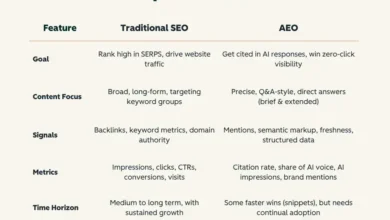
The traditional landscape of digital information retrieval is undergoing a fundamental transformation as user behavior pivots away from the conventional "blue link" search model toward AI-driven answer engines. For decades, the primary objective of search engine optimization (SEO) was to secure a high-ranking position on search engine results pages (SERPs) to capture organic traffic. However, the rise of large language models (LLMs) and generative AI platforms such as ChatGPT, Perplexity, and Google’s AI Overviews has replaced the need for manual navigation with direct, synthesized answers. This transition, often described as the "zero-click" era, necessitates a comprehensive shift in how businesses approach brand visibility, customer acquisition, and content strategy.
A Chronology of the Search Evolution

The trajectory of search technology has moved through three distinct phases. In the early 2000s, search engines functioned as simple indexers, matching keywords to document strings. By the 2010s, semantic search—powered by Google’s Hummingbird update and the Knowledge Graph—allowed engines to understand intent and context. The current phase, beginning in late 2022 with the public release of ChatGPT, marks the transition to "answer engines."
In 2023, the industry saw the integration of conversational AI into major search platforms. By mid-2024, Microsoft’s Copilot and Google’s Search Generative Experience (SGE) began surfacing AI-generated summaries at the top of search results, effectively capping the reach of traditional web traffic. By 2025, consumer reliance on these summaries reached a critical threshold, with industry reports indicating that a significant majority of search queries were being resolved without a subsequent click to a primary source website.
Data-Driven Insights into Buyer Behavior

The impact of this shift is particularly pronounced in the B2B sector. According to research from Forrester, approximately 94% of B2B buyers now integrate AI into their procurement processes. The data reveals a specific hierarchy of utility: 55% of buyers leverage AI to conduct comparative vendor analysis, 54% utilize it for initial product research, and 47% rely on AI to formulate internal business cases before initiating contact with a sales representative.
Consumer trends mirror this professional shift. Adobe Digital Insights noted that generative AI usage during the 2025 holiday shopping season surged by 45% compared to the previous year, with 56% of US consumers reporting that they turned to AI-powered search to inform purchasing decisions. These figures suggest that the traditional sales funnel has been truncated; by the time a prospective client interacts with a brand, they have already received a synthesized recommendation from an AI model. For marketers, the primary discovery layer is no longer the search engine index, but the training data and real-time retrieval mechanisms of AI models.
Categorizing the AI Search Ecosystem
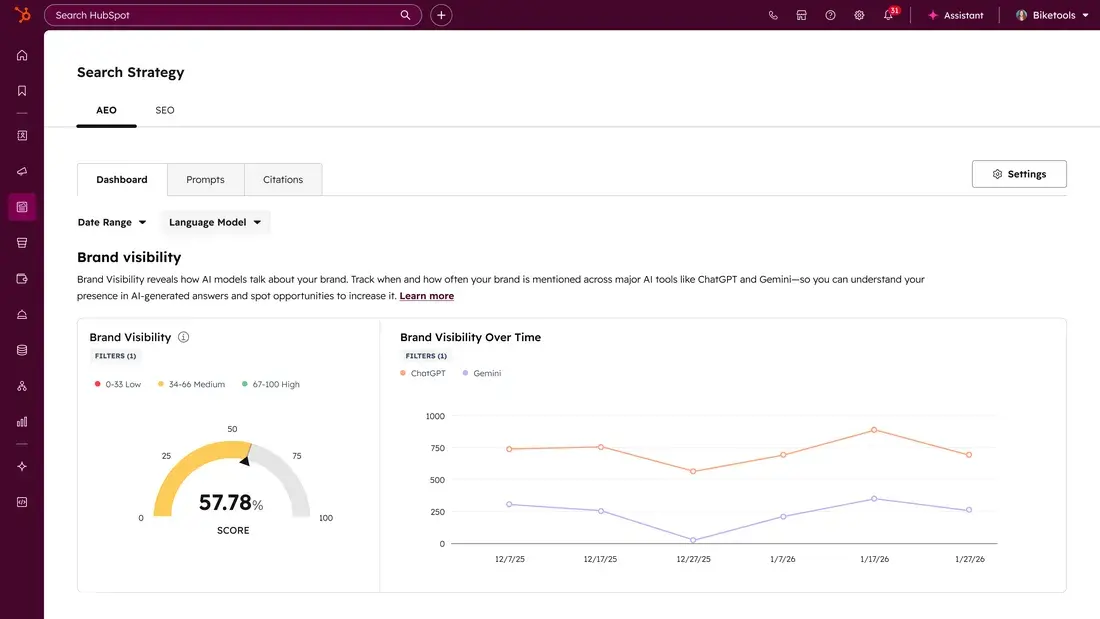
To navigate this new environment, it is essential to distinguish between the three primary categories of AI search technology, each serving a distinct function in the marketing and operational stack.
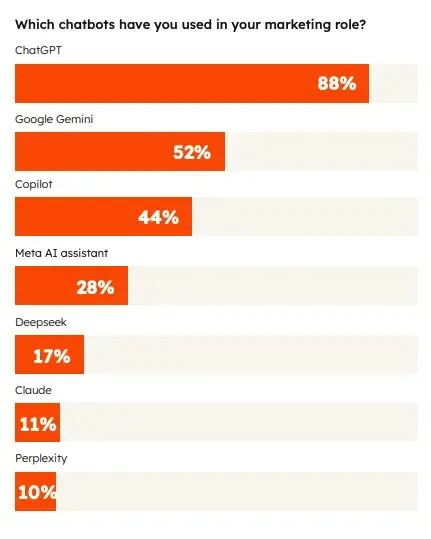
Answer Engines: These platforms, including ChatGPT, Claude, and Gemini, are designed for high-level information synthesis. Users submit queries in natural language, and the engine returns a consolidated response. While some platforms prioritize real-time web-connected data, others rely on extensive pre-trained datasets. The marketing implication here is the challenge of "black-box" visibility—marketers must optimize for answer engine inclusion rather than traditional keyword density.
AI Site Search Tools: Unlike external answer engines, these are specialized applications integrated into a company’s own digital property. Platforms like Algolia, Coveo, and Elasticsearch use machine learning to interpret user intent within an internal knowledge base or e-commerce catalog. These tools are critical for large-scale enterprises that need to ensure visitors can navigate complex product offerings or documentation without leaving the site to query a broader AI engine.

Answer Engine Optimization (AEO) Tools: This emerging software category serves as the measurement layer for the AI age. Because traditional web analytics cannot track "mentions" or "citations" within an AI response, AEO tools—such as HubSpot’s AEO platform—provide marketers with visibility into their brand’s presence within AI-generated summaries. These tools offer benchmarking, competitor analysis, and recommendations for improving the likelihood of a brand being cited as a credible source.
Strategic Implications and Operational Adjustments
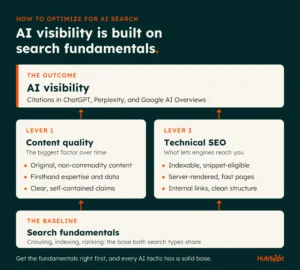
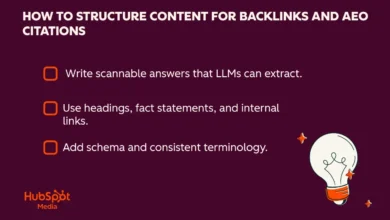
The shift toward AI-mediated search requires a recalibration of marketing priorities. The objective is no longer solely to drive traffic to a website but to become an authoritative source that AI models select for their citations. This requires a renewed focus on high-quality, data-backed content that is easily indexed and verifiable.

For many organizations, the integration of CRM data into AI workflows is becoming a competitive necessity. By leveraging proprietary customer data, businesses can predict the specific queries their target audience is likely to input into an AI engine. For instance, HubSpot’s AI Search Grader and its associated AEO tools allow marketers to bridge the gap between CRM insights and external AI visibility. Organizations that have piloted these strategies reported, on average, a 20% increase in AI-driven referral traffic, even as traditional organic search volume experienced volatility.
Responses from the Industry
Technology analysts and market leaders have framed this transition as a "new era of marketing." Experts at Bain & Company have noted that with 60% of searches now concluding without a click, the value proposition of a website is fundamentally changing. The consensus among industry leaders is that the brands that proactively manage their presence in AI-generated summaries will capture the most significant market share in the coming years.
However, this evolution is not without controversy. Concerns regarding citation accuracy, data privacy, and the potential for AI models to misrepresent brand information persist. As noted by the Columbia Journalism Review, even the most reliable AI search tools currently exhibit error rates in citation accuracy. Consequently, marketers are advised to treat AI search tools as strategic assistants rather than absolute replacements for human oversight.
Evaluating Future-Proofing Strategies
When evaluating which AI search tools to incorporate into a marketing or operational stack, businesses should focus on four core pillars:

- Integration Capabilities: Does the tool connect seamlessly with existing CRM and data infrastructure to provide context-aware insights?
- Source Transparency: Does the engine provide clear, verifiable citations that allow for trust and accountability?
- Actionability: Does the tool offer clear metrics—such as visibility scores and competitor gap analysis—that can be acted upon by a marketing team?
- Scalability: Is the platform designed to handle the evolving complexity of natural language queries, or is it limited to keyword-based retrieval?
The Path Forward for Marketers
The transition to AI-centric search is irreversible, yet it presents a unique advantage to early adopters. Marketers who currently track their visibility in ChatGPT, Perplexity, and Gemini are already ahead of the curve. While the foundational principles of content marketing—authority, relevance, and credibility—remain, the mechanism of distribution has shifted.
The immediate next step for organizations is to conduct a diagnostic assessment of their current AI visibility. Utilizing free tools, such as the HubSpot AI Search Grader, provides a low-risk starting point to understand how a brand is represented in AI-generated responses. Following this, the transition to ongoing monitoring via specialized AEO platforms will be essential for maintaining a competitive edge.

The era of searching through dozens of browser tabs for a single answer is rapidly drawing to a close. For the modern marketer, the focus must shift from chasing clicks to securing authority in the new, consolidated digital landscape. The tools required for this transition are already available; the challenge lies in the strategic deployment of these technologies to meet the changing expectations of the modern buyer. As the digital ecosystem continues to mature, those who prioritize transparency and visibility in AI-mediated environments will define the next generation of online engagement.