Profound versus Athena AI for AEO: A Comprehensive Analysis of the Answer Engine Optimization Landscape

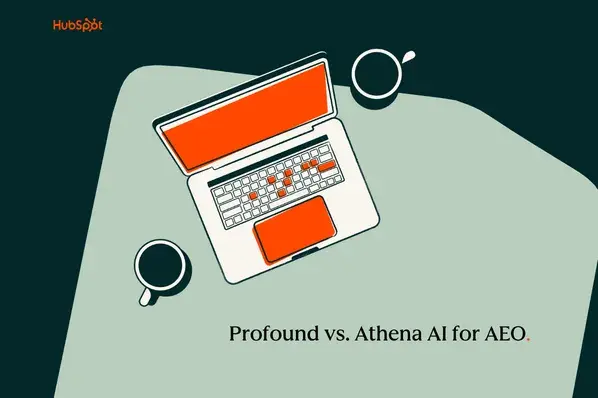
The rise of generative AI has fundamentally altered the consumer search experience, shifting the digital marketing paradigm from traditional keyword-based SEO toward Answer Engine Optimization (AEO). As users increasingly rely on platforms like ChatGPT, Gemini, Perplexity, and Google AI Overviews to synthesize information, brands are scrambling to ensure their content is accurately represented within these AI-generated responses. Two primary contenders have emerged at the forefront of this category: Profound and Athena AI (AthenaHQ). For marketing leaders, distinguishing between these platforms requires a deep dive into pricing models, feature sets, and the evolving nature of AI-driven traffic.
This analysis provides an independent examination of the Profound and Athena AI ecosystems as of September 2026. By verifying claims against first-party trust centers, pricing pages, and product documentation, this report moves beyond the often-biased narratives found in affiliate marketing roundups to offer a transparent look at how these tools impact modern search strategies.
The Shift Toward Answer Engine Optimization
To understand why platforms like Profound and Athena AI have gained traction, one must first recognize the "zero-click" phenomenon. Traditional SEO metrics—such as organic sessions and click-through rates (CTR) on blue links—are becoming less representative of a brand’s total digital footprint. When a user asks an AI engine, "What is the best CRM for a small business?" the resulting answer often summarizes information from multiple sources, potentially satisfying the user’s intent without them ever visiting a brand’s website.
Profound and Athena AI were built to close this measurement gap. They utilize proprietary monitoring layers that simulate user queries across various large language models (LLMs) to report on sentiment, citation frequency, and competitive presence. While the category is maturing, it remains highly volatile, with both vendors frequently updating their product tiers and pricing models in response to rapid shifts in AI search architecture.
Comparative Methodology: The Current Landscape
Profound has transitioned from a model featuring accessible entry-level paid tiers to a more restrictive structure centered on a seven-day free trial and a custom-quoted enterprise offering. This shift reflects a broader trend in the B2B SaaS space where specialized, high-intensity AI tools are moving toward high-touch, consultative sales models to better manage the complexities of enterprise-grade data processing.
Conversely, Athena AI (AthenaHQ) has maintained a more transparent self-serve entry point. Their $295/month Starter plan provides a clear, actionable baseline for brands. However, both platforms share a common "tier-gating" strategy: core, high-value features such as multi-region tracking, advanced citation auditing, and specialized international language support are almost universally reserved for enterprise-level contracts.
For the prospective buyer, the "at a glance" summary is clear: Profound is positioned as a heavy-duty analytical engine for organizations prepared to invest in a bespoke partnership, while Athena AI provides a more accessible, product-led entry for teams that require immediate functionality with a predictable, albeit variable, cost structure.
Engine Coverage and Strategic Prioritization
A common point of contention in AEO evaluation is the number of supported AI engines. Athena AI’s Starter plan explicitly lists 11 supported models, including industry leaders like Claude, Copilot, and DeepSeek. Profound’s trial version is more conservative, limiting users to ChatGPT, Gemini, and Google AI Overviews.
However, industry experts caution against "engine-count bias." The utility of an AI engine is purely dependent on where a brand’s specific audience resides. A B2B software firm might find that 90% of their AI-generated traffic stems from Perplexity and ChatGPT. In such a scenario, coverage of smaller, niche models like Mistral or Grok offers negligible marginal value. Consequently, organizations should conduct a pre-purchase audit of their own referral logs. By identifying which AI engines are already contributing to site traffic, marketing managers can prioritize platforms that offer the deepest insights into the channels that actually move the needle for their specific business.
Visibility Measurement and Data Reliability
Measuring visibility in the era of AI requires a pivot from absolute numbers to probabilistic trend lines. Both Profound and Athena AI operate on the understanding that AI answers are non-deterministic; the same query can yield different results based on user location, device, and even the time of day.
Profound’s "Answer Engine Insights" utilizes a structured prompt system to generate daily analysis, whereas Athena AI employs a "credit-based" consumption model. In the Athena ecosystem, 1 credit is equivalent to 1 AI response. While this creates a unified currency for tracking, it also introduces a significant management variable: teams must decide whether to allocate their credit pool to broad monitoring or to active content-optimization agents. Over-tracking is a frequent pitfall; without a clear strategy, teams often burn through their monthly credit allowance on low-impact queries, leaving little room for the high-priority analytical tasks that drive ROI.

Content Optimization and the Workflow Loop
Both vendors claim to cover the full Measure-Prioritize-Create-Monitor loop, yet the execution varies. Profound provides robust agent-based tooling, but the efficacy of these tools is tethered to the volume of credits available. Athena AI offers content-optimization agents starting at the Starter tier, but the "Recommendation Engine"—the platform’s analytical layer for identifying what needs to be fixed—is gated behind its enterprise tier.
This creates a distinct divide in the user profile:
- Teams with strong internal SEO expertise who simply need a platform for execution will find the Athena AI Starter plan efficient.
- Teams looking for a "brain" that can guide their strategy and tell them exactly which visibility gaps to address first will likely find themselves needing the enterprise-grade recommendations offered by either provider.
The Role of Security and Compliance
For enterprise-level adoption, trust is non-negotiable. Both Profound and Athena AI utilize SafeBase-powered trust centers, allowing potential clients to review SOC 2 Type 2 reports and data processing agreements independently. It is vital for procurement teams to look beyond a vendor’s "SOC 2 compliant" marketing badge. Vendors often blur the lines between "alignment with standards" and "independent third-party certification." Before signing a contract, legal and IT departments should request the full audit report to ensure the vendor meets the specific regulatory requirements of their industry, particularly in sensitive sectors like healthcare or finance.
Agency Fit and Scalability
Agencies face unique challenges in the AEO space, primarily regarding white-labeling, credit allocation across diverse client portfolios, and workspace management. Athena AI has made significant strides in documenting its agency program, offering clear pathways for multi-brand management. Profound, while less transparent in its public-facing agency documentation, reportedly offers customized options for growth-focused agencies.
Regardless of the provider, agencies should demand written confirmation on three key points during the sales process:
- How credits are distributed across different client workspaces.
- The specific process for handling client churn and data migration.
- The degree of white-labeling available for reporting outputs.
The Future of AEO: The HubSpot Context
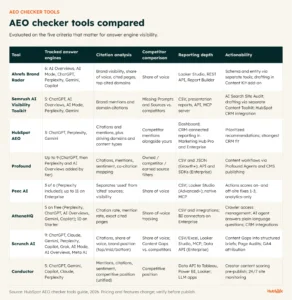
As the market for AEO tools continues to evolve, a notable trend is the integration of AEO capabilities directly into existing marketing automation platforms. HubSpot’s AEO tool serves as a prime example of this consolidation. Unlike standalone tools that operate in a vacuum, a platform-native approach allows for the direct connection between AI visibility gaps and the CRM data that informs content strategy.
When a brand identifies a visibility gap through an external tool, the next hurdle is always the same: "Who is going to close this gap?" By utilizing a platform like HubSpot, the journey from identifying a missing citation to drafting and publishing the corrected content can occur within a single, unified ecosystem. This "insight-to-action" loop is likely to become the standard expectation for marketing teams through 2026 and beyond.
Conclusion: Making the Selection
The choice between Profound and Athena AI is not a question of which tool is objectively better, but rather which tool aligns with a brand’s specific operational maturity.
For the data-heavy enterprise that requires deep-level, customized insights and has the personnel to act on complex, high-volume data, Profound’s enterprise offering provides the most robust analytical framework. For the nimble, growth-oriented team that values transparency, predictable pricing, and a faster time-to-value, Athena AI’s Starter plan offers a more accessible entry point.
Ultimately, the most successful organizations will be those that treat these tools as one component of a larger content ecosystem. Whether through a dedicated platform like Profound, a flexible solution like Athena AI, or a platform-integrated approach like HubSpot, the goal remains the same: ensuring that when a user turns to an AI engine for answers, your brand is the one being recommended. Before committing to a contract, take the time to run a trial, map your specific engine requirements, and verify the total cost of ownership—including potential overages—to ensure your AEO investment delivers sustainable, long-term value.