Structuring Python Applications with Dataclasses for Enhanced Reliability and Maintainability

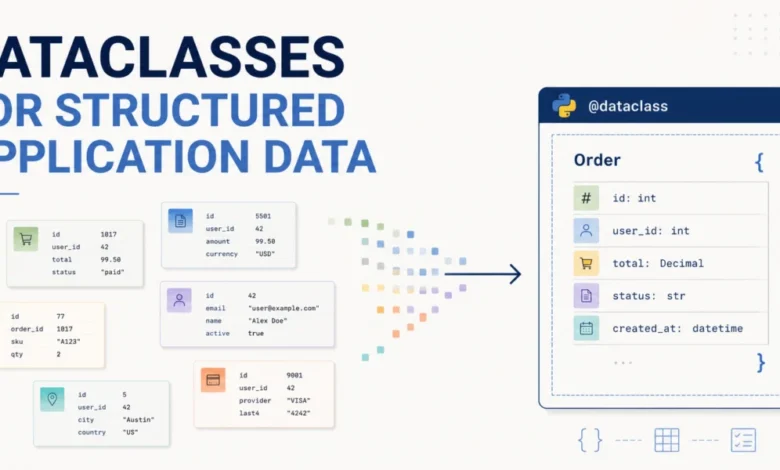
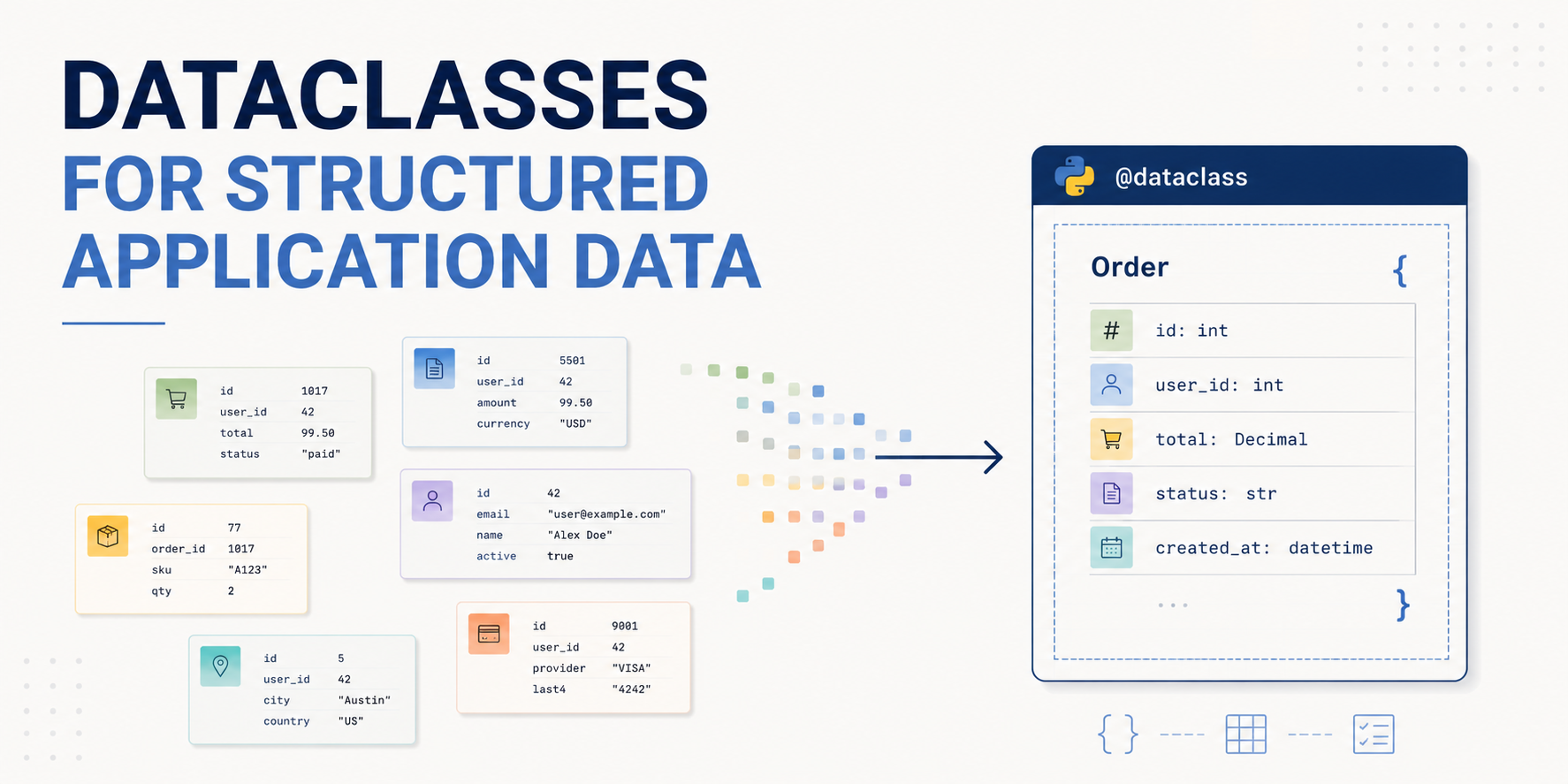
The evolution of modern software development has increasingly shifted toward the adoption of robust, self-documenting code structures that mitigate the risks associated with loosely typed configurations. As Python applications grow in complexity, the traditional reliance on configuration dictionaries—often referred to as "bag-of-keys" structures—has become a significant source of technical debt. By utilizing the dataclass decorator introduced in Python 3.7, developers are moving toward a more disciplined approach to data modeling that enhances readability, simplifies debugging, and reduces the likelihood of runtime failures caused by silent key-value errors.
Historical Context and the Problem of Fragile Configurations
For years, Python developers relied on standard dictionaries to manage configuration, state, and data payloads. While dictionaries offer flexibility and speed in the short term, they lack a formal schema. This lack of structure leads to "silent failures," where misspelled keys or missing parameters remain undetected until they trigger an error deep within the application’s execution logic.
The primary catalyst for this shift in development standards was the publication of PEP 557, which proposed the introduction of the dataclasses module into the Python standard library. Prior to this, developers were forced to choose between heavy, third-party libraries or writing extensive boilerplate code for __init__, __repr__, and __eq__ methods. The adoption of dataclasses represents a middle ground: it provides the necessary structure to enforce data integrity without introducing external dependencies or significant performance overhead.
The Architectural Shift to Structured Models
The transition from dictionary-based configuration to dataclass-based models is characterized by the replacement of string-based lookups with attribute access. This shift allows Integrated Development Environments (IDEs) and static analysis tools, such as Mypy, to perform type checking and validation before code execution.
When a developer defines a configuration object, the dataclass approach forces the declaration of field types. While Python remains a dynamic language—meaning these annotations are not enforced at runtime by the language interpreter itself—they serve as a functional contract between different modules of an application. By defining a JobConfig class, for instance, a developer establishes a clear, immutable expectation of what data is required for a batch processing job, including default values that ensure consistency across disparate call sites.
Composition and the Management of Complex Systems
One of the most effective strategies for managing large-scale configurations is the use of composition. As applications expand, a single class containing dozens of fields often becomes unmanageable. By breaking these configurations into smaller, nested records—such as RetryPolicy or OutputConfig—developers can ensure that each class is responsible for a single, coherent domain.
This compositional approach mirrors modern architectural patterns where data is treated as a collection of specialized components rather than a monolithic object. When nesting these records, developers must remain cognizant of how dataclasses handle default factories. Unlike simple scalar defaults, complex objects like lists or other dataclasses require the field(default_factory=...) construct to ensure that every instance receives its own unique, fresh state. This prevents the common "shared state" bug, where multiple instances inadvertently modify the same underlying object.
Validating Data and Maintaining Invariants
The __post_init__ method serves as a critical junction for data validation within the dataclass lifecycle. While the standard initializer handles basic assignment, the __post_init__ hook allows developers to perform sanity checks immediately upon object creation. If a batch size is set to a negative integer or a name field is left empty, the application can trigger an exception at the point of origin, rather than allowing corrupt data to propagate through the system.
This approach provides a significant advantage in terms of incident response. When an error is caught at the boundary, the stack trace provides an immediate indication of which configuration value failed, rather than forcing engineers to trace a silent error through multiple layers of function calls. However, industry best practices dictate that this hook should be reserved for internal invariants rather than complex, external data parsing. For inputs originating from untrusted sources, such as public-facing APIs, developers are encouraged to use more comprehensive validation frameworks.
Implications for Serialization and Data Exchange
Data serialization remains a frequent point of contention in software design. Using asdict() to convert a dataclass to a JSON-compatible format is efficient for simple structures, but it necessitates a deliberate strategy for reconstruction. The most reliable pattern for returning data from a serialized state is the implementation of a from_dict class method. This method acts as a factory, ensuring that nested dictionaries are correctly cast back into their respective dataclass instances.
This process highlights the distinction between the "internal" state of an application and the "external" representation of data. By maintaining this separation, developers gain greater control over how their applications interface with the outside world. It also serves as a safeguard; the internal code remains protected by the schema defined in the dataclasses, while the serialization layer handles the complexities of transforming that schema into portable formats like JSON or YAML.
Comparative Analysis: When to Use Dataclasses
A comparative analysis of common data-handling techniques reveals a clear hierarchy of tools based on the specific needs of the application.
- Dictionaries: Best suited for short-lived, transient data where the effort of defining a schema would outweigh the benefits of structure.
- Dataclasses: The optimal choice for internal application data where the developer controls the structure and requires a balance between simplicity, performance, and type-safety.
- Pydantic: The industry-standard tool for external data validation. It is designed for scenarios where the data comes from untrusted or unknown sources and requires automatic type coercion, complex validation, and schema generation.
The following table summarizes these distinctions:
| Category | Dictionaries | Dataclasses | Pydantic |
|---|---|---|---|
| Primary Use Case | Flexible, local, short-term | Trusted, internal data | Untrusted, external, APIs |
| Validation | None | Limited (via __post_init__) |
Rich, automated, multi-field |
| Dependencies | None | Standard Library | Third-party |
| Complexity | Minimal | Low | Moderate |
Broader Impact on Development Culture
The move toward dataclasses is indicative of a broader trend in the Python ecosystem: the desire for more formal, predictable code. By treating configuration as a contract rather than a loose collection of keys, engineering teams can significantly reduce the "mean time to repair" (MTTR) for bugs related to data configuration.
Furthermore, this discipline improves team velocity. New engineers joining a project can inspect the dataclass definitions to understand the required inputs for a service, rather than searching through codebase-wide dictionary assignments. This creates a self-documenting system that minimizes tribal knowledge and promotes standardized practices across the development lifecycle.
Conclusion: The Value of Disciplined Modeling
While the use of dataclass may appear to be a minor syntactic shift, its implications for the reliability and maintainability of large-scale Python applications are substantial. By enforcing structure at the data level, developers can build systems that fail gracefully, communicate clearly through their type signatures, and remain resilient to the accidental errors that plague less formal implementations.
Ultimately, the choice to use structured data models is a choice to prioritize the long-term health of an application over the short-term convenience of ad-hoc dictionary manipulation. As the industry continues to emphasize secure and robust software engineering, the disciplined use of dataclasses will remain a fundamental tool in the developer’s toolkit, ensuring that agreements about data structure are written in code, where they can be tested, verified, and trusted.