Apple Watch Series 12 and Ultra 4 Introduce Live Rewind for Real-Time Audio Transcription

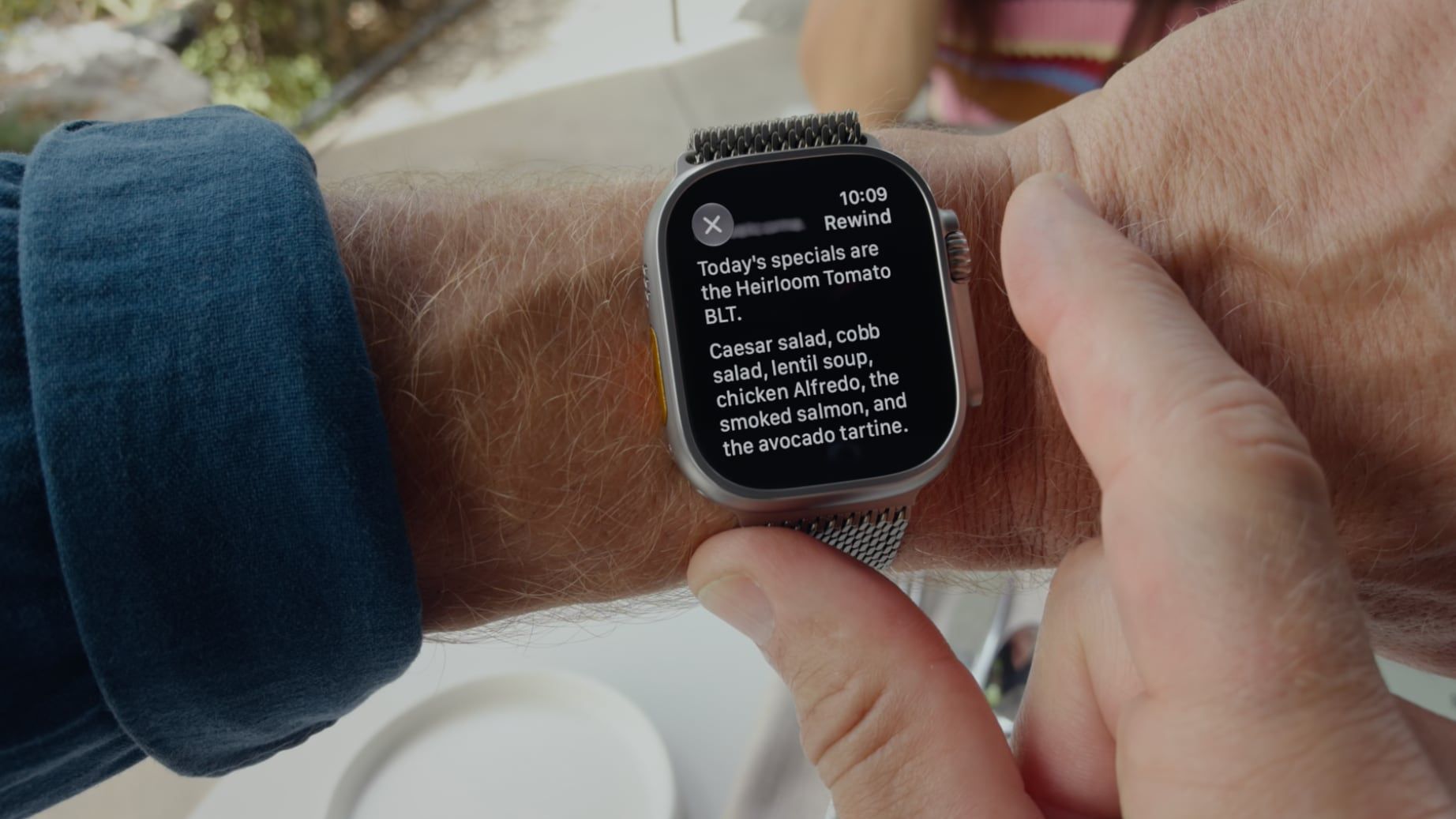
The unveiling of the Apple Watch Series 12 and the Apple Watch Ultra 4 at Apple’s September 2026 “Surprise and Shine” event has introduced a sophisticated new feature known as Live Rewind. This capability, powered by the newly debuted S11 processor, represents a significant leap in wearable audio intelligence, allowing users to instantly retrieve and transcribe the preceding 15 seconds of ambient audio. While the technology is designed to assist users in noisy environments or complex conversations, its arrival has prompted a robust discourse regarding privacy, surveillance, and the evolving role of artificial intelligence in personal devices.
Technical Foundations and the S11 Processor
At the heart of the new functionality is the S11 silicon, which incorporates a specialized architecture Apple refers to as the Secure Exclave. Unlike traditional processors that might buffer audio in accessible memory, the Secure Exclave is a hardware-isolated compartment designed to process sensor data entirely independently of the watchOS operating system.
According to technical specifications released by Apple, the S11 chip performs real-time audio analysis within this protected environment. Once the 15-second snippet is processed into a text-based transcript, the original audio data is purged. This hardware-level isolation ensures that neither the operating system, third-party applications, nor Apple itself can access the raw audio files. The system is designed to provide utility without creating a persistent record, as the text snippets themselves are ephemeral, disappearing approximately 30 seconds after the watch display dims unless the user explicitly saves them to the Siri application.
The Mechanism of Action and Transparency
Apple has implemented strict physical and visual protocols to ensure that Live Rewind cannot be used for covert recording—a primary concern raised by privacy advocates during the announcement. To activate the feature, a user must perform a deliberate double-press of the Digital Crown. Upon activation, the device emits an audible chime, a sound that is mandatory and cannot be suppressed even if the device is set to silent or is connected to Bluetooth headphones.
Complementing this auditory alert, the Apple Watch display initiates a full-screen animation accompanied by a persistent microphone indicator. This multi-layered approach to transparency is clearly intended to mitigate fears that the device might be used to surreptitiously capture private conversations. Furthermore, the feature is not an “always-on” background process; it remains dormant until the specific physical trigger is initiated, at which point it processes only the immediate, short-term buffer.
Contextualizing the September 2026 Event
The introduction of Live Rewind follows a period of intense focus on the “Apple Intelligence” ecosystem. During the “Surprise and Shine” event, held on September 9, 2026, Apple showcased a broader suite of AI tools across its product line, including the highly anticipated foldable iPhone Duo and the iPhone 18 Pro series.
The timeline of development suggests that Apple has been preparing for this integration for several years, specifically since the rollout of advanced neural engine capabilities in the S9 and S10 series. However, the S11 represents the first generation where the hardware was built specifically to house the Secure Exclave for audio-specific intelligence. The company confirmed that the feature will be rolled out as a component of watchOS 27 later this year, signaling that while the hardware is ready, the software infrastructure requires further refinement to ensure it meets the company’s strict privacy and performance standards.
Implications for Privacy and User Adoption
The immediate public reaction to the announcement has been bifurcated. On one hand, advocates for accessibility, such as those within the hard-of-hearing community, have lauded the feature as a potential game-changer. For individuals who struggle to process fast-paced speech or complex jargon in professional settings, the ability to “rewind” a conversation offers a level of inclusion previously unavailable in a wearable format.
Conversely, the technology has drawn comparisons to earlier controversies surrounding smart glasses and wearable cameras. Critics argue that even with an audible chime, the presence of such technology could fundamentally alter social dynamics. If individuals believe they are being “transcribed,” they may become less candid in their communication. This has led to a flurry of debate on digital forums, with some users questioning whether the “social contract” of public spaces is being eroded by the constant potential for AI-assisted documentation.
Apple has responded to these concerns by emphasizing that the feature is strictly regulated by age restrictions—it is unavailable to users under 13—and that it can be toggled off entirely within the Watch app on a paired iPhone. By providing granular control, Apple aims to frame Live Rewind as a professional tool rather than a mass-surveillance device.
Data Security and the Secure Exclave
The technical architecture of the Secure Exclave is a critical factor in understanding the security of this feature. In modern computing, the biggest threat to user privacy is often the exfiltration of data from the device to the cloud. By ensuring that the processing of Live Rewind occurs exclusively on-device, Apple is attempting to bypass the risks associated with server-side processing.
The Secure Exclave operates as a "black box." Information enters, is processed by the local neural engine, and the resulting text is displayed. The raw audio is never written to the device’s NAND flash storage, meaning there is no forensic footprint of the conversation left behind. For privacy researchers, this design represents the "gold standard" of local-first AI, yet the question remains whether public trust will keep pace with these technical assurances.
Compatibility and Market Positioning
The rollout of Live Rewind is notably restricted, which may limit its immediate impact on the general consumer market. To utilize the feature, users must possess the Apple Watch Series 12 or the Ultra 4, paired with an iPhone 16 or newer. Notably, the iPhone 16e is excluded from this compatibility list, likely due to the processing overhead required by the Apple Intelligence features that support the watch-based transcription.
This hardware gating serves a dual purpose: it ensures the feature performs with the low latency required for a "live" experience, and it provides a strong incentive for current users to upgrade to the latest, most secure hardware. As of the third quarter of 2026, the market for "AI-ready" wearables is expanding, with competitors also exploring voice-to-text integration. However, Apple’s emphasis on the hardware-isolated Secure Exclave positions the Series 12 and Ultra 4 as the premier options for users who prioritize both functionality and data sovereignty.
Future Outlook
As Apple prepares for the official launch of watchOS 27 and iOS 27, the industry will be watching closely to see how the public adopts Live Rewind in real-world scenarios. If the feature proves successful, it is likely that similar "audio intelligence" tools will be integrated into the broader Apple ecosystem, including future iterations of AirPods and perhaps even the rumored Apple smart glasses.
The success of Live Rewind will ultimately depend on the balance between utility and social acceptance. While the technical hurdles have been addressed through the S11 chip and the Secure Exclave, the societal hurdles—privacy, etiquette, and the normalization of wearable AI—remain in flux. For now, Apple has set the stage for a new era of human-computer interaction, one where the device in one’s ear or on one’s wrist serves not just as a communicator, but as an active, intelligent listener. Whether this creates a more inclusive society or one where privacy is increasingly fragile remains the defining question for the next decade of personal technology.