Gloria Steinem, the legendary feminist icon and pioneering journalist who defined the second-wave feminist movement, has died at the age of 92.

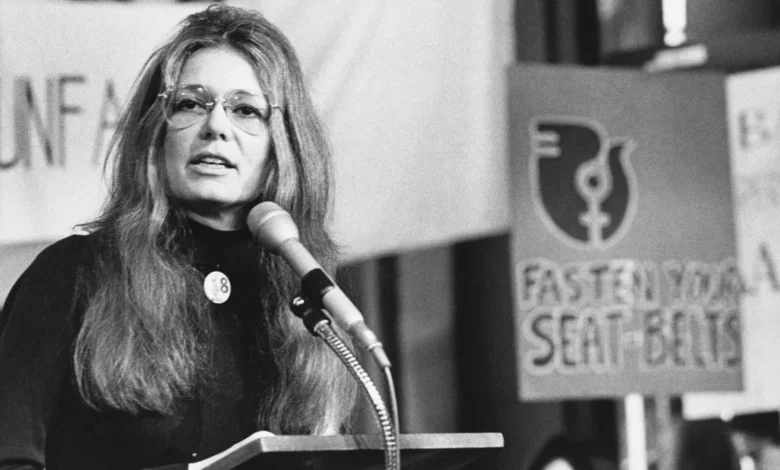
The news of her passing was confirmed via an official statement on her Instagram account early Thursday, noting that she died peacefully at her home in New York City. Surrounded by loved ones, her death marks the end of a near-century of life characterized by relentless advocacy, intellectual rigor, and an unwavering commitment to social justice. While no specific cause of death was cited, the announcement emphasized that Steinem remained active and engaged with her work until her final days.
A Legacy Defined by Disruption
Gloria Steinem emerged as a household name during the 1960s, a decade of profound cultural upheaval in the United States. She was not merely a participant in the burgeoning women’s liberation movement; she was its architect and its most visible strategist. Her approach to journalism was uniquely combative and investigative, designed to expose the systemic inequalities buried beneath the veneer of post-war domestic bliss.
Perhaps her most famous entry into the national consciousness occurred in 1963, when she went undercover as a "Playboy Bunny" at the New York City Playboy Club. Her subsequent exposé, published in Show magazine, provided a scathing critique of the labor conditions and objectification women faced in the service industry. It was a masterclass in immersive reporting that stripped away the glamour of the industry, revealing a reality of long hours, meager pay, and the dehumanizing nature of the job. This investigative spirit became the cornerstone of her career, leading her to co-found Ms. magazine in 1971, a publication that gave voice to issues previously ignored by mainstream media, including domestic violence, reproductive rights, and gender-based discrimination in the workplace.
A Chronology of Activism
Steinem’s life was a testament to the power of sustained, organized dissent. Her journey was marked by several pivotal milestones that shaped the trajectory of American social policy:
- 1963: Steinem gains national notoriety for her undercover investigation into the Playboy Club, establishing her reputation as a formidable investigative journalist.
- 1971: Co-founding Ms. magazine, she provides a national platform for second-wave feminist discourse, effectively moving feminist issues into the mainstream living room.
- 1972: She plays a central role in the founding of the National Women’s Political Caucus, an organization aimed at increasing the number of women in elected office.
- 1970s-1980s: Steinem travels extensively as a grassroots organizer, speaking on campuses and at rallies, becoming the face of the fight for the Equal Rights Amendment (ERA).
- 2013: President Barack Obama honors her with the Presidential Medal of Freedom, the highest civilian award in the United States, cementing her status as an American cultural icon.
- 2020s: Until her passing, she remained active through her "Talking Circles," a series of intimate gatherings held at her home designed to foster intergenerational dialogue and community building.
The Power of the Talking Circle
In her later years, Steinem shifted her focus toward the preservation of democratic discourse through her "Talking Circles." These meetings were not merely social gatherings; they were an intentional, structured methodology for change. By welcoming activists, authors, and leaders into her home, Steinem sought to bridge the generational divide that often fractured social movements.
Participants, including high-profile organizers and writers, have described these circles as transformative experiences. They were designed to democratize power, allowing every voice in the room equal weight. This tradition, which she insisted must continue, served as a symbolic extension of her philosophy that equality must be practiced in the smallest of spaces before it can be achieved on a national scale.
National and Global Tributes
The outpouring of grief following the announcement reflected the sheer breadth of Steinem’s influence. From the halls of Congress to the stages of Broadway, leaders and cultural icons acknowledged that their own paths were paved by her efforts.
Former Speaker of the House Nancy Pelosi lauded Steinem as a "fearless trailblazer," while former Georgia gubernatorial candidate Stacey Abrams noted that her personal interactions with Steinem were defined by a "relentless belief that we could be better." These sentiments were echoed by figures like Christiane Amanpour, who categorized Steinem as one of the most significant historical figures in the global fight for women’s equality.
The creative community also weighed in, with author Roxane Gay describing Steinem’s death as a "staggering loss," and comedian Sandra Bernhard calling for a rededication to the fight for reproductive rights—a cause that served as the bedrock of Steinem’s activism.
Statistical Impact and Socio-Political Context
To understand the significance of Steinem’s work, one must look at the data regarding the state of women in America before and after her rise. When she began her career, the gender wage gap was significantly wider, and women faced substantial legal barriers to credit, property ownership, and career advancement.
According to U.S. Census Bureau data, in 1960, women earned roughly 60 cents for every dollar earned by men. While the gap remains an ongoing issue, the cultural shift sparked by Steinem’s work led to landmark legislative changes, including Title IX of the Education Amendments of 1972, which prohibited sex-based discrimination in any federally funded education program. Her work with the National Women’s Political Caucus also helped drive the surge of women into legislative roles, shifting the demographics of power in Washington.
The Future of the Movement
The implications of Steinem’s passing are being felt at a time when the feminist movement faces renewed challenges, particularly regarding reproductive autonomy and bodily agency. Analysts suggest that the void left by her absence is not just emotional, but strategic. For decades, Steinem served as the "connective tissue" of the feminist movement, a unifying figure who could transcend internal ideological fractures.
Her death leaves a generation of activists to grapple with the "post-Steinem" era. However, the institutional infrastructure she helped build—from the Gloria’s Foundation, which provides fellowships for social justice work, to the Ms. magazine archives—remains. Her explicit request that supporters donate to her foundation rather than sending flowers serves as a final directive: to ensure that the work of organizing and the tradition of the Talking Circle survives her.
Final Reflections
Gloria Steinem often spoke of the importance of "lighting signal fires," a metaphor for the ways in which one generation passes the torch of progress to the next. In her final statement, her estate noted, "Gloria loved the tradition of lighting signal fires on hills to light the way to the other side of the mountain."
As the country reflects on her life, the consensus among historians and activists alike is that Steinem’s legacy is not found in the awards on her shelf or the headlines she generated, but in the millions of women who, because of her work, claimed the right to define their own lives. She leaves behind a blueprint for resistance and a reminder that, in the face of systemic injustice, curiosity, humor, and communal action remain the most effective tools for change. Her passing is a moment of historical transition, shifting the responsibility of the "next hill" to a new generation of leaders who now carry the mantle of a life well-lived.