The Enigma of Jimothy: Seattle’s Viral Raccoon Sparks Debate Over Identity and Urban Wildlife

Seattle is grappling with a captivating mystery that has swept across the internet and into the heart of its urban landscape: the true identity and number of its now-iconic, unusually shaped raccoon, affectionately known as Jimothy. What began as a viral video of a singularly peculiar creature has evolved into a local phenomenon, igniting a fervent community debate and prompting wildlife experts to consider the possibility that the Emerald City may be home to not just one, but potentially multiple raccoons exhibiting a similar, distinctive appearance. The internet, ever quick to embrace a compelling narrative, remains undecided on the appropriate plural for "Jimothy"—is it Jimothies, Jimothem, or perhaps Jimothi? This linguistic conundrum mirrors the deeper question facing Seattleites: are they witnessing the saga of a remarkably resilient individual, or a fascinating population of uniquely structured urban dwellers?
The Rise of an Unlikely Star
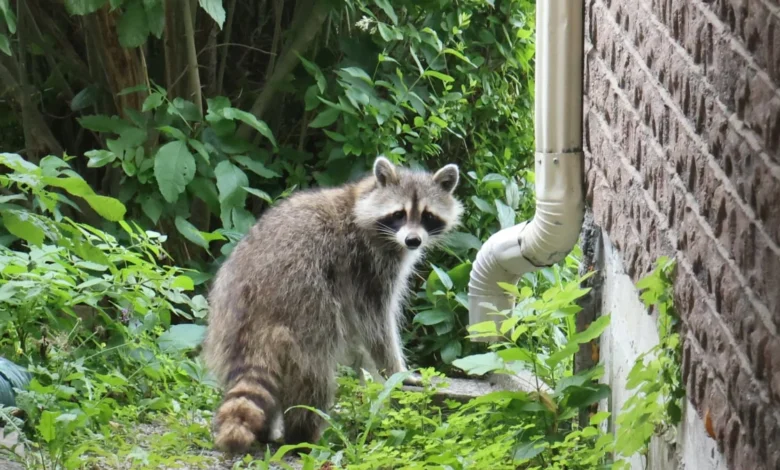
The saga of Jimothy began with a seemingly ordinary encounter that quickly spiraled into internet stardom. On July 13, Seattle resident Kiana Hall was walking through the city’s bustling Ballard neighborhood when she spotted an animal beneath a parked car. Initially mistaking it for a cat, Hall’s curiosity prompted her to begin recording. What emerged was undeniably a raccoon, but one with an appearance unlike any she, or indeed many online viewers, had ever witnessed. This particular raccoon possessed a noticeably shortened torso and neck, giving it a stout, almost compressed silhouette. Hall, captivated by its unique charm, spontaneously named it "Jimothy," a moniker she later explained to Today simply felt right for the creature’s demeanor.
The brief video, posted online, accumulated millions of views almost instantly, transforming Jimothy into an overnight celebrity not just in Seattle but across global social media platforms. The public’s fascination was immediate and profound, sparking the declaration of "Hot Jimothy Summer." The raccoon’s distinctive look inspired a torrent of creative tributes, including memes, street murals adorning local businesses, custom merchandise ranging from t-shirts to stickers, and even permanent tattoos etched onto dedicated fans. Local organizations and institutions quickly joined the celebratory fervor. The University of Washington humorously bestowed an honorary doctorate upon the furry icon, while the Washington State Department of Transportation (WSDOT) issued public service announcements featuring Jimothy, cleverly integrating wildlife awareness with the trending topic. His influence even extended to professional sports, with a costumed Jimothy mascot triumphing over four oversized fish in the Seattle Mariners’ beloved seventh-inning Salmon Run. Even tech giant Google recognized his cultural significance; a simple search for "Jimothy" or "Jimothy the raccoon" now triggers a charming animation of the short-spined creature scurrying across the user’s screen, cementing his place in digital lore.
A Distinctive Trait: Understanding Jimothy’s Anatomy
Jimothy’s unusual physical form, characterized by his compacted body, has led wildlife experts to speculate about a potential underlying condition. The most widely considered explanation points to a congenital spinal deformity, possibly resembling what is known as "short spine syndrome." This rare condition, observed in various animal species including domestic cats, dogs, and even some wild animals, results from the compression and fusion of vertebrae during development, leading to a significantly shortened and often rigid spine. While the exact causes can vary, genetic factors are often implicated.
It is crucial to note, however, that without a direct veterinary examination, Jimothy’s diagnosis remains unconfirmed. Despite the absence of a definitive medical assessment, observational evidence from numerous videos suggests that the raccoon, or raccoons, exhibiting this trait are remarkably resilient. Footage consistently shows Jimothy navigating his urban environment with apparent ease, walking, climbing, foraging for food, and generally demonstrating independent functionality. This adaptability is a testament to the survival instincts of urban wildlife, even those facing physical challenges. While short spine syndrome can present mobility issues or other health complications in some animals, Jimothy’s visible activity indicates that, for him, the condition has not severely hampered his ability to thrive in the wild—at least, in the short term. The ability of these animals to adapt to such a unique physical structure highlights the incredible plasticity of nature.
The Plot Thickens: Conflicting Sightings and the Identity Crisis
As Jimothy’s fame grew, so did the number of reported sightings. Seattle residents, particularly those in the Ballard neighborhood, began to actively scour their personal archives—old photographs, security-camera footage, and social media posts—for any trace of the distinctive raccoon. This enthusiastic community effort, however, inadvertently introduced a layer of complexity to Jimothy’s story, leading to the central question that now captivates the city: could there be more than one Jimothy?
Ballard resident Rebecca Sorenson was among the first to articulate this growing skepticism in an interview with FOX 13 Seattle. She noted the stark contradictions emerging from the community’s shared anecdotes. "There’s posts now that say that he was born a year ago and then other people with posts that saw him in 2017," Sorenson explained, highlighting the wide disparity in alleged timelines. "I’m curious now if there are more than one?" These conflicting accounts, particularly the significant temporal gap, presented a formidable challenge to the prevailing narrative of a single, long-lived Jimothy.
The idea of a single raccoon appearing in footage spanning from 2017 to the present day raised immediate red flags for wildlife experts. A raccoon spotted in 2017 would, by current estimates, need to be at least nine years old today. This lifespan pushes the boundaries of what is typically observed in wild raccoon populations, especially those living in challenging urban environments.
Expert Perspectives on Raccoon Longevity and Urban Ecology
To shed light on this biological puzzle, wildlife experts have weighed in on the plausibility of a single Jimothy’s extended reign. Wendi Mallo, an experienced animal keeper who cares for two raccoons at Northwest Trek Wildlife Park, provided valuable context regarding the typical lifespan of these clever masked mammals. Mallo indicated that the average lifespan for a wild raccoon ranges from three to five years. Crucially, a significant number of raccoons, often more than half, do not survive their first year due to a myriad of dangers inherent to their environment. These threats include vehicular collisions, predation by domestic dogs and other animals, exposure to diseases such as rabies and distemper, and the general scarcity or competition for resources in urban settings.
Considering these statistics, a raccoon living to nine years or beyond in the wild would be an extraordinary anomaly. "Yeah, that seems like a very long-lived raccoon to me for the wild," Mallo told FOX 13 Seattle, acknowledging the unlikelihood while also leaving room for the unexpected, adding, "But who knows, there’s magic in the wild. We’ve just got to look for it." While not impossible, such longevity would require an exceptional combination of luck, resourcefulness, and perhaps an uncanny ability to evade the numerous perils of city life.
This biological reality lends significant credence to an alternative theory: that Ballard might be home to multiple raccoons sharing similar spinal abnormalities. While short spine syndrome is rare, it is not unheard of for localized populations of animals to exhibit higher incidences of specific genetic conditions due to a limited gene pool or environmental factors. If Jimothy’s condition is indeed genetic, it is conceivable that other raccoons within the same family line or localized population could also carry and express this trait. This would mean that the "Jimothy" captured in Kiana Hall’s viral video might be just one of several distinct, though similarly shaped, raccoons roaming the Ballard streets, each contributing to the collective legend.
Raccoons are highly adaptable creatures, perfectly suited to urban environments. Their omnivorous diet allows them to thrive on a wide variety of food sources, from natural berries and insects to discarded human food. Their dexterity and intelligence enable them to access various shelters, from hollow trees to attics and storm drains. The Ballard neighborhood, with its mix of residential areas, green spaces, and commercial establishments, provides an ideal habitat for raccoons, offering abundant food and shelter opportunities. This urban adaptability further complicates identification efforts, as multiple raccoons could easily coexist within a relatively small geographic area.
The Blurring Lines of Fact and Folklore
The uncertainty surrounding Jimothy’s true identity has profoundly complicated his narrative, blurring the lines between verifiable fact and evolving urban folklore. The community’s collective effort to trace his lineage has resulted in a fascinating, if confusing, tapestry of alleged sightings. Residents have eagerly shared everything from grainy security-camera footage to decades-old photographs and backyard anecdotes, each claiming to depict the distinctive raccoon at different stages of his life. One set of videos, for instance, reportedly captures a younger Jimothy living with his mother and siblings in an earlier year (likely 2015 or similar, given the context of 2017 sightings), painting a picture of his formative years. Conversely, other residents have attached varying ages and origin stories to raccoons they believe to be him, further fragmenting the timeline and character of the celebrated animal.
This phenomenon highlights the powerful role of collective storytelling and social media in shaping public perception. In the absence of definitive evidence, the community has constructed a composite narrative, piecing together fragments of sightings and speculation into a cohesive, albeit potentially inaccurate, biography for their beloved local celebrity. The "Jimothy" figure has thus transcended the individual animal, becoming a symbol, a shared experience, and a local legend. Without a direct examination by a veterinarian or another reliable, verifiable method of identification, such as distinctive markings or tracking devices, a definitive answer remains elusive. Seattle could indeed be following the journey of one exceptionally resilient raccoon, defying the odds of urban survival; alternatively, the city might be observing several similarly shaped relatives, a family line perhaps predisposed to this unique genetic trait; or, most likely, the ongoing narrative is a mixture of genuine Jimothy sightings intertwined with instances of mistaken identity, where any round-bodied raccoon becomes "Jimothy" in the public imagination.
This cultural phenomenon serves as a compelling case study in how modern digital communication transforms local curiosities into widespread, participatory narratives. The collective engagement, driven by a shared affection for an unusual creature, has created a living legend where the precise facts are less important than the shared experience and the joy derived from it.
Navigating Human-Wildlife Interactions in the Digital Age
Despite the ongoing identity crisis, the raccoon or raccoons currently appearing in recent videos seem to be in robust health. Wendi Mallo, the animal keeper, noted that the animal’s body condition appears good, suggesting that despite the challenges his unusual build might present, he is capable of finding sufficient food and maintaining his well-being. This observation offers some reassurance to Jimothy’s legion of fans.
However, the immense public attention directed at Jimothy also brings with it significant implications for human-wildlife interaction, particularly in a dense urban environment. Wildlife officials and advocates have consistently advised residents to exercise caution and responsibility when observing Jimothy—or any potential Jimothys—from a safe distance. The core recommendations are clear: people should under no circumstances attempt to approach, feed, capture, or pet these wild animals. These guidelines are not merely for human safety but are paramount for the welfare of the raccoons themselves.
The increased attention and the influx of visitors drawn to the Ballard neighborhood in hopes of catching a glimpse of Jimothy create a heightened risk of disturbance and harm to urban wildlife. Feeding wild animals, for instance, can lead to habituation, making them lose their natural fear of humans and increasing their vulnerability to dangers such as traffic, intentional harm, or the spread of disease. It can also disrupt their natural foraging behaviors and lead to aggressive encounters if they associate humans with food. Furthermore, an increased human presence can cause stress to nocturnal animals like raccoons, altering their natural routines and potentially exposing them to more hazards. The romantic notion of befriending a wild animal often overlooks the complex ecological and behavioral needs of these creatures.
The Jimothy phenomenon, therefore, serves as a poignant reminder of the delicate balance required in urban ecosystems. While the collective fascination with such unique creatures can foster greater appreciation and awareness for urban wildlife, it also necessitates a collective responsibility to ensure that this admiration does not inadvertently lead to their detriment. Educating the public on ethical wildlife viewing practices—observing from afar, refraining from intervention, and respecting their natural habitats—becomes even more critical when a wild animal attains celebrity status.
The Enduring Mystery of Ballard’s Beloved Raccoon(s)
Until a definitive answer emerges, the term "Jimothy" in Seattle may continue to function less as the name of a singular raccoon and more as an honorary title, a mantle passed among Ballard’s roundest and most distinctive residents. The mystery of his true identity, or identities, only adds to his allure, transforming him from a simple urban animal into a figure of local legend and an emblem of community fascination.
Whether Seattle is home to one exceptionally long-lived and resilient raccoon, a family of similarly shaped relatives, or a combination of these scenarios, the Jimothy saga highlights several enduring aspects of urban life. It underscores the remarkable adaptability of wildlife in navigating human-dominated landscapes, the powerful and often unpredictable nature of internet virality, and the complex ethical considerations that arise when human curiosity intersects with the natural world. As residents continue their vigilant watch, sharing glimpses and stories, Jimothy, in whatever form he takes, remains a beloved, enigmatic icon of Seattle, a testament to the magic that can indeed be found in the wild, even amidst the concrete and commotion of a bustling city. The unanswered questions only deepen the legend, ensuring that Jimothy, or Jimothies, will continue to capture hearts and spark conversations for years to come.