Mastering Model Versioning and Tracking for Scikit-LLM Pipelines with MLflow

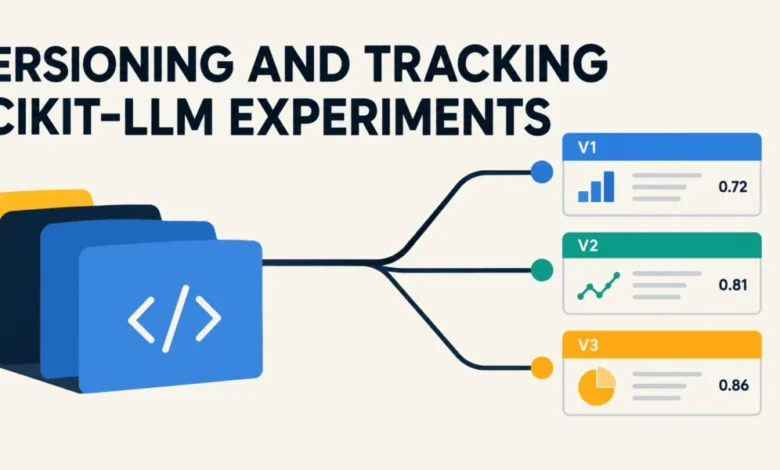
In the rapidly evolving landscape of artificial intelligence, the ability to build, track, compare, and register machine learning pipelines that integrate Large Language Models (LLMs) has transitioned from a specialized research task to an essential operational requirement. As organizations increasingly adopt Scikit-LLM—a library designed to bridge the gap between traditional scikit-learn workflows and generative AI—the need for robust version control and lifecycle management becomes paramount. By leveraging MLflow, an open-source framework for end-to-end machine learning lifecycle management, developers can ensure that their LLM-driven pipelines remain reproducible, auditable, and production-ready despite the inherent volatility of model backend updates and configuration changes.
The Evolution of LLM Lifecycle Management
The integration of Large Language Models into standard machine learning workflows introduces unique challenges that traditional versioning tools struggle to address. Unlike static tabular models, LLMs are frequently updated, swapped, or re-parameterized. A "model" in this context is often a complex composition of a pre-trained LLM, a specific prompting strategy, and a structured classification layer. When these components are combined, the risk of "configuration drift" increases significantly.
The historical trajectory of machine learning operations (MLOps) began with simple version control for code, eventually expanding to data versioning. Today, we are in the era of "model-as-code" where the weight of the LLM, the specific inference backend (such as GPT4All or OpenAI), and the pipeline architecture must be tracked in unison. MLflow provides the necessary infrastructure to capture these variables, allowing data scientists to maintain a "single source of truth" for their experiments.
Establishing the Operational Framework
Before embarking on the development of these pipelines, engineers must establish a standardized environment. This typically begins with the installation of core dependencies, including the scikit-llm library—ensuring the appropriate extras like [gpt4all] are included to support local execution—and mlflow.
The configuration phase involves setting up the tracking URI, which dictates where experiment metadata and model artifacts are stored. Utilizing a SQLite database backend is a common practice for local development, as it allows for lightweight, portable tracking of run metrics and parameters. For larger teams, this can be scaled to Postgres or cloud-based managed services. By initializing an MLflow experiment, practitioners define a workspace where every iteration of a pipeline—from the baseline prototype to the production-grade candidate—is logged, timestamped, and stored with its unique environment metadata.
The Anatomy of a Reproducible Pipeline
A fundamental component of this process is the definition of the baseline pipeline. In a typical zero-shot classification scenario, the pipeline consists of a ZeroShotGPTClassifier. By utilizing the mlflow.start_run context manager, developers can encapsulate every training execution. This block is critical for reproducibility; it allows for the explicit logging of parameters such as the llm_backend and the specific version of the model file being used (e.g., orca-mini-3k-71m-q4_0.gguf).
When the pipeline is serialized, the choice of format is vital. While standard pickle formats are common, using cloudpickle is often necessary to handle the complex, non-standard objects frequently found in LLM pipelines. This ensures that when a model is pulled from the registry weeks or months later, it can be re-instantiated without encountering deserialization errors.
Comparative Analysis and Auditability
As projects scale, the number of experimental runs often grows exponentially. A typical lifecycle might involve dozens of failed attempts due to hardware constraints, incorrect prompting, or model incompatibilities. The power of MLflow lies in its ability to search and filter these runs. By extracting metadata into a pandas DataFrame, engineers can conduct a comparative analysis.
This auditing process is not merely a record-keeping exercise; it is a vital component of regulatory compliance and operational safety. By viewing historical data—such as run IDs, status (FINISHED vs. FAILED), and specific model file parameters—teams can identify which configurations yield the highest accuracy or the lowest latency. This granular visibility allows for an empirical approach to decision-making, moving away from intuition-based model selection toward data-driven deployment strategies.
From Experimentation to Production Registry
The transition from a "logged" experiment to a "registered" model represents a shift in maturity for any machine learning project. When a specific run demonstrates superior performance—often verified by quantitative metrics like accuracy or F1-score—it is promoted to the MLflow Model Registry.
Registering a model acts as a formal "blessing," marking the transition from an experimental phase to a versioned asset ready for staging or production. Once a model is registered, it receives a version number, providing a stable URI for deployment pipelines. This versioning mechanism is essential for rollbacks; if a new model version is deployed and exhibits unexpected behavior, the organization can instantly revert to the previous stable version stored in the registry.
Broader Implications for Enterprise AI
The adoption of these practices has profound implications for the enterprise. First, it mitigates the "black box" nature of LLMs by forcing developers to document the specific backend and configuration that produced a result. Second, it facilitates collaborative research, as team members can review each other’s experiments and leverage successful components of previous runs.
From an economic perspective, the ability to rapidly iterate and compare models reduces the time-to-market for AI-powered applications. Instead of manually managing model files on local drives, teams can use the registry to automate the deployment of the "best" model, thereby reducing human error. As the industry moves toward more autonomous, agentic workflows, the role of rigorous tracking tools like MLflow will only become more central to maintaining system integrity.
Strategic Considerations for Future-Proofing
Looking ahead, organizations must consider how these pipelines will scale. As models grow in size and complexity, the overhead of logging every run will require more robust storage backends and potentially specialized hardware for model evaluation. Furthermore, the integration of LLMs necessitates a new kind of monitoring—evaluating not just traditional metrics, but also the "truthfulness," bias, and safety of the model’s output.
The workflow described here provides a foundation for this future. By enforcing strict versioning of the pipeline components, companies create a lineage for their AI models. This lineage is the first line of defense against hallucinations and technical debt. In an era where AI is rapidly being integrated into mission-critical systems, the discipline of tracking, comparing, and registering these pipelines is not just a best practice; it is a fundamental requirement for the responsible advancement of generative technology.
In summary, the synergy between Scikit-LLM and MLflow offers a clear path toward professionalizing the LLM lifecycle. By automating the registration of high-performing models and maintaining a rigorous audit trail of experimental outcomes, developers can navigate the complexities of generative AI with confidence, ensuring their projects remain transparent, reproducible, and resilient in the face of rapid technological change.