Apple Prepares Major iPad Mini Overhaul with OLED Display, A20 Pro Chip, and Potential Water Resistance


Apple is reportedly preparing a substantial redesign of its compact tablet lineup, marking the first major hardware overhaul for the iPad mini since 2021 and its first silicon update since 2024. Industry insiders and supply chain analysts have indicated that the upcoming iteration of the device will introduce cutting-edge display technology, a powerful next-generation processing architecture, and potentially groundbreaking durability features that could redefine expectations for small-form-factor tablets. While the prospective upgrades promise significant performance and visual enhancements, they are also expected to come with a notable shift in market positioning and consumer pricing.
Evolution of the iPad Mini Lineup: A Historical Context
To understand the significance of the forthcoming release, it is necessary to examine the historical trajectory of the iPad mini. Introduced in late 2012 by then-CEO Tim Cook and the late Steve Jobs’ executive team, the device filled a crucial market gap for consumers seeking a highly portable, full-featured iOS experience in a smaller footprint. Over subsequent generations, the product received iterative updates, transitioning from standard LCD panels to Retina displays and eventually adopting a modernized, flat-edged industrial design with the sixth-generation model in 2021, which eliminated the traditional home button and incorporated Touch ID into the top power button alongside USB-C connectivity.
A minor spec refresh followed in 2024, bringing incremental improvements to internal memory and processing capabilities to support emerging software features. However, the form factor has remained largely static for half a decade. The anticipated 2026 overhaul represents a strategic pivot by Apple, transforming the compact tablet from a niche media-consumption device into a high-performance productivity and creative powerhouse capable of handling demanding local computational workloads.

Transition to OLED Display Technology
The most anticipated visual upgrade centers on the adoption of OLED (Organic Light-Emitting Diode) display technology. Unlike traditional Liquid Crystal Displays (LCDs) that rely on a universal backlight, OLED panels feature pixels that emit their own light, enabling true blacks, infinitely higher contrast ratios, and significantly more vibrant color reproduction.
Industry reports indicate that while the new iPad mini will not utilize the advanced Tandem OLED technology found in the high-end iPad Pro models—which combines two emission layers for exceptionally high peak brightness—users will still experience a dramatic improvement in visual fidelity and panel efficiency. Questions remain regarding refresh rate technology. Current supply chain speculation suggests that the device may retain a standard 60Hz refresh rate rather than adopting Apple’s adaptive ProMotion technology, which scales up to 120Hz for smoother scrolling and enhanced Apple Pencil responsiveness. Consumer advocacy and tech analyst communities have expressed hope that Apple reconsiders this limitation to align the device more closely with modern flagship standards.
Processing Power: The A20 Pro Chip and Expanded Unified Memory
Under the hood, the upcoming iPad mini is projected to receive a massive performance leap. Current iterations operate on the 3nm A17 Pro chip paired with 8GB of unified memory. Reports indicate that the refreshed model will skip intermediate generations to integrate the A20 Pro processor coupled with 12GB of RAM.
This hardware configuration is primarily designed to facilitate advanced on-device artificial intelligence processing. With 12GB of memory, the tablet will possess the local computational capacity required to execute complex machine learning models directly on the hardware, improving natural language processing, complex dictation tasks, and localized Siri functionality without relying on cloud-based server infrastructure.
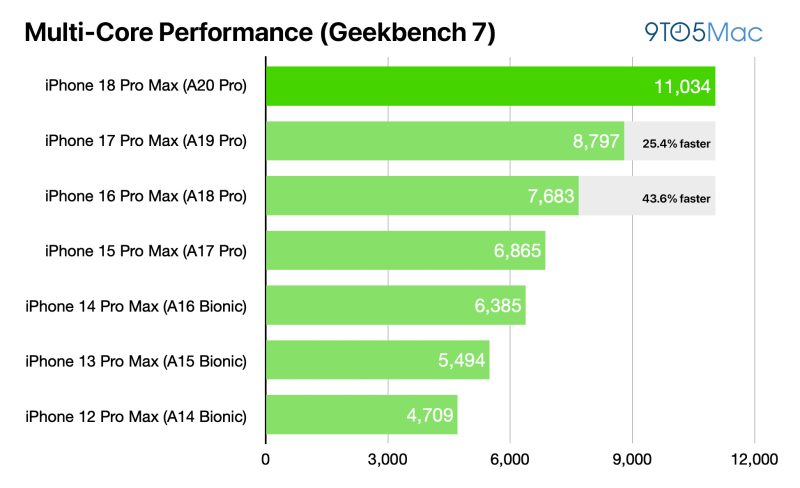
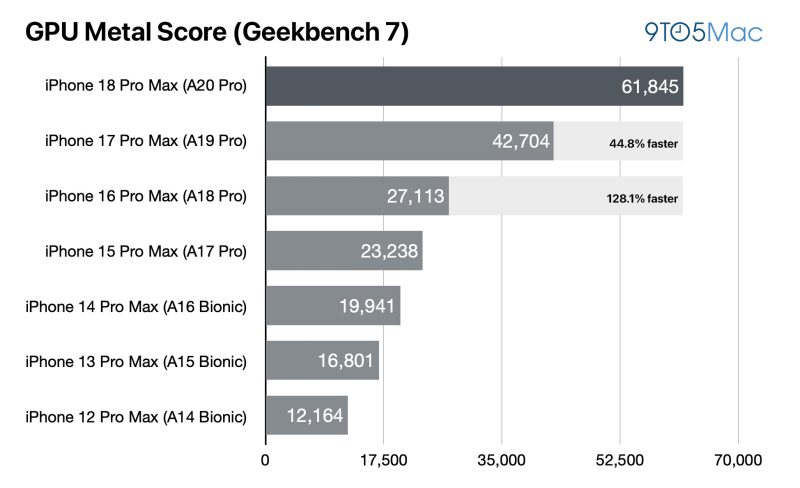
Performance benchmarks extrapolated from related semiconductor roadmaps suggest that the A20 Pro will deliver substantial generational gains. Multi-core CPU performance is projected to increase by approximately 60 percent compared to the A17 Pro, while graphics processing unit (GPU) performance could see an unprecedented surge of up to 166 percent. These enhancements will enable the compact tablet to handle graphically intensive gaming, professional-grade photo and video editing, and advanced multitasking workflows previously reserved for larger iPad Pro or MacBook configurations.
Enhanced Durability: Toward the First Water-Resistant iPad
In a departure from traditional tablet engineering, engineering teams within Apple are reportedly developing structural modifications to introduce water resistance to the iPad mini chassis. Achieving water resistance in a tablet presents unique thermal and acoustic challenges, particularly regarding speaker grilles, microphone ports, and structural seams.
According to manufacturing leaks, the new model will feature a redesigned internal architecture and specialized acoustic mesh casings designed to actively prevent liquid ingress. If successfully implemented, this feature would make the device the first-ever water-resistant tablet in Apple’s hardware ecosystem, significantly increasing its utility in outdoor environments, kitchens, and industrial settings where accidental liquid exposure is a hazard.
Market Positioning, Pricing, and Economic Implications
The convergence of advanced display technology, high-end silicon, and novel durability features is expected to impact the retail cost of the device. According to insights shared by Bloomberg market analyst Mark Gurman, the upcoming iPad mini model could introduce a higher entry-level price point, potentially starting at $799. This represents a substantial increase compared to the current $599 starting price established by previous iterations.
This pricing strategy suggests that Apple is consciously repositioning the iPad mini from a mid-tier consumer device into a premium product category. Industry analysts note that while the price increase may deter budget-conscious buyers, the inclusion of pro-level specifications could justify the cost for professionals and enthusiasts who prioritize portability without compromising on computational power. It remains undetermined whether Apple will adjust the baseline storage capacity—potentially shifting from 128GB to 256GB—to soften the impact of the higher initial financial investment.
Broader Industry Impact and Outlook
The impending refresh of the iPad mini underscores a broader industry trend toward packing desktop-class processing power and sophisticated display technologies into smaller, highly mobile form factors. As consumers increasingly demand unified digital workflows across multiple devices, the blurring lines between smartphones, tablets, and personal computers continue to influence product development.

Competitors in the consumer electronics space will likely monitor Apple’s pricing strategy and feature implementation closely. If the market embraces a premium, high-performance compact tablet at an elevated price point, rival manufacturers may accelerate their own research and development into premium small-screen devices featuring advanced display panels and localized artificial intelligence processing. As official announcements approach, developers and consumers alike await confirmation from Apple regarding release timelines, final specifications, and regional availability.