The Simpsons Revives Stop-Motion Magic With Nightmare Before Christmas Homage as Handmade Animation Resges in the AI Era

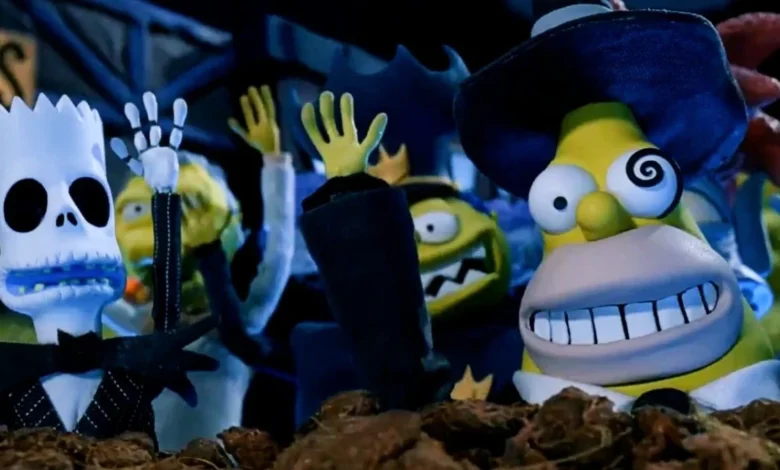
The enduring cultural footprint of Matt Groening’s animated television institution, The Simpsons, was reinforced once more through the release of the opening sequence for Treehouse of Horror XXXVII. Produced by Burbank-based Stoopid Buddy Stoodios, the sequence delivers a meticulous, frame-by-frame stop-motion tribute to Henry Selick’s 1993 cinematic classic, The Nightmare Before Christmas. This broadcast coincides with a broader, industry-wide renaissance of physical, handcrafted media, arriving just as studios like Laika witness strong box-office traction for their sixth feature-length stop-motion project, Wildwood.
The convergence of these releases highlights an evolving sentiment within the commercial animation sector. Amid rapid advancements in generative artificial intelligence and hyper-polished computer-generated imagery, artists, producers, and audiences are increasingly turning their attention toward traditional tactile craftsmanship. The newly unveiled television sequence demonstrates how legacy intellectual properties continue to leverage niche artisanal techniques to engage contemporary viewers.
Anatomy of the Tribute: Cast and Production Design
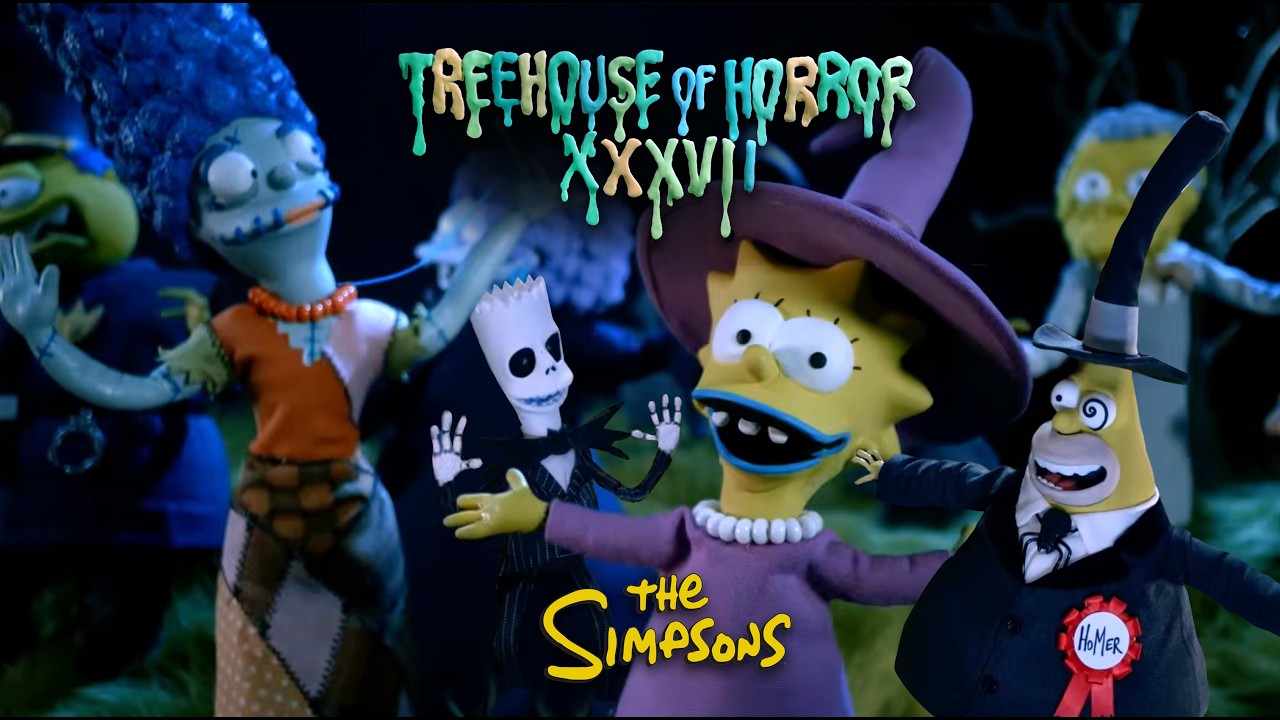
The Treehouse of Horror XXXVII opening sequence reimagines the iconic residents of Springfield through the distinct, gothic, and whimsical aesthetic established by Tim Burton and Henry Selick over three decades ago. The character casting within the parody strictly mirrors the narrative hierarchy of The Nightmare Before Christmas.
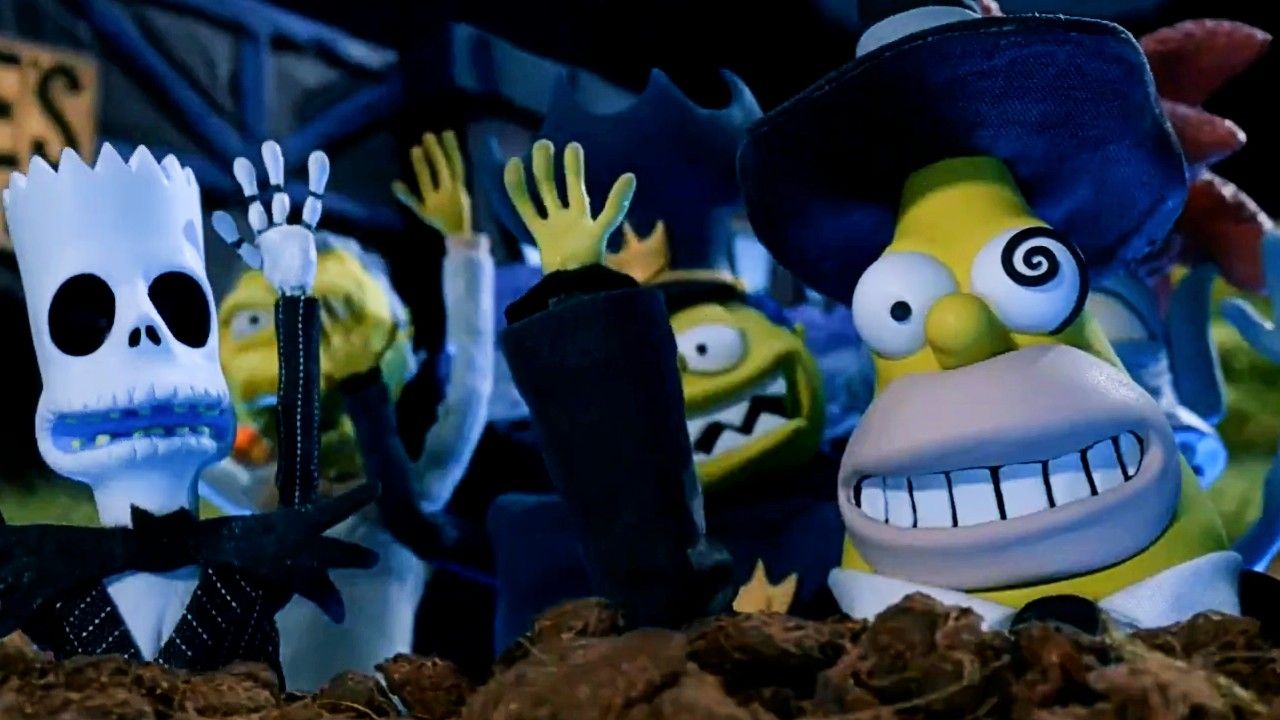
Bart Simpson assumes the role of Jack Skellington, the Pumpkin King, while Marge Simpson embodies Sally, the stitched-together ragdoll. Patriarch Homer Simpson takes on the persona of the two-faced Mayor of Halloween Town, and the family pet, Santa’s Little Helper, is transformed into the spectral ghost dog, Zero. Rounding out the primary ensemble, neighbor Ned Flanders appears as the insect-filled antagonist, Oogie Boogie.
The sequence culminates with the characters performing a lyrical adaptation of the film’s signature opening number, "This Is Halloween," rewritten to honor Springfield’s annual horror tradition. In a meta-narrative nod characteristic of the franchise, Lisa Simpson—dressed as a traditional witch—explicitly reminds viewers that the Halloween specials exist entirely outside the show’s formal canon. This long-standing narrative freedom has historically allowed the creative teams to experiment with alternative art styles, ranging from anime parodies to claymation and pixel art.
Stoopid Buddy Stoodios and the Commitment to Practical Craft
The realization of the Springfield-meets-Halloween-Town crossover was spearheaded by Stoopid Buddy Stoodios, a production house globally recognized for its mastery of stop-motion animation, most notably demonstrated through the long-running satirical series Robot Chicken.
Faced with modern technological shortcuts—such as high-resolution 3D printing and computer-generated interpolation—the production team deliberately chose a more labor-intensive methodology. John Harvatine IV, co-founder of Stoopid Buddy Stoodios, explained the studio’s technical philosophy to industry publication Animation World Network, noting that the team pursued a strictly old-school framework, beginning with fundamental hand-sculpting techniques.
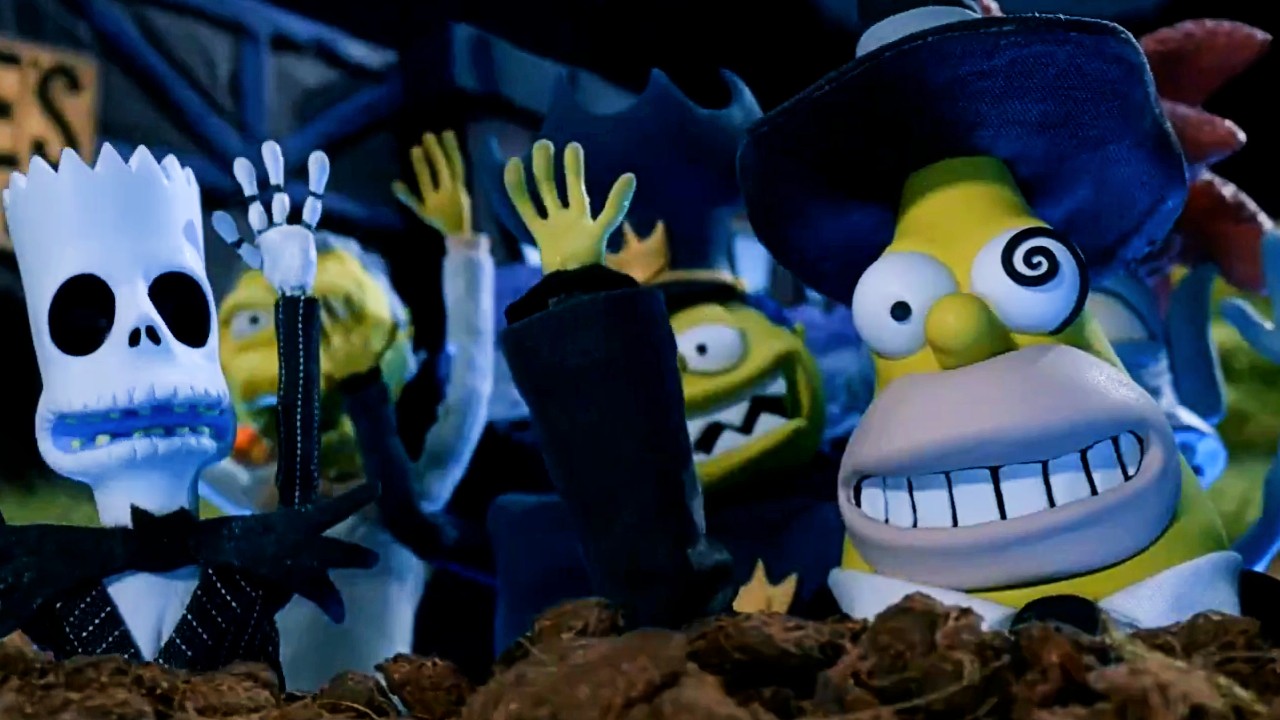
This sentiment was echoed by sculptor Jim McKenzie, who contributed to the physical fabrication of the characters and sets. In statements to Entertainment Weekly, McKenzie emphasized the cultural weight of physical fabrication in the current technological climate. He noted that participating in a project reliant entirely on physical manipulation feels increasingly significant as digital automation permeates creative industries.
The physical nature of the work demands immense patience. Stop-motion animation typically yields mere seconds of usable footage per animator, per week. Puppets must be meticulously posed, adjusted millimeter by millimeter, and captured one frame at a time, resulting in a distinct aesthetic characterized by micro-imperfections, tangible textures, and genuine physical depth that algorithms struggle to replicate authentically.
Historical Context: The Legacy of The Nightmare Before Christmas
The choice of The Nightmare Before Christmas as the foundational reference point for this television crossover carries considerable historical weight within the animation community. When the feature film debuted in October 1993 under the direction of Henry Selick and the creative vision of producer Tim Burton, stop-motion animation was largely regarded by major Hollywood studios as an antiquated medium, superseded by burgeoning computer graphics and traditional cel animation.
Despite initial commercial skepticism, the film achieved sleeper-hit status, proving that stop-motion could sustain a commercially viable, mainstream feature film. More importantly, the critical and financial success of The Nightmare Before Christmas laid the institutional groundwork for modern stop-motion powerhouses. Most notably, it served as a direct conceptual precursor to Henry Selick’s later work on Coraline (2009), the inaugural feature film produced by Laika, which established a new operational standard for independent, feature-length stop-motion production.
Chronology of the Modern Handmade Revival
The recent visibility of stop-motion animation is part of a broader timeline highlighting the resilience of physical media against digital saturation:
- October 1993: Touchstone Pictures releases The Nightmare Before Christmas, redefining commercial expectations for stop-motion feature films.
- February 2009: Laika releases its debut feature, Coraline, establishing Oregon as a hub for advanced, large-scale puppet animation.
- Late 2000s–Present: Stoopid Buddy Stoodios develops critically acclaimed stop-motion content, utilizing retro toys, action figures, and bespoke armature building.
- September 2025: Laika releases its sixth feature film, Wildwood, to positive box-office returns, highlighting continued audience demand for handcrafted cinematic storytelling.
- October 2025: The Simpsons premieres Treehouse of Horror XXXVII, featuring a fully realized stop-motion opening sequence produced by Stoopid Buddy Stoodios as an explicit homage to 1990s dark fantasy animation.
Industry Implications and the AI Landscape
The timing of these releases underscores an ongoing philosophical debate within the visual arts and entertainment sectors. As generative artificial intelligence models and automated rendering software gain broader adoption across commercial pipelines, fears regarding homogenization and the displacement of human labor have intensified.
Industry analysts observe that audiences are developing an acute appreciation for visibly human-made labor as a counterweight to digital perfection. Imperfections inherent in physical media—such as subtle thumbprints on clay models, stray fibers on puppet costumes, and the natural jitter of physical sets—function as authenticity markers.
While automated tools promise unprecedented efficiency and cost reduction in standard animation workflows, the continued commercial success of artisanal projects like Wildwood and high-profile television crossovers like The Simpsons’ latest Halloween opener suggest that tactile storytelling retains a vital economic and cultural niche. These productions prove that physical craftsmanship not only survives technological disruption but can thrive by offering audiences a tangible, irreplaceable viewing experience rooted in human ingenuity.
Related posts: