How Retailers Can Build Their Own Digital Marketplaces: Insights from the CS-Cart and TackleTarts Expert Exchange

The modern e-commerce landscape is undergoing a structural transformation, shifting away from traditional single-vendor storefronts toward expansive, multi-vendor digital marketplaces. For contemporary retailers seeking to aggressively scale operations, boost sales figures, and diversify revenue streams, establishing a marketplace represents an unprecedented commercial opportunity. Rather than merely participating as a third-party seller on established platforms like Amazon or eBay, ambitious brands are increasingly realizing that owning the infrastructure provides superior control over margins, customer data, and brand positioning.
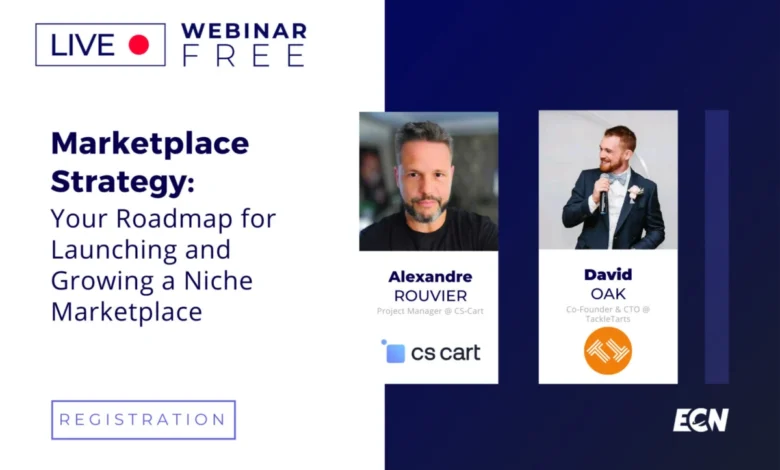
To explore the mechanics of this growing digital strategy, e-commerce authorities CS-Cart and TackleTarts recently convened for a comprehensive expert exchange. Moderated as a deep-dive webinar, the collaborative session addressed the foundational steps required for businesses to successfully conceptualize, build, and launch proprietary marketplaces. Retailers who missed the live broadcast now have access to the complete event replay, offering a strategic roadmap for navigating the complexities of multi-vendor commerce.
The Evolution of E-Commerce: Why Retailers Are Building Their Own Marketplaces
Over the past decade, consumer expectations have shifted dramatically. Modern shoppers increasingly demand vast product selections, competitive pricing, streamlined checkout processes, and rapid fulfillment—all within a single digital ecosystem. While legacy retailers once struggled to match the inventory depth of retail giants, the democratization of marketplace software has leveled the playing field.
Market data from leading digital trade associations indicates that marketplace sales now account for a substantial majority of global online retail transactions. Consumers prefer the convenience of browsing multiple brands, comparing diverse product categories, and making consolidated purchases under one virtual roof. For retail enterprises, capitalizing on this consumer behavior by launching an in-house marketplace eliminates the heavy capital expenditure typically associated with acquiring massive physical or digital inventories. Instead, platform operators can invite vetted third-party merchants to stock the digital shelves, earning commissions on transactions while enriching the overall consumer proposition.
However, transitioning from a traditional merchant model to a marketplace operator involves intricate logistical, legal, and technical hurdles. Recognizing these challenges, the collaborative presentation between CS-Cart and TackleTarts was designed to demystify the development process, providing actionable insights for businesses eager to capture market share.
Inside the CS-Cart and TackleTarts Collaboration
The educational event brought together technical expertise and real-world execution. CS-Cart, a globally recognized provider of customizable multi-vendor software solutions, partnered with TackleTarts, a specialized niche retailer that successfully navigated the transition into a marketplace model.
The case study format of the presentation allowed attendees to examine a tangible blueprint of marketplace development. Rather than relying on abstract theoretical models, the session dissected TackleTarts’ operational journey—highlighting the strategic decisions, technical integrations, and vendor management practices that fueled their growth.
Throughout the session, the dialogue centered on answering critical operational questions that face every enterprise considering the marketplace model: How do you recruit and vet compatible merchants? What pricing structures and commission models maximize profitability? How do you maintain stringent quality control over third-party fulfillment and customer service? And crucially, what underlying software architectures are required to handle complex multi-vendor transactions, automated payouts, and real-time inventory synchronization?
By addressing these core inquiries, the presenters provided attendees with a holistic understanding of what it takes to curate a high-quality consumer offering while maintaining harmonious vendor relationships.
Technological Foundations: Choosing the Right Infrastructure
A recurring theme during the expert exchange was the critical importance of technology selection. Building a marketplace is fundamentally different from establishing a standard content management system or a single-vendor e-commerce store. The underlying architecture must seamlessly manage multiple administrative dashboards, independent vendor inventories, split payments, tax calculations across various jurisdictions, and distinct shipping rules.
Industry analysts note that businesses attempting to build proprietary marketplace software from scratch often face exorbitant development costs, prolonged time-to-market windows, and persistent security vulnerabilities. Consequently, modern retailers increasingly rely on robust, pre-built marketplace builders and modular software frameworks.
During the event, technical specialists from CS-Cart emphasized the value of flexibility and scalability. A successful marketplace software solution must offer customizable vendor portals, comprehensive API integrations for third-party logistics and enterprise resource planning (ERP) systems, and granular permission controls. By utilizing specialized marketplace infrastructure, retail organizations can significantly reduce development timelines, allowing leadership teams to focus on core competencies such as merchant acquisition, brand marketing, and customer experience enhancement.
Curating a Qualitative Offering: Vendor Collaboration and Brand Alignment
A marketplace is only as strong as its merchant ecosystem. One of the central insights shared during the CS-Cart and TackleTarts presentation was the necessity of strategic merchant curation. Simply opening a platform to any registered vendor can lead to compromised product quality, unreliable shipping times, customer service friction, and long-term brand erosion.
To build a trusted marketplace brand, operators must establish rigorous onboarding criteria. This includes verifying vendor credentials, evaluating product quality standards, ensuring compliance with local consumer protection laws, and aligning fulfillment speeds with marketplace expectations. Furthermore, successful marketplace operators work collaboratively with merchants to create exclusive product bundles, co-branded promotions, and cohesive merchandising strategies that enhance the overall consumer value proposition.
The case study explored by TackleTarts illustrated how strategic partnerships within a specific niche can create a powerful competitive moat. By collaborating with complementary merchants who share a target demographic rather than direct competitors, platform owners can cross-pollinate customer bases and build a loyal, highly engaged community of buyers.
Broader Market Implications and Strategic Outlook
The growing accessibility of marketplace creation tools is fundamentally reshaping the competitive dynamics of digital commerce. Historically, the multi-vendor marketplace model was the exclusive domain of multi-billion-dollar technology conglomerates. Today, mid-market retailers, specialized niche brands, and regional distributors are increasingly launching localized or vertical marketplaces to capture specific consumer segments that mass-market giants overlook.
Economic analysts observe that vertical marketplaces—platforms focused on a specific industry, hobby, or lifestyle category—often achieve higher customer retention rates and stronger brand loyalty than generalist retail sites. By combining specialized domain expertise with a curated multi-vendor inventory, niche retailers can position themselves as definitive authorities within their respective sectors.
However, industry experts caution that marketplace ownership is not a passive revenue stream. Operating a successful platform requires continuous investment in digital marketing, vendor support, dispute resolution mechanisms, and cybersecurity infrastructure. Retailers must be prepared to transition from traditional merchants into digital landlords and ecosystem orchestrators, managing the delicate balance between platform profitability and merchant satisfaction.
How to Access the Event Replay and Further Resources
For retail executives, digital strategists, and e-commerce entrepreneurs looking to deepen their understanding of multi-vendor architecture and marketplace launch strategies, comprehensive educational materials remain vital. The insights shared during the exchange between CS-Cart and TackleTarts provide a foundational understanding of the technical, logistical, and strategic considerations required to succeed in this competitive arena.
Interested professionals can access the complete event replay and review detailed technical guides by visiting the registration portal hosted by E-Commerce Nation. By filling out the designated inquiry form on the platform, stakeholders can unlock the full presentation archive, gaining direct access to expert advice, case study breakdowns, and actionable frameworks designed to accelerate their marketplace development journey. As the e-commerce sector continues its rapid evolution, mastering the art of marketplace orchestration will undoubtedly remain a defining competitive advantage for the retailers of tomorrow.
Related posts: