The Evolution of Last-Mile Logistics: How Gig-Economy Delivery Models Are Reshaping Ecommerce Operations and Consumer Expectations

The global ecommerce landscape is currently undergoing a radical transformation as major retailers pivot away from traditional long-haul shipping in favor of hyper-local, gig-powered delivery networks. This shift, exemplified by Target Corporation’s recent announcement to expand its Shipt-powered same-day delivery model to more than 100 additional U.S. stores by 2026, represents a fundamental change in how goods move from the warehouse to the doorstep. While these localized models promise unprecedented speed and significant cost reductions for merchants, they also introduce a new set of variables regarding service consistency, residential security, and brand reputation. As the "last mile" continues to be the most expensive and complex part of the supply chain, the industry is grappling with the trade-offs between the efficiency of the gig economy and the reliability of established carrier networks.
The Strategic Shift to Hyper-Local Fulfillment
The core of the modern delivery revolution lies in the concept of "stores-as-hubs." Rather than relying on massive, centralized distribution centers located hundreds of miles from urban populations, retailers like Target, Walmart, and Amazon are increasingly utilizing their physical storefronts as micro-fulfillment centers. This strategy allows products to be staged within miles—sometimes blocks—of the end consumer.
Target’s decision to scale its Shipt integration is a direct response to the success of this decentralized model. By leveraging its network of nearly 2,000 physical stores, Target has effectively brought its inventory closer to the customer than any traditional shipping company could achieve through a hub-and-spoke system. When a customer places an order, a Shipt contractor—operating as a gig-economy worker—enters the local store, picks the items, and delivers them directly to the customer’s home using their personal vehicle. This bypasses the traditional logistics chain of sorting facilities, long-haul trucking, and regional distribution centers.
The financial implications of this model are profound. Industry data suggests that Target can reduce its delivery costs by approximately $2.50 per package when utilizing Shipt instead of national carriers like UPS or FedEx. While $2.50 may seem modest on a single-order basis, for a retailer processing millions of transactions, the cumulative savings represent a significant boost to profit margins. These savings are primarily driven by the elimination of "zone-based" pricing and the reduction of handoffs between different logistics entities.
A Chronology of the Gig-Delivery Integration
The current dominance of gig-economy delivery did not happen overnight; it is the result of nearly a decade of strategic acquisitions and infrastructure experimentation.
- 2013–2015: The Rise of the Gig Economy: Platforms like Uber and Instacart began demonstrating that independent contractors could handle complex urban logistics. Amazon responded by launching Amazon Flex in 2015, allowing everyday drivers to deliver packages from their own cars.
- 2017: Target’s Strategic Pivot: In a landmark $550 million deal, Target acquired Shipt. At the time, Shipt was primarily a grocery delivery service. Target’s leadership recognized that the platform could be repurposed to handle a much broader range of ecommerce goods.
- 2020–2022: The Pandemic Accelerator: The COVID-19 pandemic caused a permanent shift in consumer behavior. Same-day delivery moved from a luxury to a baseline expectation. Retailers that had invested in local fulfillment saw triple-digit growth in their "drive-up" and "delivery-from-store" segments.
- 2023–2024: Optimization and Scale: Retailers began refining the technology behind these apps, improving route density and integrating real-time store inventory data to ensure that gig workers weren’t hunting for out-of-stock items.
- 2026 Vision: Target’s commitment to expanding this model to 100+ more stores by 2026 signals that the gig-delivery model is no longer an experiment—it is the primary engine of their growth strategy.
Supporting Data: The Economic and Social Impact of the Last Mile
To understand why retailers are willing to risk the inconsistencies of gig work, one must look at the data surrounding shipping costs. Research from Capgemini indicates that the "last mile" of delivery accounts for roughly 53% of the total cost of shipping. In an era where consumers expect "free" shipping, merchants are under immense pressure to find any possible efficiency.
Furthermore, the speed of delivery has become a primary driver of conversion. According to a 2023 consumer survey, nearly 41% of shoppers are willing to pay extra for same-day delivery, and 24% of consumers said they would abandon a cart if delivery times were too long. By using local gig workers, retailers can offer 2-hour or 4-hour delivery windows that traditional carriers, hampered by rigid daily routes, simply cannot match.
However, the shift also brings social and security challenges. Porch piracy is at an all-time high in the United States. Data from Safewise indicates that approximately 44% of Americans have had a package stolen in the last year, with the total value of stolen goods reaching billions of dollars annually. Gig-delivery models, which often lack the standardized training and secure-access tools of traditional carriers, can inadvertently exacerbate this problem.
The Complexity of Professional vs. Gig Delivery
The operational difference between a UPS driver and a gig-economy contractor is vast. Traditional carriers operate within a highly regulated and standardized environment. Drivers undergo extensive training, wear uniforms that identify them to residents and building managers, and often have access to specialized tools like "Arrow keys" (master keys used by USPS) or secure building codes integrated into their handheld devices.
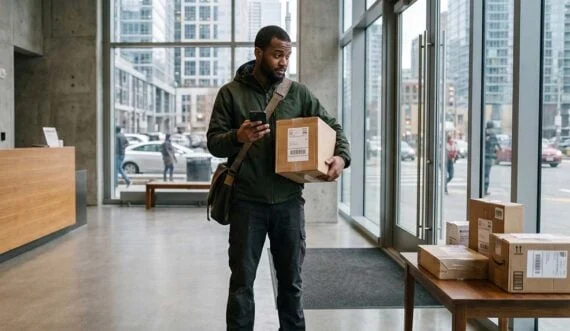
In contrast, the gig-economy model is characterized by high turnover and a lack of institutional knowledge. A Shipt or Amazon Flex driver may be visiting a specific apartment complex for the first and only time. This leads to common "delivery fails," such as packages being left in unsecured lobbies, outside front gates, or in hallways where they obstruct foot traffic.
For residents in high-density urban environments, the experience can be particularly frustrating. Modern apartment buildings often utilize one-time passcodes or smartphone-based entry systems. While these are designed to be secure, an inexperienced gig worker—under pressure to complete a high volume of deliveries to maintain their "rating"—may find the process too time-consuming. The result is often a "dump and run" approach, where the package is left in the most convenient (and often least secure) location possible.
The Brand Experience Dilemma for Merchants
For large-scale retailers like Target or Walmart, a botched delivery is a manageable problem. These companies possess the customer service infrastructure to issue refunds or reship items without a significant dent in their bottom line. Their brand strength is such that a single poor delivery experience rarely results in the total loss of a customer.
However, for small to midsize merchants who utilize white-label gig delivery services to compete with the giants, the stakes are much higher. In these instances, the delivery person is the only physical point of contact the customer has with the brand. If a package is damaged, stolen, or left in a puddle, the customer does not blame the independent contractor; they blame the merchant.
Industry analysts suggest that the delivery experience is now an inextricable part of the product itself. A "poor handoff" can lead to negative social media reviews, high customer support costs, and a decrease in the Lifetime Value (LTV) of a customer. This creates a paradox: to stay competitive on price and speed, merchants must use gig services, but to maintain brand quality, they need the reliability of professional carriers.
Broader Implications and Future Outlook
The expansion of the Shipt-powered model at Target is a harbinger of a more fragmented logistics future. We are likely to see a "two-tier" delivery system emerge. The first tier will consist of high-value, high-security shipments handled by traditional carriers with specialized training and equipment. The second tier will be a high-volume, low-cost "commodity" delivery layer powered by gig workers and, eventually, autonomous systems.
Technological intervention will be required to bridge the gap in consistency. We can expect to see:
- Enhanced Smart-Access Integration: Direct integration between delivery apps and building security systems (like Latch or ButterflyMX) to grant drivers temporary, tracked access.
- Predictive Analytics: AI that flags "difficult" delivery locations (e.g., buildings with history of theft) and routes those specific packages to more experienced drivers or requires "hand-to-hand" delivery.
- Standardized "Photo-on-Delivery" Requirements: Stricter protocols for documenting exactly where a package was left to reduce fraudulent claims and encourage driver accountability.
The move toward 2026 will see a continued blurring of the lines between "retailer" and "logistics provider." As Target and its peers become more proficient at managing their own last-mile networks, the traditional dominance of national carriers will continue to be challenged. The ultimate winner in this evolution will be the consumer, provided that the industry can solve the lingering issues of reliability and security that currently shadow the convenience of the gig economy. In this new era, fulfillment is no longer just about getting a box from point A to point B; it is about mastering the final few feet of the customer journey.
Related posts: