The Mechanism of Avian Navigation
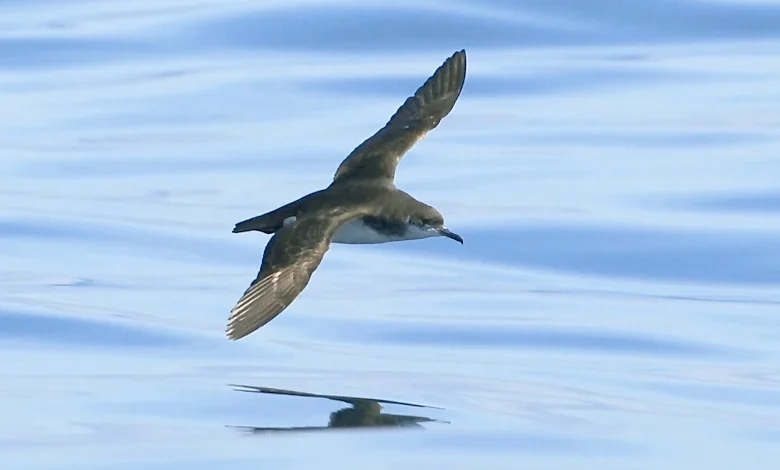
The Manx shearwater (Puffinus puffinus) is a marvel of maritime evolution. Sporting a wingspan that allows for efficient gliding over thousands of kilometers, these birds breed in burrows along the coastal islands of the United Kingdom and Ireland, with a significant population density in Wales. Their life cycle is defined by arduous foraging trips that can span from a single day to two weeks, during which they must navigate vast stretches of open water to find sustenance before returning to their nests.
According to behavioral ecologists, these birds rely on a sophisticated "map and compass" system. While the map component—which may incorporate olfactory cues—helps the birds determine their current location, the compass component relies on the position of the Sun. Because the Sun moves across the sky throughout the day, an effective solar compass requires a stable internal clock to compensate for the changing angle of the light. If the bird’s internal perception of time drifts, its estimation of its heading inevitably veers off course.
Two Decades of Tracking Data
The study, led by Patrick Lewin of the University of Oxford, represents one of the most comprehensive analyses of wild avian movement ever conducted. The project began in 2004, shortly after GPS technology was miniaturized sufficiently to be safely carried by birds the size of a pigeon. Over the subsequent 20 years, researchers compiled a database of 3,688 individual foraging trips undertaken by 1,045 distinct birds.
By isolating the "homeward" legs of these journeys—identified by the birds’ shift from erratic, exploratory foraging patterns to rapid, linear flights toward their burrows—the research team was able to create a high-resolution map of their navigational accuracy. By calculating the birds’ last known sunrise point, researchers could measure the temporal drift between the birds’ internal clocks and the actual local time at their GPS coordinates. The resulting data showed a consistent pattern: as the birds traveled across degrees of longitude, their solar compasses became increasingly biased, leading to observable deviations in their flight paths.
Quantifying the Biological Cost
The time shifts observed by the researchers were remarkably subtle, rarely exceeding an hour and more frequently measuring between 10 and 15 minutes. While such a shift might be imperceptible to a human operating in a modern, technology-driven society, for a bird navigating by the Sun, it introduces a measurable degree of error.
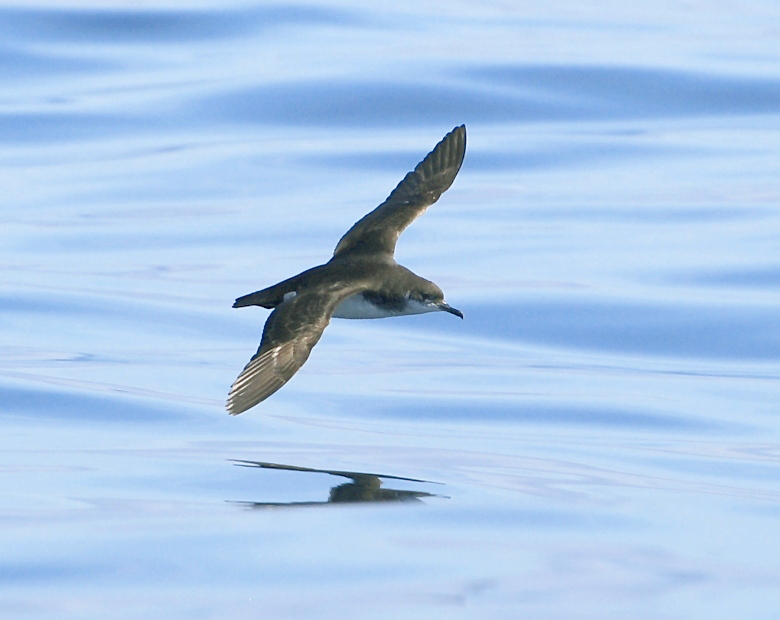
The data indicated that when shearwaters flew east, their internal clocks caused them to veer clockwise; when flying west, the bias shifted to the anticlockwise direction. The maximum deviation calculated was approximately 15 degrees. While this sounds significant, the birds proved remarkably resilient. Because they possess an innate "map sense" that allows them to continuously check their orientation against landmarks or other environmental cues, the birds were able to correct their trajectory. Calculations suggest that for a 1,000-kilometer journey, the navigational error added a negligible five kilometers to the total distance traveled.
Scientific Implications and Comparative Biology
This study marks the first time that jet lag-induced navigational error has been documented in wild animals during their natural behavior. Previous research had observed similar phenomena in captive animals, such as penguins that were physically transported across longitude lines, but this study confirms that the phenomenon is an inherent risk of natural, self-directed flight.
The research also addresses the interplay between different navigation systems. The finding that shearwaters continue to drift slightly even when following coastlines suggests that birds may balance two competing systems: an internal solar compass and a landmark-based navigation system. This dual-system hypothesis aligns with previous studies on homing pigeons, which demonstrated that even when a familiar "road" or coastline is available, a disrupted internal clock can still cause a detectable, albeit minor, shift in the bird’s path.
Broader Biological and Evolutionary Context
The implications of this research extend far beyond the Manx shearwater. If birds as adept at navigation as the shearwater are subject to the limitations of their internal clocks, it is highly probable that other migratory species—particularly those that move rapidly across multiple time zones—experience similar issues.
The study raises compelling questions about how different species have evolved to mitigate the effects of internal clock desynchronization. For humans, chronic jet lag is associated with significant health risks, including metabolic disruption and sleep disorders. Whether these birds have evolved physiological mechanisms to "reset" their clocks more quickly or whether they have adapted to operate with a degree of temporal instability remains a primary question for future research.
Furthermore, the study provides a roadmap for the development of bio-inspired autonomous navigation systems. Engineers designing long-range drones or autonomous maritime vehicles often look to nature for efficiency. Understanding how a bird manages to correct for a misaligned internal clock could lead to the development of more robust, fail-safe algorithms for artificial intelligence systems tasked with navigating in environments where traditional GPS signals might be unavailable or unreliable.

Future Research Horizons
While the study provides robust evidence for the existence of avian jet lag, it leaves several questions unanswered. Researchers have yet to determine whether this internal clock drift leads to secondary symptoms, such as impaired foraging success, reduced breeding efficacy, or altered sleep patterns. Future investigations will likely focus on the physiological markers of these birds, potentially using wearable technology to monitor sleep-wake cycles during long-distance transoceanic flights.
Additionally, the research highlights the vulnerability of species that inhabit regions where longitude lines are densely packed, such as the polar regions. As climate change shifts migratory patterns and forces birds to adapt to new foraging grounds, the ability to manage time-zone-related navigation errors may become an increasingly vital component of species survival.
Conclusion
The work conducted by the team at the University of Oxford serves as a sobering reminder of the precision required for life in the wild. Even with millions of years of evolutionary refinement, the Manx shearwater remains tethered to the laws of physics and biology that govern time and space. By documenting the subtle ways in which these birds lose their sense of time, researchers have not only provided a new understanding of avian migration but have also illuminated a universal struggle: the difficulty of maintaining internal equilibrium in a world that is constantly moving.
As the scientific community continues to analyze the data collected over these two decades, the focus will likely turn toward the resilience of these animals. If these birds can navigate the vast, featureless Atlantic while simultaneously battling the "nuisance" of jet lag, they may hold the key to understanding how life overcomes the constraints of its own internal machinery. The study, published in the latest issue of Science, stands as a testament to the power of long-term ecological monitoring and the enduring mystery of the natural world’s navigational prowess.