Anakin Skywalker Gen Z Male Rage Memes Reflect Growing Disillusionment and Political Discontent Online

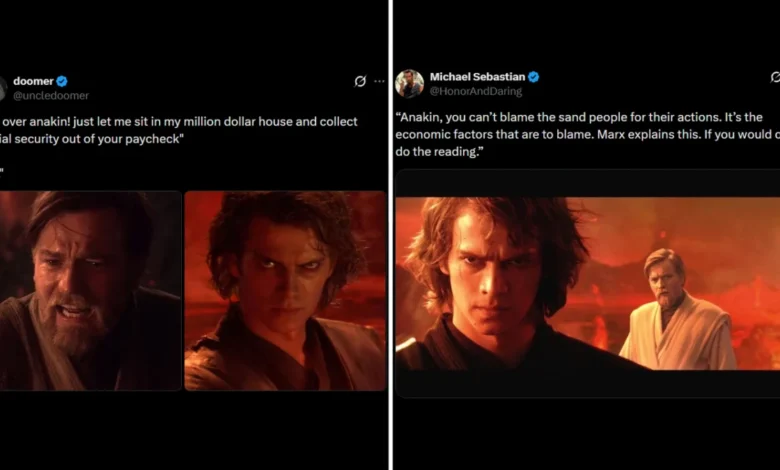
The digital landscape of late 2026 has given rise to a distinctive and viral cultural phenomenon across social media platforms, particularly on X (formerly Twitter). Dubbed the Anakin Skywalker Gen Z Male Rage Memes, this trend utilizes imagery, video edits, and quote captions centered around the character of Anakin Skywalker from the Star Wars prequel trilogy. Far beyond simple cinematic nostalgia or standard internet humor, these memes serve as a vehicle for young men—specifically within Generation Z—to articulate deep-seated feelings of economic anxiety, political alienation, and frustration with institutional authority. By mapping Anakin’s tragic narrative arc onto contemporary socio-political grievances, internet users have transformed a decades-old science fiction franchise into a modern ideological battleground.
The Cultural Anatomy of the Prequel Metaphor
At the core of this viral movement is a specific interpretation of George Lucas’s Star Wars prequel trilogy, comprising The Phantom Menace, Attack of the Clones, and Revenge of the Sith. In the films, Anakin Skywalker is introduced as a powerful, emotionally complex individual who is brought into the fold of the Jedi Order—an ancient, established governing body that demands strict adherence to dogmatic rules while increasingly losing touch with the reality of the galaxy. Anakin’s growing resentment toward figures of authority, such as the Jedi Council and his mentor Obi-Wan Kenobi, ultimately culminates in his dramatic fall to the Dark Side and his transformation into Darth Vader.
In October 2026, online commentators and everyday users began repurposing these cinematic beats to mirror the lived experiences of young men coming of age in Western societies. Within these digital spaces, the Jedi Order and the Galactic Senate are frequently analogized to aging establishment generations—specifically Baby Boomers and older generations—who hold systemic power while presiding over what younger demographics perceive as failing economic and social structures.
The memes tap into a complex matrix of modern anxieties. Content frequently highlights crushing student loan debt, the prohibitive cost of housing, the psychological toll of pandemic-era disruptions during formative years, and the disruptive impact of automated technologies and artificial intelligence on the job market. Rather than viewing Anakin as a cautionary tale of unchecked personal ambition and moral corruption, a segment of Gen Z male internet users has reinterpreted his narrative as an understandable reaction to a rigid, hypocritical system that demands conformity and sacrifice while offering little security or upward mobility in return.
Chronology and Escalation of the Online Trend
The trajectory of the trend gained measurable momentum during the first two weeks of October 2026. Early iterations began as stark comparisons between the bleak economic outlook for young adults and the trials faced by the fictional Jedi Knight. On October 11, 2026, X user ArchitectOracle posted a breakdown summarizing the perceived hardships of the zoomer generation—citing post-college debt, lost years due to COVID-19, AI-driven displacement, and rising living costs—paired with imagery of Anakin’s defeat and severe injuries sustained in his duel with Obi-Wan Kenobi. The post quickly amassed over 170,000 views, signaling a resonant chord among peers.
Over the subsequent days, the discourse evolved from general economic lamentations to sharper cultural and political commentaries. On October 16, user Isaac556x45 published a post lamenting broader societal shifts, including the disappearance of traditional physical retail spaces and changing economic markers, which garnered significant engagement. By October 17, longer-form analytical posts began circulating, contextualizing the appeal of the prequels. Commentary from users like Con_Tomlinson argued that young men relate to Anakin not as a villain, but as a competent, driven individual whose natural aspirations for family, fraternity, and stability are thwarted by a sclerotic political order.
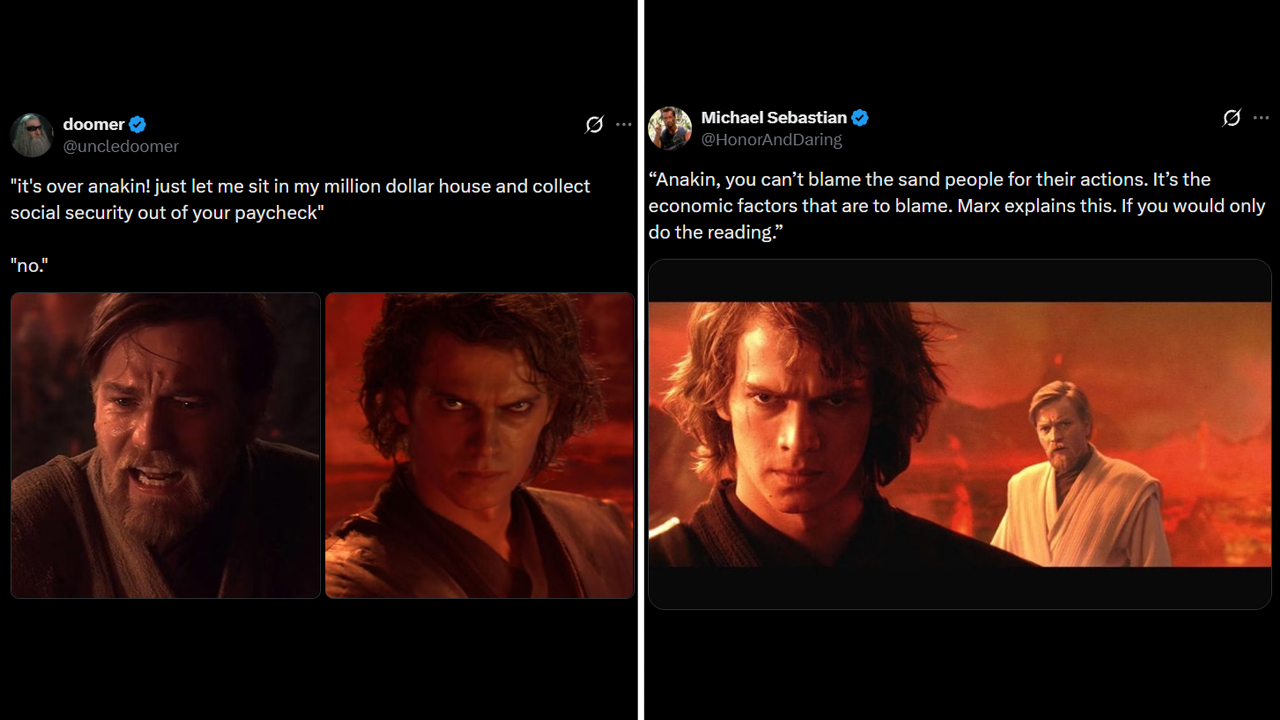
The movement expanded further into right-wing political commentary and cultural critique as October progressed. Users such as Templarpilled and kangminlee framed the prequels as a profound piece of science-fiction storytelling that mirrored the disillusionment of young men who grew up believing in the fundamental goodness of institutional systems, only to find them hollow and self-serving.
The Intervention of Public Figures and Counter-Discourse
The cultural footprint of the meme trend widened significantly on October 27, 2026, when prominent conservative commentator Matt Walsh weighed in on the Star Wars prequels. Responding to a viral post labeling the films cinematic masterpieces unfairly maligned by older generations, Walsh characterized the trilogy as containing some of the worst acting and writing in big-budget Hollywood history, even surpassing the original trilogy in perceived flaws.
Walsh’s critique sparked immediate pushback within the meme ecosystem. X users swiftly mobilized by drawing parallels between Walsh and Jedi Master Ki-Adi-Mundi—a member of the Jedi Council who famously opposed Anakin’s training in The Phantom Menace. By casting Walsh in the role of the dismissive institutional authority figure, creators turned the critique back onto older commentators, framing the rejection of the prequels as yet another instance of older generations failing to comprehend or validate the perspectives of the youth.
This friction drew broader media attention. Digital culture outlets, including Not The Bee, covered the escalating discourse, noting how online communities were utilizing the cinematic universe to express sharp critiques regarding contemporary immigration policies, economic nationalism, and generational disenfranchisement. Further contributions from accounts like ThomBrady5 provided expansive, multi-paragraph breakdowns comparing the Jedi religion to rigid modern civic dogmas, drawing thousands of impressions and fueling further debate across the platform.
Quantitative Reach and Sociological Implications
While precise search interest metrics remain difficult to quantify uniformly due to the decentralized nature of social media algorithms, individual post metrics highlight the massive scale of the trend. Major viral posts associated with the Anakin Skywalker male rage phenomenon routinely pulled in hundreds of thousands of views, thousands of reposts, and robust comment sections filled with ideological debate.
From a sociological perspective, the adoption of fictional archetypes to express political and economic grievances is a well-documented phenomenon in digital media studies. However, the specific focus on Anakin Skywalker highlights a deepening generational divide. Sociologists and cultural analysts note that when younger demographics feel locked out of traditional pathways to wealth, homeownership, and social stability, popular culture becomes a vital canvas for expressing systemic alienation.
The ironic and often aggressive tone of the memes—incorporating internet slang, political buzzwords, and dark humor—masks a serious underlying sentiment: a profound loss of faith in legacy institutions. Whether framed through the lens of economic desperation or nationalist sentiment, the Anakin Skywalker Gen Z Male Rage Memes underscore how deeply popular narratives are weaponized by modern youth to make sense of a rapidly changing and increasingly inhospitable social order. As these digital communities continue to grow and refine their messaging, the boundary between cinematic fiction and real-world political discourse becomes increasingly blurred, cementing internet subcultures as primary drivers of contemporary generational expression.