Google’s Breakthrough September 2026: A Comprehensive Review of Frontier AI Models, Scientific Milestones, and Hardware Innovations

The month of September 2026 marked a watershed period for artificial intelligence development, highlighted by Google’s rollout of next-generation frontier models, unprecedented scientific databases, and pioneering space-based infrastructure experiments. Over the course of four weeks, the technology conglomerate introduced significant upgrades spanning consumer applications, enterprise cybersecurity defenses, biological mapping, and hardware architecture. These announcements reflect a broader strategy to transition artificial intelligence from a generalized digital assistant into an integrated, specialized partner capable of addressing complex global challenges across healthcare, climate science, software engineering, and daily productivity.
The Main Facts: Frontier Models and Core Infrastructure
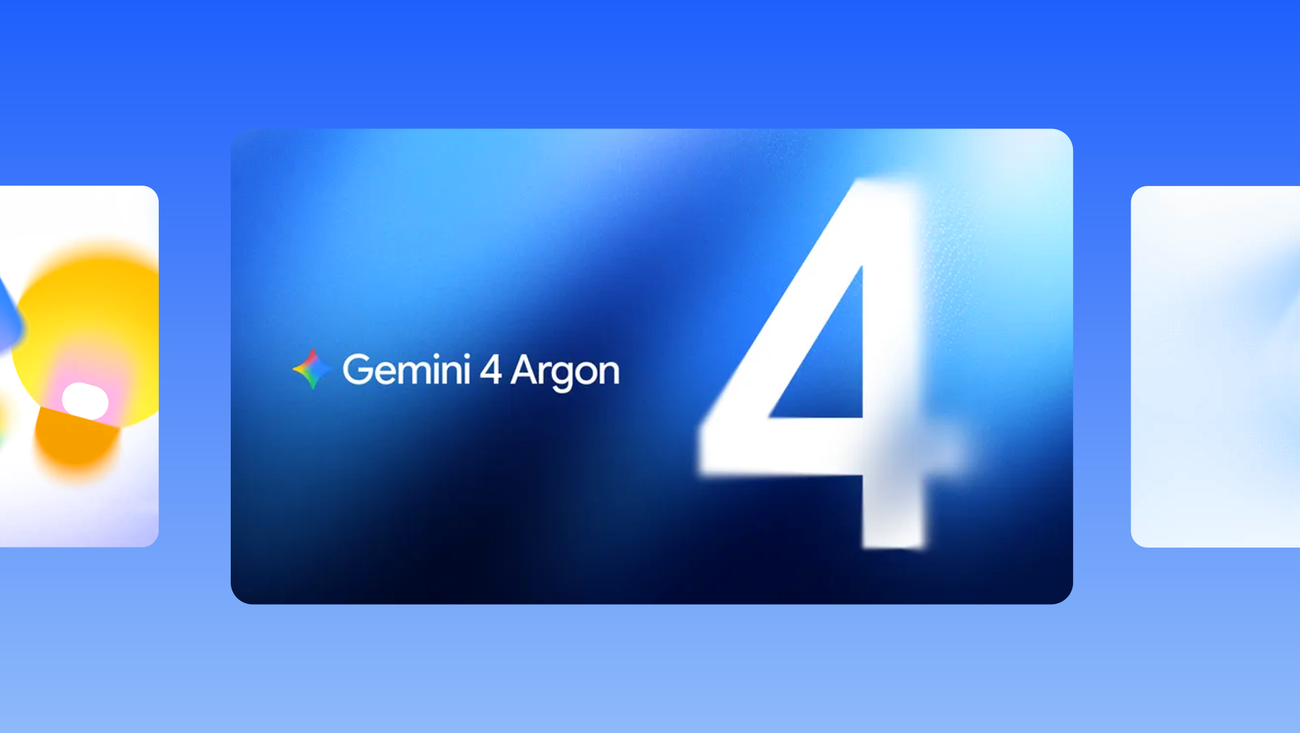
At the core of September’s announcements is the debut of Gemini 4 Argon, designated as the company’s premier frontier model. Engineered specifically for complex reasoning tasks and heavy-duty computational workloads, Argon features an industry-leading output limit of one million tokens. This immense capacity positions the model to handle massive repositories of information, ranging from extensive financial research and legal drafting to long-horizon software engineering.
Google launched Argon with a strong emphasis on cybersecurity. In an era where digital threats evolve at machine speed, Gemini 4 Argon, alongside its companion model Gemini 3.8 Flash Cyber, is designed to assist security professionals with autonomous vulnerability discovery and automated code patching. Recognizing the inherent risks associated with releasing frontier-level cyber capabilities, Google restricted the initial deployment of these tools to trusted defenders through the newly established Fairwind Program. This phased rollout allows developers and security analysts to evaluate system guardrails and provide critical feedback before broader commercial availability.

Complementing the high-end Argon model, Google also introduced Gemini 3.8 Flash, which delivers the advanced reasoning and coding performance of its predecessor, Gemini 3.7 Flash, while maintaining the same speed and cost efficiency. For developers and enterprises building multi-step agentic workflows, these models offer substantial performance gains without increasing operational overhead.
Chronology of September 2026 Announcements
The September deployment schedule followed a rapid, multi-tiered release cadence that targeted distinct sectors of the technology ecosystem, moving from core model architectures to hardware and scientific applications.

In the first week of September, attention centered on developer tools and foundational model releases, specifically the introduction of the 3.8 Flash architecture and the initial briefings on Gemini 4 Argon. By the second week, Google expanded its voice and conversational capabilities with the launch of Gemini 3.8 Live and Gemini 3.8 Live Extended Thinking. These speech-to-speech models reduced latency for multi-step reasoning tasks and were immediately integrated into developer environments like Google AI Studio and the Gemini API, as well as consumer platforms such as Search Live and Workspace applications including Gmail, Docs, and Keep.
Mid-September brought significant consumer and ecosystem updates. Google unveiled new Connected Apps within the Gemini interface, integrating third-party productivity tools (such as Airtable, monday.com, and PandaDoc), creative platforms (Adobe, Squarespace), and lifestyle services. Simultaneously, the company announced the global rollout of Lyria 3.5, its most advanced music generation model, allowing users to produce coherent songs and arrangements from text or image prompts.

In the final third of the month, Google shifted focus to hardware, scientific breakthroughs, and institutional developments. The pre-order announcement for Googlebook—a laptop built on Android and ChromeOS foundations with native on-device Gemini intelligence—showcased the company’s hardware ambitions. This was followed by the unveiling of WeatherNext 3, the launch of the AlphaGenome Atlas database containing predictive models for nine billion human genome variants, and the initiation of Project Suncatcher, which evaluates Tensor Processing Unit (TPU) performance in low-Earth orbit. The month concluded with the formal introduction of the DeepMind Institute to study artificial general intelligence (AGI) governance and safety.
Supporting Data and Ecosystem Expansion
Google’s September announcements were underscored by substantial scaling metrics that demonstrate the global reach of its infrastructure. The company’s tools now support more than 300 languages spoken by approximately 7 billion people, representing roughly 86% of the global population.

In the realm of environmental monitoring, Google partnered with NASA’s Jet Propulsion Laboratory to deploy MAPL-EMIT, a deep learning model utilizing Google Earth Engine. Operating from space, the model successfully detected 50% more methane emissions than traditional human observation methods, identifying over 23,000 previously unmapped plumes, including 24 of the world’s 25 largest-emitting landfills.
In biosciences, the AlphaGenome Atlas addressed a foundational bottleneck in genetics by predicting the functional effects of nearly every possible single nucleotide variant in the human genome. Because testing billions of mutations in a laboratory setting is physically impossible, the database provides researchers with predictive computational models designed to accelerate the study of rare diseases and complex genetic traits without requiring advanced coding expertise. Furthermore, in collaboration with HHMI Janelia and Cambridge University, Google AI helped map the complete adult male fruit fly brain, charting over 166,000 neurons and nearly 12,000 distinct cell types through the assembly of millions of microscopic images.

Official Responses and Industry Recognition
The scope of September’s releases drew widespread attention from industry analysts and independent bodies. Early responses from the cybersecurity sector welcomed the establishment of the Fairwind Program, viewing structured, vetted access to autonomous patching tools as a necessary step to counter sophisticated automated cyberattacks. Enterprise users similarly praised the integration of Connected Apps, noting that consolidating workflows across disparate software suites—from project management platforms to creative design suites—reduces friction in daily operations.
The design and user-interface strategy behind these innovations also received formal acknowledgment. Fast Company recognized Google as the 2026 Design Company of the Year, specifically highlighting the company’s interface design choices that simplify complex AI interactions for everyday users.

Regarding future computational scaling, the introduction of Project Suncatcher highlighted an emerging paradigm in data center engineering. By launching test satellites into low-Earth orbit to evaluate TPU performance, Google aims to leverage the fact that satellites in orbit have access to up to eight times more solar power than terrestrial installations. This initiative addresses growing concerns regarding the energy demands of large-scale AI infrastructure.
Broader Impact and Implications
The convergence of developments announced in September 2026 signals a definitive shift toward agentic, highly specialized, and ubiquitous artificial intelligence. By embedding models like WeatherNext 3 across Search, Maps, and Cloud, and introducing collaborative group agents like CC in Google Labs to manage household logistics, the boundary between consumer software and active digital assistance continues to dissolve.

Simultaneously, institutional moves such as the formation of the DeepMind Institute underscore the tech sector’s recognition of its responsibility as AGI approaches. By creating a dedicated forum for global researchers, ethicists, and policymakers, the institute aims to build a consensus on safety and governance that extends beyond corporate laboratories.
Ultimately, September 2026 demonstrated that artificial intelligence development has matured past initial novelty phases. Whether applied to the structural mapping of biological genomes, the monitoring of planetary climate data from space, or the secure deployment of automated defensive coding tools, Google’s recent updates illustrate a comprehensive effort to weave machine intelligence deeply into the fabric of scientific research, enterprise operations, and daily human life.