Apple CEO John Ternus Pressures Software Chief Craig Federighi to Accelerate AI Roadmap Amid Leadership and Strategy Shakeup

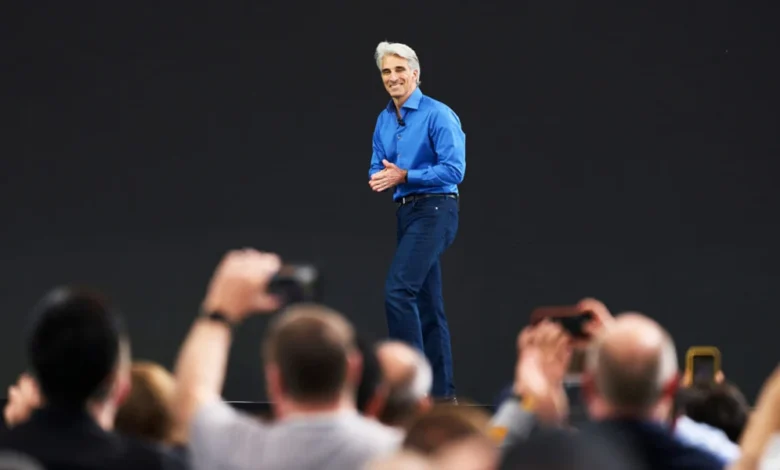
Apple is facing a pivotal moment in its corporate history as leadership confronts mounting pressure to accelerate its artificial intelligence strategy and modernize its software development pipelines. According to recent reports from Bloomberg, newly appointed Apple CEO John Ternus has initiated closed-door discussions with Senior Vice President of Software Engineering Craig Federighi, demanding a radical shift in how the company approaches artificial intelligence and product deployment timelines. The high-stakes meeting underscores growing internal and external anxieties that the Cupertino-based tech giant is moving too slowly in the rapidly evolving generative AI landscape, risking its competitive edge against industry rivals like OpenAI, Google, and Microsoft.
The friction at the top of Apple’s corporate hierarchy highlights a cultural clash between traditional hardware-driven planning cycles and the agile, high-velocity demands of modern software and AI development. While Federighi remains a central and indispensable pillar of Apple’s executive team—with no current plans to step down or establish an immediate succession framework—his hands-on management style and conservative planning horizons are facing unprecedented scrutiny. As Apple explores ambitious next-generation software paradigms, including agentic AI capabilities for Siri, the pressure on its executive leadership team has reached a critical juncture.
Tension at the Top: The Ternus and Federighi Dynamic
The dynamic between Apple CEO John Ternus and software chief Craig Federighi has become a focal point for industry analysts tracking the company’s strategic pivot. In recent weeks, Ternus convened a high-level, closed-door meeting with Federighi, who assumed broader oversight of Apple’s artificial intelligence initiatives following the dismissal of the company’s previous AI lead. According to insider accounts, Ternus expressed deep frustration with what he perceives as corporate hesitancy to embrace AI development with the same urgency demonstrated by competitors.
Ternus reportedly urged Federighi to aggressively accelerate the company’s software roadmap, pushing the organization to look past incremental, evolutionary improvements to Siri and instead embrace revolutionary architecture. Federighi, however, has historically relied on a meticulous, hands-on management approach. Known for his deep technical expertise and formidable debating skills in executive meetings, Federighi frequently challenges opposing proposals, relying on granular technical arguments to defend his vision. While this rigorous scrutiny has historically ensured high product quality and ecosystem cohesion, it has also created bottlenecks. Some software engineering and design team members have expressed concerns that this centralized control leaves limited room for alternative ideas to gain traction or influence product direction.
Furthermore, a significant structural disconnect exists in how Apple plans its product lifecycle. While Apple’s hardware engineering division famously operates on multi-year roadmaps—often looking three to five years ahead to account for silicon design, supply chain constraints, and manufacturing scaling—Federighi’s software organization has traditionally focused on a tighter, 12-to-18-month planning window. Bridging this gap between hardware foresight and software agility is one of the primary challenges facing Apple’s leadership as they attempt to catch up in the AI race.
Leadership Uncertainty: Mike Rockwell Weighs His Future
Compounding Apple’s strategic challenges are potential departures among other key technical leaders. Mike Rockwell, the visionary executive credited with creating the Vision Pro mixed-reality headset and subsequently taking on a leadership role in developing Siri AI as Vice President of Siri Engineering, is seriously considering stepping down.
Industry insiders indicate that Rockwell is weighing whether to relinquish his current leadership responsibilities or leave Apple entirely within the coming year. Such a departure would deal a substantial blow to the company, particularly given Rockwell’s instrumental role in steering the technical development of the next-generation Siri. That initiative has faced notable hurdles, including a widely publicized two-year delay that left Apple lagging behind conversational AI assistants offered by competitors. The potential exit of an executive of Rockwell’s caliber underscores the intense pressure currently felt across Apple’s engineering ranks as they struggle to balance ambitious product timelines with the company’s legendary standards for polish and privacy.
The Broader AI Landscape and Historical Context
Apple’s current predicament stands in sharp contrast to its historical positioning as a market-defining innovator. For decades, the company successfully played a "fast follower" role, allowing nascent technologies to mature before introducing refined, user-friendly iterations that eventually dominated consumer markets. This strategy triumphed with digital music players, smartphones, tablets, and smartwatches. However, the generative AI boom has proven fundamentally different. Unlike hardware-centric categories where supply chain dominance and industrial design create formidable moats, the AI era is defined by rapid algorithmic iteration, massive cloud infrastructure scaling, and continuous, data-driven deployment.
Competitors such as OpenAI and Google have integrated advanced generative models directly into daily consumer workflows, conditioning users to expect rapid capability expansions. Apple’s cautious entry into the space—marked by the staggered rollout of Apple Intelligence features—has been widely scrutinized by Wall Street and technology commentators. Critics argue that Apple’s strict privacy commitments, while valuable for consumer trust, have constrained the vast data collection pipelines required to train cutting-edge foundation models at scale.
To counter these structural disadvantages, Apple has increasingly turned to hybrid strategies. The company notably partnered with OpenAI to integrate ChatGPT capabilities into iOS, iPadOS, and macOS, serving as a bridge while proprietary models continue to mature internally. Yet, leadership recognizes that relying indefinitely on external partners for core AI intelligence undermines Apple’s long-term vertical integration strategy.

Internal Reforms and the Shift Toward Agentic AI
Recognizing the need for structural reform, Apple is actively experimenting with new development pipelines designed to accelerate engineering output. Recent reports indicate that the company is granting engineers significantly more time—roughly 50% more dedicated focus—to write code and explore innovative solutions, while simultaneously reducing the time spent on cumbersome integration tasks. This shift is being facilitated by advancements in internal coding agents and automated testing tools, which are transforming how software is built and deployed within large tech organizations.
At the heart of these experimental pipelines is the development of "agentic" AI systems. Rather than merely responding to isolated voice commands or retrieving static information, next-generation AI agents are designed to execute complex, multi-step workflows autonomously across applications. For Siri, this evolution represents a transition from a reactive assistant to a proactive agent capable of managing user tasks across disparate software ecosystems.
Analyst Perspectives and Market Implications
Financial analysts and technology historians view this executive pressure cooker as a defining test for Apple under its current leadership structure. John Ternus, who took the helm following Tim Cook, is working to establish his own operational legacy by signaling that historical operating procedures are no longer sufficient to maintain market leadership.
The immediate challenge for Ternus and Federighi will be harmonizing Apple’s legendary commitment to product perfection with the speed required in the modern AI economy. If Federighi is able to loosen his grip on the software engineering organization and empower subordinate leaders to make autonomous decisions, Apple could unlock a new wave of organizational agility. Conversely, failure to streamline development and retain top-tier talent like Mike Rockwell risks entrenching Apple further behind its more agile Silicon Valley competitors.
As Apple prepares for major software milestones—including the anticipated architectural shifts expected in future iterations of iOS and macOS—the eyes of the technology sector remain fixed on Cupertino. The outcome of these internal maneuvers will not only determine the future capabilities of Siri and the Vision Pro ecosystem but will also set the strategic trajectory for one of the world’s most valuable technology companies for the next decade.