Understanding the Mechanics of Intelligence: How Information Entropy and Cross-Entropy Loss Enable Large Language Models

The architecture of modern artificial intelligence, particularly the generative capabilities seen in large language models (LLMs) such as OpenAI’s GPT-4, Google’s Gemini, and Meta’s Llama series, relies fundamentally on the mathematical principles of classical information theory. While the end-user experience involves natural language interaction, the internal mechanics of these systems are governed by the minimization of uncertainty through a metric known as cross-entropy loss. By leveraging Claude Shannon’s foundational work from 1948, engineers have transformed the abstract concept of "information entropy" into a practical, high-performance optimization tool that enables machines to predict human language with unprecedented accuracy.
The Historical Foundation: Claude Shannon and Information Theory
In 1948, mathematician Claude Shannon published "A Mathematical Theory of Communication," a seminal paper that introduced the world to the concept of information entropy. Shannon sought to quantify the fundamental limits of signal processing and data transmission. He defined entropy as a measure of the average uncertainty or "surprise" associated with a random variable’s possible outcomes.
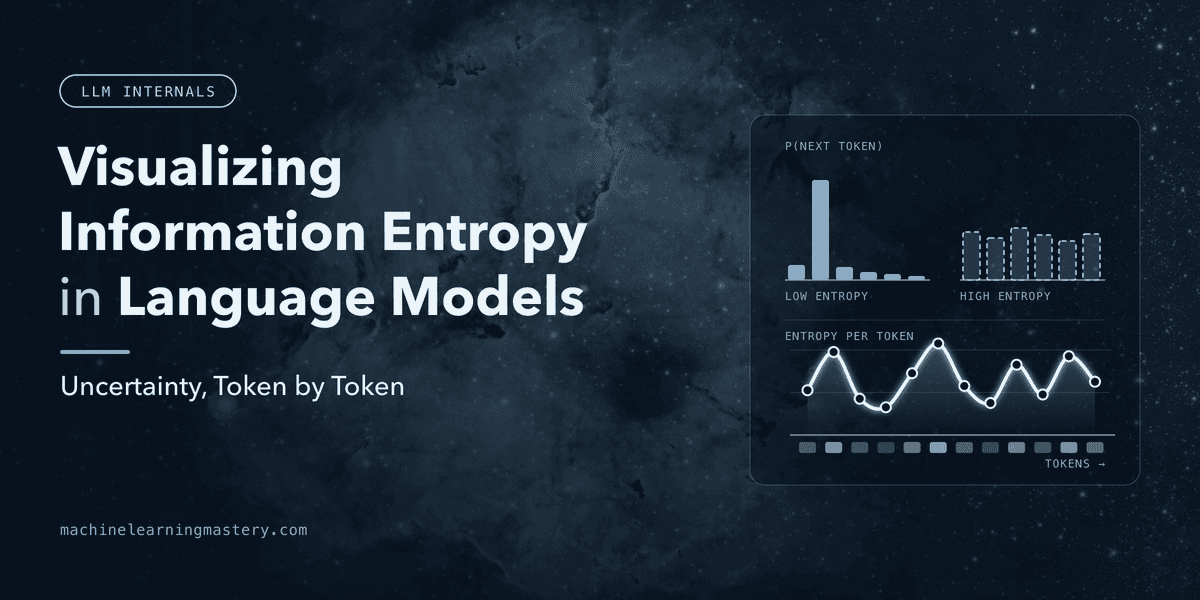
In this framework, a system with high entropy is one where outcomes are widely distributed and unpredictable, such as the roll of a fair six-sided die. Conversely, a system with low entropy is one where outcomes are highly predictable or biased toward a specific result. For decades, this theory was primarily utilized in telecommunications and data compression. However, the rise of deep learning in the 21st century necessitated a new application for these metrics. When researchers began training neural networks to perform classification—whether identifying objects in images or predicting the next word in a sequence—they required a mathematical "compass" to guide the model toward accuracy. That compass became cross-entropy loss.
Defining the Mechanics: Entropy vs. Cross-Entropy
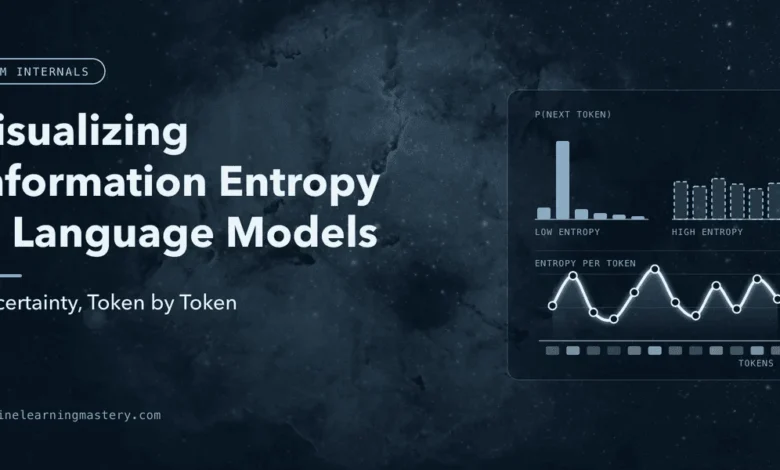
To understand how an LLM functions, one must distinguish between Shannon entropy and cross-entropy. Shannon entropy, denoted as $H(P) = -sum P(x) log_2 P(x)$, measures the internal uncertainty of a single probability distribution. In the context of an LLM, the model examines the current sequence of tokens (words or word fragments) and produces a probability distribution across its entire vocabulary—often exceeding 50,000 unique entries.
Cross-entropy, by contrast, compares two distinct distributions: the "true" distribution and the "predicted" distribution. During the training phase, the model is fed vast amounts of human-generated text. For any given input, the "true" distribution is essentially a "one-hot" vector where the probability of the correct next word is 100%, and all other words are 0%. The model’s task, through backpropagation and gradient descent, is to adjust its internal parameters (weights and biases) so that its predicted probability distribution approaches this ground-truth target. Every time the model makes a prediction, the cross-entropy loss function calculates the "distance" between its guess and the target. The optimization process then mathematically penalizes the model for any deviation, forcing it to gradually refine its internal weights to decrease that distance.
The Training Pipeline: From Uncertainty to Precision
The process of training a foundational LLM follows a rigorous, multi-stage chronology that spans months of compute time.
- Pre-training Phase: The model is initialized with random weights. It processes terabytes of data, continuously predicting the next token. In this early stage, the cross-entropy loss is extremely high because the model’s predictions are essentially random.
- Optimization Loops: Through millions of iterations, the model uses the cross-entropy loss value to calculate gradients. These gradients tell the model exactly how to adjust its parameters to reduce future loss.
- Convergence: As training progresses, the model begins to identify statistical patterns in grammar, syntax, and factual information. The cross-entropy loss drops as the model becomes "confident" in its predictions.
- Fine-Tuning: Following the general pre-training, models undergo Reinforcement Learning from Human Feedback (RLHF), where the loss functions are further refined to align with human preferences for safety and tone.
Data-Driven Insights: Visualizing Model Confidence
A practical assessment of these concepts can be observed through simulated probability distributions. Consider a vocabulary of five words: "apple," "banana," "cat," "dog," and "elephant," with the target word being "cat."
- Scenario A (Confident & Correct): The model assigns a 90% probability to "cat" and minimal weight to others. The cross-entropy loss here is very low, signifying that the model has successfully "learned" the pattern.
- Scenario B (Confident & Wrong): The model assigns 80% to "apple." While the model appears confident (low internal entropy), its cross-entropy loss is catastrophically high because it is objectively incorrect. This demonstrates that a model can be highly certain yet entirely wrong, a common phenomenon in "hallucinations."
- Scenario C (Uncertain/Flat): The model assigns 20% to each word. This results in high entropy (maximum uncertainty). The loss is moderate, but the model lacks the specificity required to generate coherent, useful text.
These simulations highlight why the minimization of cross-entropy is essential. It does not merely punish the model for being "wrong"; it rewards the model for aligning its internal belief structure with the reality of human language.
Implications and Industry Perspectives
The industry-wide reliance on cross-entropy loss has profound implications for the future of AI development. As models grow in parameter count—from millions to trillions—the computational cost of calculating loss over billions of tokens becomes the primary bottleneck in development.
Industry leaders, including researchers at Google DeepMind and OpenAI, have noted that while cross-entropy is the gold standard for current architectures, it does have limitations. Because it treats every error as a loss based on exact word matches, it struggles with synonymy or stylistic choices where multiple words might be equally valid. For example, if a model predicts "feline" instead of "cat," the cross-entropy loss treats this as a mistake, even if the semantic meaning is identical. Consequently, researchers are actively exploring "semantic loss" functions that might one day supplement or replace traditional cross-entropy to better account for the nuances of human intent.
Broader Impact: The Future of Neural Optimization
The transition from simple classification tasks to the complex, generative reasoning of modern AI has not diminished the importance of information theory; it has amplified it. Every interaction with an AI chatbot is, at its core, a series of calculations designed to minimize the surprise of the next token.
As we look toward the future, the integration of these mathematical principles into more efficient training paradigms will be crucial. The ability to achieve lower cross-entropy with less data—often referred to as "sample efficiency"—is currently the primary metric for competitiveness among AI firms. By mastering the relationship between entropy, surprise, and predictive accuracy, developers are effectively teaching machines to navigate the vast, uncertain landscape of human communication, turning the chaos of language into the structured, orderly output we have come to expect from modern artificial intelligence. The journey from Shannon’s 1948 theoretical framework to today’s multi-billion parameter models serves as a testament to the enduring power of information theory as the bedrock of the digital age.