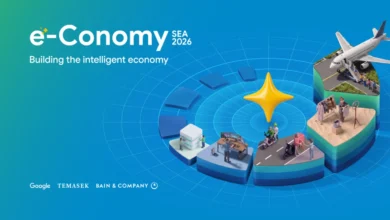
Google has officially announced the global release of Gemini 4 Argon, its newest frontier artificial intelligence model designed specifically to tackle high-complexity, multi-step reasoning tasks across a wide array of technical and professional disciplines. Available immediately to developers, enterprise organizations, researchers, and general consumers, the model represents a significant architectural leap forward for Google’s flagship AI ecosystem. According to company disclosures, Gemini 4 Argon is engineered to excel in deep analytical work spanning software engineering, financial modeling, legal analysis, cybersecurity, and scientific research. The release comes amid intense competition within the generative artificial intelligence sector, as major technology firms increasingly pivot from general-purpose conversational agents toward specialized systems capable of autonomous execution and deep domain mastery.
The rollout of Gemini 4 Argon spans multiple access tiers and platform integrations. Developers and enterprise clients can access the model via the API in Google AI Studio and the Gemini platform. Meanwhile, individual consumers subscribing to Google AI Ultra gain access through Google Antigravity, while both Google AI Ultra and Pro subscribers can utilize the model directly within the Gemini application and AI Mode in Search. To encourage widespread adoption and experimentation, Google has priced the model competitively at launch, establishing an introductory rate of $2 per million input tokens and $10 per million output tokens, alongside a steep 95% discount for cached input tokens. Industry analysts note that this aggressive pricing structure is designed to capture market share among enterprise customers seeking cost-effective solutions for large-scale data processing and code generation.
Benchmark evaluations indicate that Gemini 4 Argon achieves superior performance compared to preceding frontier models, particularly in multi-step scenarios that require sustained logic and cross-domain synthesis. The model currently holds the number one position on the Vals Index, a widely recognized benchmark tracking artificial intelligence performance across critical economic sectors including coding, finance, legal services, and tax preparation. Unlike previous iterations, Argon has been optimized to communicate more directly, reducing conversational hedging, minimizing repetitive phrasing, and strictly adhering to complex formatting and style guidelines requested by the user. These conversational refinements address long-standing user complaints regarding verbosity and evasiveness in enterprise-grade language models.
In software engineering environments, Gemini 4 Argon has already demonstrated measurable productivity gains during internal testing at Google. Over the preceding weeks, internal engineering teams utilizing Argon within the Google Antigravity platform reported an increase in agentic code submissions of more than 35%. Concurrently, these teams observed a reduction in code rollbacks by nearly one-third, signaling a higher baseline accuracy in generated codebases. The model’s capacity to handle intricate programming logic extends into creative and interactive technical domains. Demonstrations released alongside the model illustrate Argon’s ability to autonomously script, rig, animate, and deploy complex three-dimensional graphical environments, ranging from simulated architectural complexes to playable web-based racing games built entirely through multi-agent visual critique loops.
Beyond software development, Gemini 4 Argon introduces transformative capabilities for high-stakes professional workflows in legal, financial, and scientific sectors. Utilizing enhanced visual perception, advanced reasoning, and strict factual grounding, the model excels in longitudinal data analysis, interactive analytical sandboxes, and deep multimodal document comprehension. At Isomorphic Labs, researchers have integrated Argon as an active partner to accelerate drug discovery workflows. By synthesizing massive volumes of complex scientific literature and patent documentation in hours rather than weeks, the model has streamlined the initial phases of pharmaceutical research. Similar operational efficiencies are being observed in archaeology and historical preservation, where Argon has been deployed to synthesize tens of gigabytes of airborne LiDAR scans, geographic information system vectors, and computer-aided design drawings to reconstruct fragmented archaeological records into explorable digital heritage sites.
The cybersecurity sector represents another primary domain benefiting from the deployment of Gemini 4 Argon. Recognizing the dual-use nature of advanced cybersecurity tools, Google is expanding access to the model to hundreds of additional participants within its Fairwind Program. Prominent cybersecurity firms such as Wiz are leveraging Argon to support initiatives aimed at protecting critical infrastructure. Within early access trials, security researchers utilized the model to autonomously audit complex codebases, test intricate hypotheses, and identify subtle, zero-day vulnerabilities and architectural logic flaws that typically evade automated scanning tools. This capability is expected to significantly bolster defensive postures across enterprise and public sector networks.
In the realm of robotics, Gemini 4 Argon achieves a major milestone by bridging the gap between visual-semantic reasoning and physical execution. The model achieved an 87% score on the Embodied Reasoning benchmark, outperforming competing frontier models in interpreting spatial and physical problems within three-dimensional environments. To showcase these capabilities, Google researchers tested a novel "Video-to-Sim-to-Real" pipeline. By observing a raw video of a human playing the game of cornhole, Argon calculated environmental spatial coordinates, determined necessary whole-body joint trajectories, and autonomously generated the required simulation code. When deployed onto Apptronik’s Apollo humanoid robot, the system successfully executed the physical task, sinking seven consecutive shots in real-world trials. This methodology effectively compresses weeks of manual simulation programming into a matter of hours, offering a scalable training paradigm for physical automation and robotics development.
To foster academic and scientific exploration, Google has announced a specialized initiative granting 10,000 qualified researchers free access to the highest usage tier of Google Antigravity for a period of six months. Applications for this program are currently being processed on a rolling basis, contingent upon eligibility and capacity constraints. This outreach underscores Google’s strategy to embed its frontier models deeply within academic research institutions, thereby driving foundational discoveries in mathematics, physics, and computer science.
Safety and security remain central to the deployment of Gemini 4 Argon. Given the elevated capabilities of the model, Google subjected Argon to rigorous pre-release evaluations in collaboration with external third-party safety partners. The resulting safeguards represent the company’s most comprehensive security stack to date, designed to mitigate risks associated with autonomous code execution, cybersecurity exploitation, and the generation of unsafe content. Detailed methodologies, evaluation scores, and safety mitigations are documented in the official Gemini 4 Argon Model Card released alongside the software.
As Gemini 4 Argon becomes globally available, industry experts are closely monitoring its adoption rates across Fortune 500 enterprises and independent developer communities. Enabled by an industry-leading one-million unified input-output token limit via the Gemini API, the model is equipped to handle massive contextual payloads without degradation in reasoning quality. While Argon represents the vanguard of Google’s current AI offerings, company executives have indicated that it is merely the first installment in the broader rollout of the Gemini 4 product family, signaling that further technological advancements are forthcoming in the competitive landscape of generative artificial intelligence.
Related posts: