The Ultimate Guide to Integrating Artificial Intelligence Tools into Your Business and E-Commerce

Operations
Artificial intelligence has officially transitioned from a speculative technological frontier into a foundational pillar of modern commercial operations. As language models, generative design interfaces, and predictive algorithms continue to evolve, professionals and enterprises across nearly every sector are adopting these technologies to streamline workflows, reduce overhead, and scale their digital presences. Recent industry data underscores this fundamental shift in the global economy. According to insights compiled by AuthorityHacker, approximately 35% of companies have already integrated artificial intelligence directly into their core operational processes. Furthermore, an overwhelming 90% of organizations now view AI-driven assistance as a distinct competitive advantage, emphasizing that understanding the nuances, capabilities, and limitations of these tools is no longer optional for industry leaders. Additionally, consumer and enterprise hardware have rapidly adapted, with 77% of modern electronic devices incorporating artificial intelligence features natively into their operating functionalities.
To help organizations navigate this rapidly expanding landscape, business leaders, entrepreneurs, and content creators are increasingly seeking structured overviews of the most effective AI-powered platforms available today. Whether the objective is to optimize internal corporate workflows, elevate an online storefront, scale a content-driven blog, or simply explore the frontiers of machine learning capabilities, understanding the specific utility of these platforms is essential for sustainable digital growth.
The Evolution and Chronology of Commercial Artificial Intelligence
The widespread integration of artificial intelligence into everyday business tools is the result of decades of research, but its commercial acceleration has occurred at an unprecedented pace over the past several years.
The timeline of modern artificial intelligence accessibility began in earnest during the late 2010s, characterized by the emergence of narrow machine-learning applications designed to handle specific, repetitive tasks such as basic customer service chatbots and rudimentary data entry automation. However, the paradigm shifted dramatically in November 2022 with the public release of advanced generative pre-trained transformers. This milestone effectively democratized access to sophisticated natural language processing, allowing non-technical users to interact with complex algorithms using conversational language.
Throughout 2023 and into 2024, the market experienced a massive influx of specialized applications. Developers began leveraging foundational models to build niche platforms tailored explicitly to distinct business functions, including automated website generation, programmatic marketing campaign management, and synthetic media creation. By early 2024, artificial intelligence was no longer viewed merely as a novelty or an experimental playground; it had solidified its status as an indispensable enterprise resource. Industry analysts note that this rapid adoption curve outpaces even the early days of the internet and mobile computing revolutions, driven primarily by the immediate, measurable return on investment reported by early adopters.
Building and Optimizing Websites Through Machine Learning
Establishing a compelling digital storefront or corporate website traditionally required significant investments of time, specialized web development skills, and substantial financial capital. Today, artificial intelligence has fundamentally disrupted this web development lifecycle.
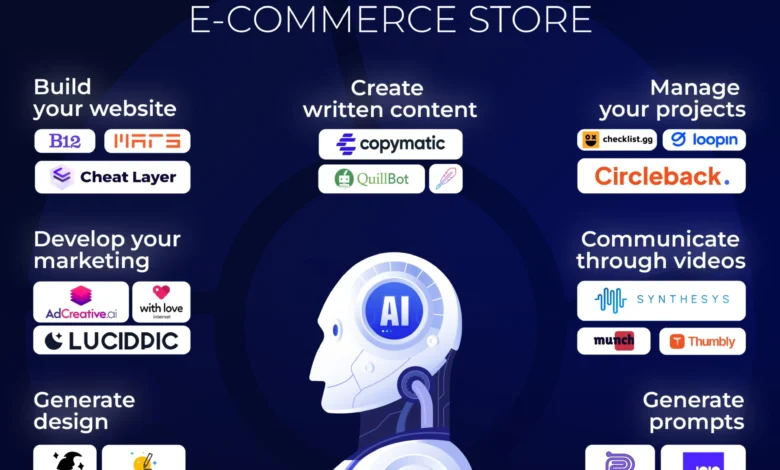
Modern AI-powered website builders and design assistants enable entrepreneurs to launch professional, fully functional digital platforms in a fraction of the traditional timeframe. By analyzing user prompts, brand guidelines, and industry-specific requirements, these platforms automatically generate layout structures, responsive code, color palettes, and user-experience frameworks. For e-commerce operators, this means the barrier to entry for creating conversion-optimized online stores has dropped significantly. Small business owners can now leverage sophisticated design algorithms that dynamically adjust site architecture based on user behavior patterns, ensuring maximum engagement and streamlined checkout processes without needing a dedicated IT department.
Revolutionizing Marketing Strategies with Algorithmic Precision
Marketing in the digital age relies heavily on data-driven decision-making, audience segmentation, and hyper-personalized messaging. Artificial intelligence tools have become central to executing these complex strategies efficiently.
Contemporary marketing departments utilize machine learning models to analyze vast consumer datasets, predict purchasing trends, and automate multi-channel campaigns across social media, email, and search engines. These systems can autonomously test hundreds of headline variations, image combinations, and call-to-action placements in real time—a process known as multivariate testing—to determine the highest-performing configurations. For online retailers, this translates into highly targeted advertising spend, reduced customer acquisition costs, and automated lifecycle marketing campaigns that nurture leads from initial site visit to final purchase conversion.
Scaling Video Communication and Synthetic Media
Video content continues to dominate digital consumption, serving as one of the most effective mediums for brand storytelling and consumer engagement. However, traditional video production is notoriously resource-intensive, requiring expensive equipment, specialized editing expertise, and significant production schedules.
Artificial intelligence has democratized video creation through the advent of synthetic media generation, automated editing suites, and AI-powered avatar presentations. Modern platforms allow businesses to produce professional-grade promotional videos, product demonstrations, and localized content simply by inputting text scripts. These tools can automatically generate voiceovers in dozens of languages, synchronize lip movements, add dynamic captions, and edit raw footage into cohesive, engaging narratives. Consequently, brands of all sizes can maintain a consistent, high-impact video presence across platforms like YouTube, TikTok, and corporate websites without incurring the traditional costs associated with full-scale video production agencies.
Enhancing Project Management and Operational Workflow
As remote and hybrid work models become the global standard, maintaining operational efficiency, cross-departmental collaboration, and precise project timelines is a critical challenge for enterprise leadership.
Artificial intelligence tools designed for project management are transforming how teams coordinate tasks, allocate resources, and track deliverables. These platforms utilize predictive analytics to forecast potential project bottlenecks, automate routine status updates, summarize lengthy meeting transcripts, and assign tasks based on individual team member workloads and historical performance metrics. By offloading administrative overhead to intelligent algorithms, project managers can redirect their focus toward high-level strategic planning and creative problem-solving, ultimately accelerating time-to-market for new products and initiatives.
The Art and Science of Prompt Engineering
As conversational artificial intelligence becomes ubiquitous, the ability to communicate effectively with large language models has evolved into a specialized digital skill known as prompt engineering.
To maximize the output quality of generative AI tools, users must structure their inquiries with precision, context, and clear constraints. Recognizing the learning curve associated with this process, a new category of tools has emerged specifically dedicated to generating, refining, and optimizing prompts. These prompt-generation platforms help users construct detailed, highly effective instructions for AI models, ensuring that the resulting outputs—whether code, strategic outlines, or creative text—meet exact professional standards. Mastering prompt generation enables organizations to extract maximum value from their AI software investments, reducing trial-and-error cycles and standardizing the quality of automated outputs across teams.
Transforming Written Content and Content Marketing
Content marketing remains a cornerstone of digital authority, search engine optimization (SEO), and brand awareness. However, maintaining a consistent publication schedule for blogs, newsletters, and social channels demands a continuous output of high-quality written material.
AI-powered writing assistants and content strategy platforms have redefined how editorial teams approach content creation. These systems assist with everything from initial keyword research and topic clustering to drafting comprehensive articles, optimizing meta descriptions, and repurposing long-form assets into social media snippets. While human oversight remains essential to ensure brand voice alignment, factual accuracy, and editorial integrity, these tools enable writers and marketers to overcome writer’s block, scale their output exponentially, and maintain robust search visibility in fiercely competitive digital marketplaces.
Generating High-Quality Visual Designs and Brand Assets
Visual identity is critical for establishing brand recognition and consumer trust, yet producing professional graphic design assets has historically required specialized training and expensive software suites.
Generative design tools powered by artificial intelligence have bridged this gap, empowering users to create stunning, original visual assets through descriptive text prompts. From custom product mockups and marketing banners to unique social media graphics and brand logos, these platforms synthesize complex visual concepts in seconds. E-commerce merchants can instantly generate diverse product backdrops, lifestyle imagery, and promotional graphics without the need for expensive photo shoots or dedicated graphic design contractors. This democratization of visual creation allows brands to iterate rapidly on visual campaigns and maintain a polished, professional aesthetic across all customer touchpoints.
Broader Economic Impact and Strategic Implications
The rapid integration of artificial intelligence across these diverse business functions signals a permanent structural transformation in the global economy. As evidenced by market adoption statistics, companies that successfully incorporate AI into their daily operations are securing distinct competitive advantages in efficiency, scalability, and market responsiveness.
However, industry experts and policymakers emphasize that technological adoption must be paired with thoughtful governance, data privacy compliance, and ongoing workforce training. As algorithms take over routine tasks, the human element within organizations is shifting toward higher-order strategic thinking, ethical oversight, and creative direction. Ultimately, the successful deployment of artificial intelligence tools is not merely about replacing human labor, but rather about augmenting human capability to drive unprecedented levels of innovation and commercial success.