AI Supply Chain Vulnerabilities Exposed as Researchers Discover Months-Long Data Thefts Across Major Inference Providers

A sweeping cybersecurity investigation has revealed that attackers systematically intercepted
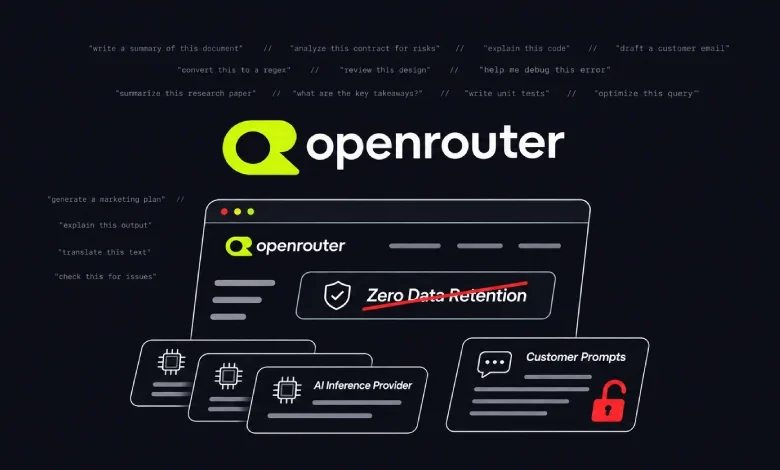
and stole data from inside multiple artificial intelligence inference providers for months, operating entirely undetected until external security researchers blew the whistle. The alarming findings underscore systemic vulnerabilities in the rapidly expanding AI supply chain, calling into question the reliability of privacy guarantees such as Zero Data Retention configurations, which theoretically ensure that user prompts and data are never permanently recorded or stored.
The investigation, spearheaded by industrial cybersecurity firm Dragos and corroborated by several prominent industry players, exposed a complex web of compromised endpoints, unauthorized traffic routing, and compromised server infrastructure. The incidents demonstrate that even when end-users implement strict privacy settings, those protections become functionally obsolete if malicious actors manage to compromise the foundational infrastructure of third-party processing hubs.
The Genesis of the Discovery: Canary Token Research
The sweeping nature of these breaches came to light following a months-long research initiative led by Dragos, which utilized advanced canary token research methods to map data leakage across the global AI ecosystem. Between July and November, researchers seeded approximately two million unique prompts containing specialized web links and credential tokens. Because these canary tokens were designed to trigger alerts the moment they were accessed or utilized anywhere on the web, researchers could track precisely when and where a prompt had been read.
Because a planted secret can only be learned in one place, any unauthorized use of a canary token served as definitive proof that an attacker or unauthorized system had accessed the underlying prompt. The results were staggering. The seeded prompts were processed alongside routine customer queries, meaning that real-world enterprise data, proprietary code snippets, and confidential user inputs were almost certainly intercepted alongside the bait.
Among the most glaring discoveries was that several prompts explicitly flagged as Zero Data Retention—a standard setting relied upon by privacy-conscious enterprises to prevent the logging of prompts—were successfully captured and exploited by malicious entities. "A privacy flag doesn’t help when the attacker is already inside," noted HD Moore, chief research officer at Dragos, highlighting the fundamental flaw of relying on policy-level software controls when underlying server infrastructure has been compromised.
Chronology of the Attacks
The timeline of these multi-layered breaches spans nearly half a year, tracing back to the summer of 2026 and involving a sophisticated array of tactics:

- Mid-July: The earliest detected breaches began. Attackers infiltrated internal credentials at multiple inference providers. One of the initial targeted providers spent months blaming internal misconfigurations and third-party data processing partners before realizing its own internal credentials had been compromised.
- Late October: The largest single breach phase occurred. Attackers planted approximately two hundred AWS keys into specific requests sent to an inference provider during narrow windows. Every single request processed during these windows was duplicated. Notably, some of the stolen requests were rejected by the provider before a model even finished running, indicating that the interception occurred at the very edge of the network traffic arrival point rather than deeper within the inference stack.
- Late October to Early November: Stolen credentials were tested rapidly by attackers. Within hours of extraction, threat actors listed S3 buckets, searched AWS Secrets Manager and Parameter Store, attempted to generate new Bedrock API keys, and added unauthorized IAM users to maintain persistent access. These activities drove tens of thousands of automated AWS API calls.
- November 1: The same threat actor introduced ARTEX, an AI-driven penetration testing framework, using it explicitly to verify that previously acquired AWS keys remained active. Security telemetry revealed two specific user agents—artex-agent and artex-judge-r121—which did not appear in any prior public threat intelligence databases, marking them as novel indicators of compromise.
- November 8: Phala successfully contained an intrusion into its inference servers, later reporting that an unauthorized party had viewed live processing data, prompting a widespread advisory for users to rotate credentials.
Gateway and Provider Responses: The OpenRouter Action
OpenRouter, a major gateway that routes customer AI requests to an expansive pool of third-party providers, moved quickly to mitigate fallout upon receiving the researchers’ findings. The company confirmed that while its own internal infrastructure remained uncompromised, several downstream partners failed to meet basic security standards.
In response, OpenRouter removed three third-party providers from its platform, stripped 125 specific endpoints of their Zero Data Retention eligibility, and initiated direct notifications to all potentially affected customers. The company announced that any removed endpoint must undergo exhaustive security validations and provide formal operational assurances before it can be reinstated to the Zero Data Retention tier.
Furthermore, OpenRouter is actively integrating the researchers’ canary testing methodologies into its continuous monitoring framework, performing rigorous network path verifications to ensure that requests and responses are not being quietly siphoned off to unverified third parties.
Public Disclosures by Affected Providers
In the wake of the disclosures, several inference providers published incident reports detailing how their systems were breached and outlining remediation steps for impacted users.
Phala released a preliminary incident report confirming that an attacker had successfully seized control of an inference server, granting them visual access to request data during active processing. The company stated that the breach was successfully contained on November 8, and model services have since been restored with enhanced security controls. Phala advised that any requests routed to its DeepSeek V4 Flash 0731 model via the gateway between October 21 and November 8 should be considered compromised, urging users to immediately rotate any API keys, tokens, or passwords contained within those sessions.
Together AI disclosed a separate security event stemming from an AI coding agent that inadvertently committed a sensitive credential to a public GitHub repository. An unauthorized party located and downloaded stored customer prompt samples that had been logged for routine software quality assurance testing. These samples originated from requests made in June and July targeting models such as MiniMax M3, GLM-5.2, and Kimi K2.6. Together AI stated that the intruder searched the data for external service credentials and tested five of the researchers’ canary tokens. The company reported that it believes the stolen data has since been deleted and announced that Zero Data Retention is now the default setting for all new accounts.
Novita addressed a separate routing misconfiguration that inadvertently directed certain MiniMax customer requests past intended boundaries and directly into the official MiniMax API, prompting privacy notices to affected clients.
Broader Industry Implications and Geopolitical Angles

Beyond direct compromises of inference servers, the Dragos research shed light on insidious supply chain loopholes operating within AI marketplaces. Investigators uncovered instances where malicious sellers listed advanced AI models at artificially low prices, deliberately enabling verbose request logging to harvest data flowing through their nodes.
In one instance, traffic originating from a residential broadband connection in France was traced to an individual harvesting passwords from intercepted prompts and manually executing root Secure Shell (SSH) login attempts, while simultaneously testing stolen AWS keys. Further network tracing across approximately 2,000 distinct routing paths revealed hundreds of unidentified systems, including a marketplace seller quietly injecting roughly 1,000 hidden tokens into every processed prompt.
The findings also highlighted international data harvesting operations. A Chinese AI lab, operating anonymously in the report’s initial summaries, was found to have systematically fetched secret links embedded in over half of the canary prompts sent to its models between July and October. This included roughly two-thirds of all prompts explicitly designated as Zero Data Retention. When U.S.-based hosting providers resold the Chinese lab’s models, the prompts triggered the same automated scrapers, inadvertently funneling domestic enterprise data back to foreign servers.
In a particularly telling demonstration of how quickly intercepted data circulates, researchers noted that twenty-four days after a specific canary prompt was dispatched, its hidden link appeared inside a workplace chat on Feishu (known as Lark internationally). Within two minutes of posting, the link was accessed concurrently from three desktop computers and three mobile devices located in Beijing and Shanghai. Because the researchers had only publicly disclosed the first eight characters of the link, whoever posted it must have been reading a complete, cached copy of the full prompt.
Strategic Recommendations for Enterprises
The revelations serve as a wake-up call for enterprises relying heavily on third-party AI wrappers, gateways, and reseller marketplaces. Security experts emphasize that software-level privacy policies and flags offer zero protection if the underlying infrastructure is untrustworthy.
To mitigate supply chain risks, security professionals recommend several actionable strategies:
- Prioritize Direct First-Tier Partnerships: Enterprises should minimize their reliance on multi-hop reseller marketplaces and complex routing pools, opting instead for direct, contractually bound relationships with tier-one model providers.
- Implement Self-Hosting Where Feasible: For highly sensitive workloads, self-hosted open-source models remain the only absolute guarantee that prompts will not traverse third-party networks.
- Deploy Canary Tripwires: Organizations can deploy automated canary tokens (such as free Thinkst Canarytokens) within their standard prompt pipelines. Any unauthorized external access to these tokens serves as an immediate, definitive indicator of a data breach.
- Scrub Sensitive Formats: Implementing aggressive local data-loss prevention (DLP) filters to scrub API keys, passwords, and tokens from prompts before transmission can prevent credential leakage, though organizations must remain mindful that unstructured sensitive data may still slip through.
As the AI ecosystem matures, these findings demonstrate that the race for cheaper inference and broader model availability has frequently compromised fundamental cybersecurity hygiene. Until rigorous, standardized auditing protocols are enforced across the entire AI supply chain, enterprise users must treat every third-party inference hop as a potential point of data exposure.