Google has officially expanded the reach of its proprietary artificial intelligence ecosystem, making the Gemini mobile application accessible to hundreds of millions of users operating lower-memory Android hardware globally. This strategic rollout marks a significant milestone in democratizing advanced computational tools, bringing sophisticated generative AI capabilities to entry-level smartphones that were previously constrained by hardware limitations. Historically, these devices—often categorized under the Android Go edition framework—have been restricted to basic voice commands and standard search functionalities due to constraints in RAM, processing power, and thermal management.
By re-architecting the core software infrastructure of the Gemini application, engineering teams at Google have successfully optimized the user experience to run seamlessly on resource-constrained devices. This development bridges a critical technological divide, ensuring that populations in emerging markets and cost-conscious consumers worldwide are not left behind in the rapid transition toward AI-driven digital economies.
The Main Facts of the Expansion
The newly optimized Gemini application is now officially rolling out to eligible Android devices with lower memory capacities, specifically targeting the Android Go ecosystem. For a vast segment of the global population, these entry-level smartphones serve as the primary, and often sole, gateway to the internet, educational resources, remote employment, and digital commerce.
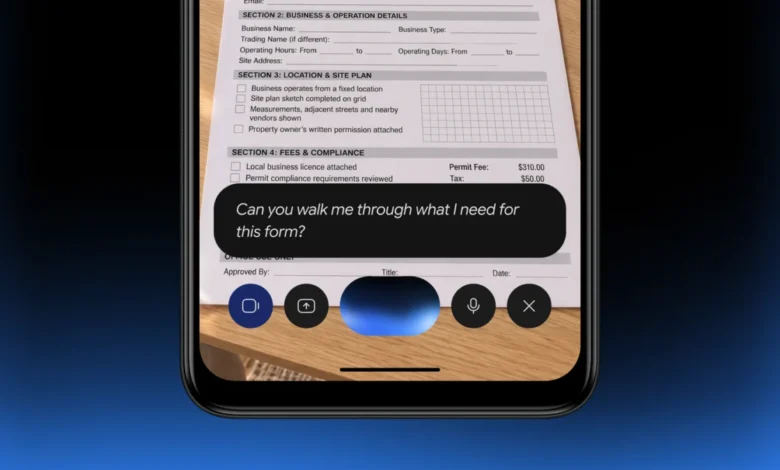
Despite operating on hardware with limited Random Access Memory—frequently restricted to 2GB or less—users can now access the full spectrum of core Gemini capabilities. Rather than relying on cumbersome text input, users can engage in conversational dialogue, practice for employment interviews, and brainstorm ideas aloud in more than 45 supported languages utilizing Gemini Live. Furthermore, the application integrates multimodal functionalities, allowing individuals to point their smartphone cameras at handwritten notes, complex documents, or official forms to instantly receive translations, summaries, and educational explanations. Users can also leverage creative tools to generate custom images, such as promotional materials for small businesses or community events.
Accessing the updated application is designed to be frictionless. Users can download the software directly from the Google Play Store, activate the assistant by pressing and holding the power button on supported hardware models, or acquire devices where Gemini comes preloaded straight out of the box through manufacturing partnerships with global brands such as Transsion.
Chronology and Development Timeline of Android AI Integration
The journey toward bringing advanced artificial intelligence to low-end mobile hardware is the culmination of years of iterative software development, hardware evolution, and strategic market positioning by Google and its manufacturing partners.
The foundation of this ecosystem began with the introduction of Android Go edition in 2017, designed specifically to optimize the operating system for entry-level smartphones equipped with modest hardware specifications. Over the subsequent years, Google consistently refined the memory management, application loading times, and battery efficiency of the Go platform to accommodate a growing suite of lightweight applications, known as Google Go apps.
Simultaneously, the broader tech industry experienced an unprecedented acceleration in generative artificial intelligence research. In late 2022 and throughout 2023, large language models transitioned from experimental cloud-based interfaces to deeply integrated consumer features. Google introduced its Gemini family of models in late 2023, initially deploying the technology to flagship Pixel devices and high-end Android smartphones.
As the infrastructure matured, Google recognized that restricting advanced AI to premium hardware would severely limit its global adoption and societal utility. Throughout 2024, engineering teams focused heavily on model distillation, quantization, and architectural re-engineering. This rigorous optimization process reduced the memory footprint of the Gemini assistant without catastrophically sacrificing performance, culminating in the current rollout to low-memory Android devices.
Supporting Data and Market Context
The market implications of this rollout are underscored by comprehensive global smartphone distribution data. According to industry analyses by market research firms such as Counterpoint Research and International Data Corporation (IDC), entry-level and budget-friendly smartphones account for a substantial majority of mobile device sales in high-growth economic regions, including South Asia, Latin America, Sub-Saharan Africa, and parts of Southeast Asia.
Android Go devices alone represent a massive, highly engaged user base spanning hundreds of millions of active monthly users. For these consumers, the smartphone is not merely a communication device but an indispensable economic tool utilized for micro-businesses, mobile banking, digital literacy, and continuing education.
Historically, hardware constraints presented a formidable barrier to entry for resource-intensive applications. Standard machine learning models require significant RAM allocation to store model weights and execute inference locally or maintain efficient cloud communication channels. By successfully slimming down the client-side architecture and optimizing cloud-assisted query processing, Google has effectively bypassed the physical limitations of legacy and budget silicon, unlocking a multi-million-user demographic that was previously inaccessible to high-tier conversational AI.
Industry Responses and Strategic Implications
While direct public statements from competing technology firms remain measured, industry analysts and market observers have widely interpreted Google’s move as a decisive tactical maneuver in the global race for AI supremacy.
In competitive landscapes dominated by Apple, Microsoft, Meta, and various regional players, user acquisition and ecosystem lock-in are paramount. By establishing Gemini as the default, ubiquitous assistant across both high-end flagships and ultra-budget hardware, Google ensures unparalleled market penetration.
Independent software developers and digital rights advocates have similarly weighed in on the democratization of AI tools. Educational specialists note that providing free, multilingual conversational AI to students using modest devices can fundamentally alter remote learning dynamics, offering personalized tutoring and language practice in regions where physical educational infrastructure is strained. Similarly, small-scale entrepreneurs operating in developing markets gain access to automated content creation, customer service drafting, and linguistic translation services that were previously restricted to enterprises with dedicated software budgets.
However, industry analysts also point out potential challenges associated with this massive deployment. Data privacy, bandwidth consumption, and device longevity remain critical considerations. Running cloud-dependent AI features on cellular networks in regions with fluctuating data costs requires careful data management. Furthermore, the long-term impact on battery degradation and thermal performance of lower-end processors subjected to continuous AI workloads will be closely monitored by consumer advocacy groups and device manufacturers alike.
Broader Economic and Societal Impact
The integration of generative artificial intelligence into low-memory mobile devices transcends simple software updates; it represents a fundamental shift in how digital tools are distributed across socioeconomic strata.
For decades, technological innovation followed a top-down trajectory: cutting-edge features debuted on expensive flagship devices and gradually trickled down to budget hardware over a span of several years. By compressing the timeline of this hardware trickle-down effect through aggressive software engineering, Google has effectively flattened the adoption curve for generative AI.
In regions where fixed-line broadband internet is scarce, the smartphone represents the primary node of the digital economy. Equipping these devices with multimodal AI capabilities—such as the ability to translate printed documents via camera input or converse fluently in over 45 languages—directly addresses practical, everyday challenges faced by billions of people. Whether facilitating commerce for a local market vendor, assisting a student with complex scientific concepts, or breaking down language barriers in multilingual communities, the societal utility of accessible AI is profound.
As hardware manufacturers continue to integrate these optimized frameworks into upcoming production lines—exemplified by early commitments from major global vendors like Transsion—the baseline expectation for what a budget smartphone can accomplish has permanently shifted. The modern entry-level Android device is no longer defined merely by its limitations, but increasingly by its capacity to connect users to the global frontier of artificial intelligence.