How a 19th-Century German Philosopher Became an Unlikely Viral Sensation Across TikTok and X

The digital landscape is no stranger to historical figures undergoing unexpected modern revivals, yet the late-November 2026 phenomenon surrounding 19th-century German Hegelian philosopher Max Stirner stands out for its surreal trajectory. Johann Caspar Schmidt, better known by his pen name Max Stirner, has transitioned from a relatively obscure academic precursor to nihilism, existentialism, and individual anarchism into a bona fide internet meme. Spanning platforms like TikTok, Instagram Reels, and X (formerly Twitter), the digital renaissance of Stirner has yielded everything from high-production video edits and cosplay to gender-swapped fan art and ironic references on adult image boards.
This digital phenomenon underscores a broader cultural trend where dense, historical, and anti-authoritarian philosophies are stripped of their academic weight and repackaged into hyper-fast, visually driven internet subcultures. While philosophers have long been repurposed by online spaces—notably Marcus Aurelius by modern stoicism circles or Friedrich Nietzsche by academic meme communities—Stirner’s sudden surge carries a uniquely absurd internet-native flavor, complete with running jokes about his historical portraiture and a proliferation of derivative digital artwork.
Who Was Max Stirner? A Historical and Philosophical Primer
To understand the absurdity of Stirner’s 2026 virality, one must examine the thinker himself. Born on October 25, 1806, and passing away on June 26, 1856, Stirner was a radical German philosopher whose ideas fundamentally challenged the societal structures of his era. His seminal 1844 work, The Ego and Its Own (Der Einzige und sein Eigentum), remains one of the most radical texts in Western political and philosophical thought.
Stirner’s philosophy posits that the individual ego precedes all else. He argued that human beings should prioritize their own self-interest above all institutional demands, completely rejecting the authority of the state, organized religion, traditional morality, and prevailing ideologies. Central to his thought is the concept of "spooks"—mental constructs, phantoms, or illusions that individuals treat as sacred and authoritative, thereby limiting their own freedom. These spooks included nationalism, liberalism, humanism, and conventional morality.
Stirner’s radical individualism did not neatly align with either the political right or left of his day. He was fiercely critical of conservative movements, but he was equally dismissive of contemporary socialist and liberal movements, including early communism. His ideas drew swift and fierce condemnation from contemporaries. Most notably, Karl Marx and Friedrich Engels dedicated a massive portion of their 1845 manuscript The German Ideology to tearing down Stirner’s theories, dismissing his hyper-individualism as an excessive, bourgeois rejection of collective liberation.
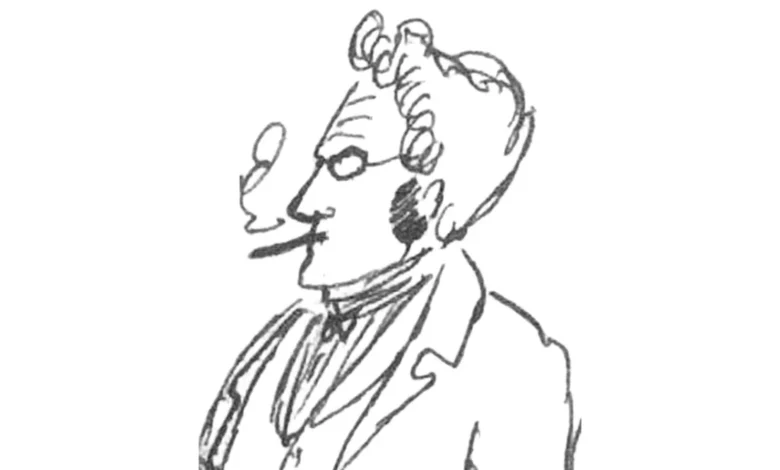
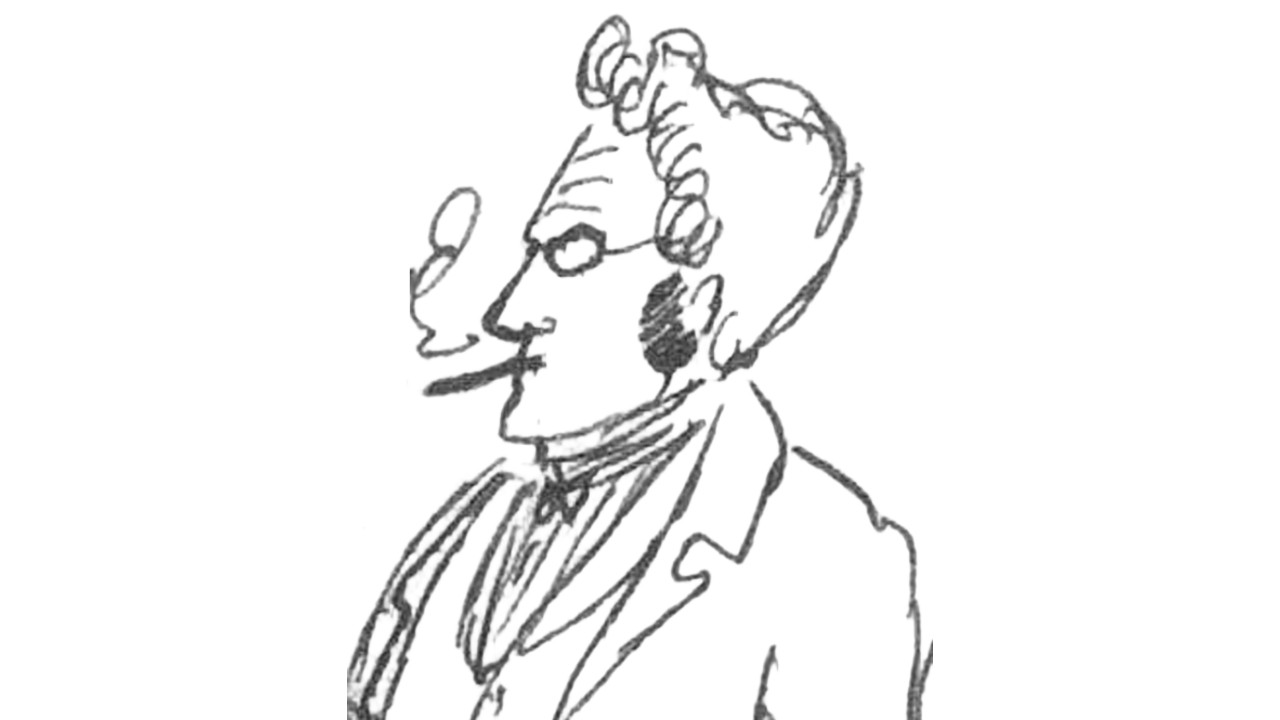
Despite being marginalized in mainstream academic philosophy for decades, Stirner experienced critical re-evaluations in the 20th and 21st centuries. He is frequently cited as an intellectual precursor to individualist anarchism, existentialism, nihilism, and post-left anarchy. Interestingly, the only reliable visual records of Stirner’s physical appearance are two surviving drawings sketched by his contemporary, Friedrich Engels. Devoid of any authentic photographs, these two minimalist portraits—featuring Stirner peering through round spectacles—have served as the foundational visual templates for his modern memeification.
Chronology of a Virality: How Stirner Conquered the Algorithm in November 2026
The transformation of a mid-19th-century German philosopher into a viral sensation did not happen overnight; rather, it crystallized through a precise chain of social media posts, fan art distributions, and algorithmic amplification throughout November 2026.
The movement began gathering visible momentum in the first week of November. On November 4th, 2026, TikTok user @grouwvy published a high-energy video edit centered around a portrait of Stirner sourced from the graphic guide Anarchy: A Graphic Guide. Utilizing dynamic text overlays, rhythmic editing, and modern internet audio styling, the video struck a chord with algorithm-driven content consumers. Within three weeks, the post amassed over one million views, exposing hundreds of thousands of users who had never read The Ego and Its Own to the philosopher’s distinctive caricature-like sketches.
Days later, the conversation shifted to X. On November 9th, user @Wane34565real posted a satirical compilation of four historical portraits of Stirner, all rendered from virtually the same narrow angle. Accompanied by the caption, "he was spamming tf out of that angle," the post tapped into modern internet vernacular to mock the limited historical documentation of the philosopher. The post resonated widely, capturing over 29,000 likes within a fortnight and cementing the specific visual silhouette of Stirner in digital consciousness.
As the weeks progressed, the user base expanded the meme landscape into more niche and unexpected territories. On November 14th, TikTok user @wi_ci published a viral edit showcasing various artistic renderings of the philosopher. Notably, the compilation included a gender-swapped depiction of Stirner, playfully dubbed "Maxine Stirner," generating upwards of 601,000 views in just over a week.
The blurring lines between high philosophy and underground internet culture reached an apex on November 15th, when X user @punishedlinusst posted a screenshot from a Rule 34 database indicating that "Max Stirner" had accumulated 24 user-generated entries on the adult content platform. Accompanied by the commentary, "I think we’ve lost the plot guys," the post garnered nearly 2,000 likes and sparked humorous discourse regarding the depths of internet depravity and hyper-fixation.
The trend continued to manifest in physical spaces through performance and fan artistry. On November 16th, TikToker @matheogoose uploaded a cosplay video featuring him dressed as the 19th-century thinker, executing a dance routine that pulled in over 487,000 views in under ten days. Shortly after, on November 22nd, X user @murkablyad shared an original illustration of the philosopher, earning thousands of approving engagements and inspiring a small wave of dedicated fan art across Instagram Reels and X.
Quantitative Impact and Algorithmic Amplification
While raw search engine data for "Max Stirner" historically experienced steady, modest interest driven primarily by political science students and niche philosophy enthusiasts, the events of November 2026 caused noticeable spikes in platform-specific discovery queues.
The quantified success of the November 2026 trend is measured not by traditional economic metrics, but by engagement velocity. Across TikTok, the hashtag ecosystem surrounding Stirner accumulated millions of cumulative views, led primarily by Gen Z and younger millennial demographics who treat obscure historical figures as blank canvases for absurdist humor. The cross-pollination of content between X, Instagram, and TikTok created a closed-loop ecosystem where a joke about Engels’ sketches on X could quickly transform into a high-production video edit on TikTok, which in turn spawned original fan art and digital cosplay.
Cultural Implications: The Trivialization vs. Democratization of Philosophy
The sudden conversion of Max Stirner into a viral internet meme offers fertile ground for cultural analysis. Academics and digital sociologists are often divided on how to interpret the internet’s obsession with historical thinkers.
On one hand, traditionalists argue that reducing a complex, anti-systemic philosopher like Stirner into TikTok edits, gender-bent avatars, and Rule 34 art represents a trivialization of serious intellectual history. Critics point out that the vast majority of users engaging with "Max Stirner" memes have likely never engaged with the dense prose of The Ego and Its Own, reducing a foundational text on egoism to a hollow aesthetic or a fleeting punchline.
On the other hand, cultural commentators suggest that such virality acts as an unorthodox form of democratization. By ripping historical figures out of dusty academic textbooks and thrusting them into the fast-paced streams of social media, online subcultures inadvertently spark curiosity. It is not uncommon for viral internet memes to drive baseline educational interest, prompting a subset of curious viewers to research who Stirner actually was, what "spooks" meant to him, and why his radical individualist philosophy sparked debates with Karl Marx nearly two centuries ago.
Conclusion: The Enduring Legacy of the Egoist
As the initial wave of November 2026 virality stabilizes, Max Stirner occupies an unprecedented cultural footprint. Whether he is being remembered as the father of modern egoist anarchism or as a pixelated face in a trending TikTok edit, Stirner’s core philosophical warning—a caution against allowing abstract societal constructs to dictate individual autonomy—ironically finds a strange reflection in the modern internet age.
In a digital ecosystem defined by algorithmic conformity, hive minds, and manufactured digital outrage, the ghost of Max Stirner lingers on—not merely as a serious academic text, but as an accidental patron saint of internet absurdity, proving that even the most rigid 19th-century German philosophers are not immune to the unpredictable machinery of 21st-century meme culture.