The Legal and Strategic Consequences of Andrew and Tristan Tate’s House Arrest in Romania

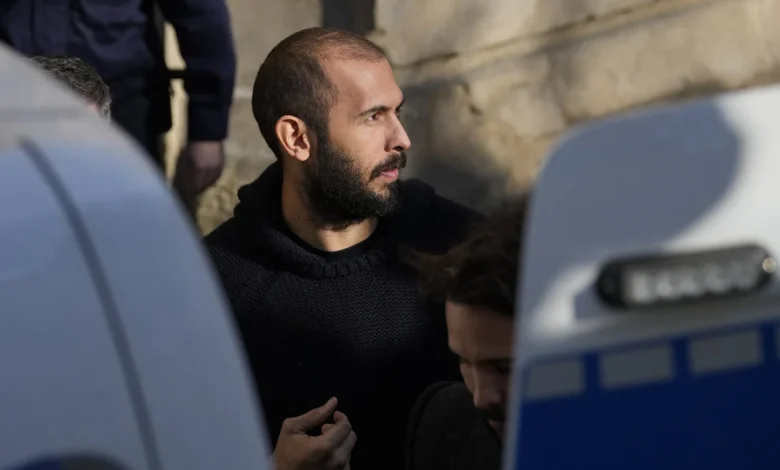
In late March, the Romanian judiciary reached a pivotal decision to transition Andrew and Tristan Tate, along with their alleged accomplices Georgiana Naghel and Luana Radu, from a high-security detention center in Bucharest to house arrest. This shift followed months of incarceration beginning on December 29, 2022, when the siblings were initially apprehended on charges of organized crime, human trafficking, and the exploitation of women. While the move to house arrest—a property located in a suburb north of Bucharest—was framed by the defense as a significant victory, Romanian authorities and legal experts suggest the brothers’ conduct during their detention may have severely compromised their long-term legal standing.
A Chronology of the Investigation
The legal saga surrounding the Tate brothers began in earnest in the spring of 2022, when Romanian authorities launched an investigation into allegations of human trafficking and the operation of an organized criminal group. The investigation gathered momentum throughout the year, culminating in the December 29 raid on the brothers’ property.
- April – December 2022: Romanian authorities allege that Luana Radu, a former police officer, utilized unauthorized access to classified Ministry of Internal Affairs databases to monitor the investigation’s progress.
- December 29, 2022: The Tate brothers and two associates are arrested and taken into custody on charges related to human trafficking and organized crime.
- February 21, 2023: A Bucharest court denies a petition for release, citing "new reasons" for continued detention, specifically noting that the accused pose a threat to public order and are actively attempting to interfere with the judicial process.
- March 31, 2023: An appeals court panel overturns the previous detention order, granting the defendants house arrest under strict surveillance.
- Late April 2023: The anticipated start date for the initial trial proceedings.
The Allegations of Witness Tampering and Evasion
Court documents obtained through freedom of information requests paint a portrait of a coordinated effort by the defense to subvert the integrity of the ongoing investigation. Prosecutors allege that the brothers, while incarcerated, orchestrated a multifaceted strategy to undermine the state’s case. Central to these allegations is a plot for Andrew Tate to flee to Dubai. Prosecutors point to wiretapped telephone conversations in which the influencer purportedly discussed using a medical condition—specifically, a spot on his lung—as a pretext to secure travel permission.
While a representative for the Tates initially claimed the spot was "most likely a tumor," Andrew Tate later utilized his social media platform to clarify that the mark was merely scarring from an "old battle." Authorities, however, remain unconvinced by these explanations, noting that the United Arab Emirates lacks an extradition treaty with Romania, rendering it an ideal sanctuary for individuals seeking to evade criminal prosecution.
Beyond the flight risk, investigators claim the brothers exerted significant pressure on witnesses and victims to retract their statements. This alleged campaign included the use of social media to mobilize followers against key witnesses. In one instance, a prominent pro-Tate online personality traveled to Florida, the residence of a key witness, under the guise of reporting a "major story." While there is no definitive proof of a face-to-face confrontation, the timing and context of the trip have been categorized by Romanian prosecutors as part of an intimidation strategy. Furthermore, a US-based law firm representing the brothers issued a cease-and-desist letter to a witness in Florida, demanding a retraction of her testimony under threat of a defamation lawsuit.
The Role of Luana Radu and Institutional Security
A particularly concerning element of the prosecution’s case involves Luana Radu, a former member of the Romanian police force. Court files suggest she served as a conduit for sensitive information, allegedly accessing classified databases to gain a strategic advantage. The judge presiding over the February 21 session noted that such access would have been virtually impossible without an internal network of support, implying a potential breach of the Ministry of Internal Affairs’ data security protocols.
These allegations are compounded by reports of unresolved complaints filed by women against the brothers prior to their current detention. Prosecutors contend that these past reports of violence and coercion were suppressed or mishandled, potentially due to the influence Radu and her associates wielded within local law enforcement circles.
Broader Legal Implications and Expert Analysis
The "irritation" expressed by Romanian judges, as noted by Mihai Mareș, a criminal defense lawyer and lecturer at the Alexandru Ioan Cuza University of Iași, is not merely a matter of judicial temperament. It carries tangible legal risks. In the Romanian justice system, the perceived credibility of the defendants is paramount. By engaging in what prosecutors describe as a "dangerous game" of witness intimidation and manipulation, the brothers have effectively signaled a lack of respect for the legal process.
"Any subsequent statements they may give will be viewed with a certain amount of skepticism by the judicial bodies," Mareș observed. This skepticism could lead to a widening of the criminal investigation. Should the evidence support the claim that the brothers attempted to force the withdrawal of criminal complaints, they could face additional charges of influencing statements and obstruction of justice—crimes that carry their own significant penalties and further diminish the likelihood of future leniency.
Political Entanglements and Public Perception
In a final, desperate attempt to consolidate support, prosecutors allege that Andrew Tate attempted to leverage the influence of controversial right-wing politicians George Simion and Diana Șoșoacă. Wiretaps allegedly capture Tate instructing his assistant to offer these figures rewards for their public support. Both politicians are known for their anti-Western rhetoric and, in the case of Șoșoacă, for being placed on international sanctions lists.
While both politicians declined to publicly advocate for the Tates, the attempt to involve them highlights the brothers’ strategy of framing their legal battles as a clash between globalist authorities and personal liberty. However, this strategy appears to have backfired in the courtroom. An anonymous justice system insider suggested that these maneuvers are symptomatic of a deeper psychological need for attention. "I think Andrew Tate is not the most intelligent guy, but he probably can’t help himself," the insider remarked, suggesting that the influencer’s compulsion to court controversy has blinded him to the severity of the legal machinery he is attempting to navigate.
Conclusion: The Road Ahead
As the trial approaches in late April, the Tate brothers find themselves in a precarious position. While they have successfully transitioned to house arrest, the conditions of their confinement are strictly monitored. The compound where they are being held is under constant surveillance, and any further attempt to influence witnesses or evade justice will likely result in a swift return to the central arrest building in Bucharest.
The case against the Tates is no longer merely about the original charges of human trafficking and organized crime. It has evolved into a complex judicial examination of the brothers’ attempts to manipulate the very system tasked with judging them. For the prosecution, the goal is to demonstrate that the Tates are not merely provocative influencers, but individuals who believe themselves to be above the law. As the trial date looms, the legal burden of proof remains with the state, but the strategic burden of maintaining credibility lies solely with the defendants—a task they have, thus far, struggled to achieve. The coming months will be a definitive test of the Romanian judicial system’s ability to withstand external pressure and ensure that the pursuit of justice remains uninfluenced by the loud, often disruptive, tactics of the accused.